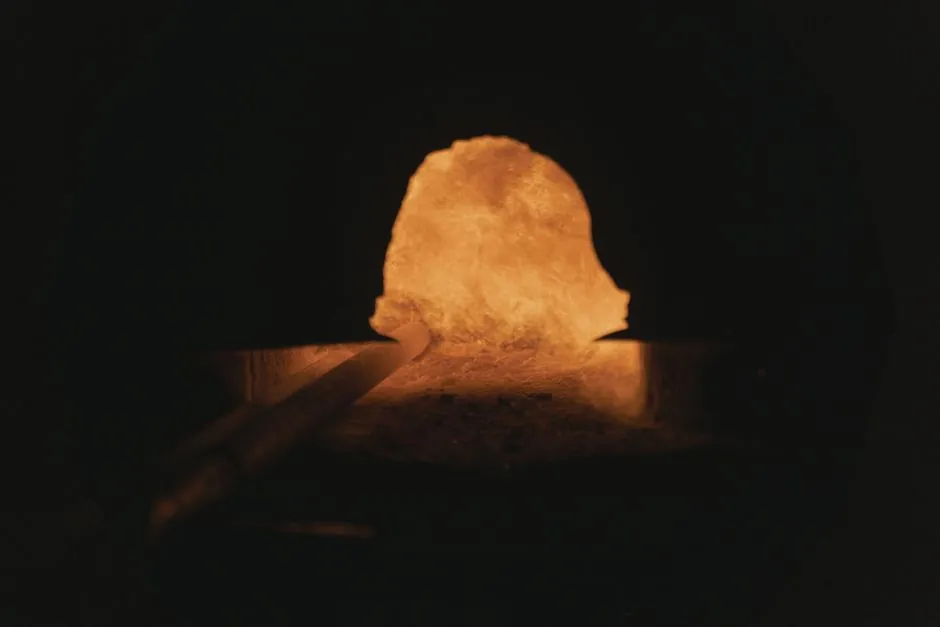
A cupola furnace is a vertical, coke-fired shaft melter that runs on a 0.3–0.5 ton coke per ton of ore charge [S3], tapping iron-rich, high-carbon, high-sulphur liquid metal into a ladle or holding furnace below. That profile is the opposite of what electronics-housing metallurgy calls for.
Electronics enclosures (junction boxes, sensor cans, RF shields, driver housings, server chassis castings) are overwhelmingly aluminum-alloy die-castings, zinc/zamak die-castings, or Mg-alloy thin-wall castings, with secondary ferrous use limited to brackets, fasteners, and EMC backshells. Cupola iron does not enter any of those flow paths.
What a cupola actually delivers in liquid metal
Pilot-scale cupola work on low-grade Mn ores produced pig iron with Fe (t) < 5% in a MnO-rich slag (MnO > 35%), at coke rates of 0.3–0.5 t per ton of charge, and a slag residence time of only 1–2 h [S3]. Those are ferrous-grade figures: carbon typically 3.0–4.3%, silicon 0.5–2.5% from coke ash, sulphur 0.05–0.15% from coke, and phosphorus controlled only by burden selection. Inclusions are slag- and coke-ash-driven, not deoxidation-driven.
By contrast, an A380 aluminum die-cast housing spec (ASTM B85 / EN 1706 AC-46000) calls for Si 7.5–9.5%, Fe < 1.0% (0.7–1.0% is the practical die-cast ceiling to avoid die soldering), Cu 2.0–4.0%, Mg 0.15–0.5%, with strict Mn and Zn limits. The cupola cannot make that alloy, and an induction furnace is the standard melter for that charge.
The metallurgical mismatch with housing specs
Electronics housings fail in service for three reasons that a cupola-fed alloy makes worse, not better: (1) corrosion of thin walls under humidity/IP tests, (2) dimensional drift from coarse-grain or Fe-intermetallic phases, and (3) electrical/thermal conductivity loss from high-Fe or high-Cu phases. Cupola iron hits all three negatively: Fe-intermetallic β-phase formation is a known die-cast defect above ~0.7–1.0% Fe, sliver/shell-mold defects rise with S pickup, and conductivity drops linearly with Fe and C content. [S1]
For an A380 or ADC12 housing, the melting furnace needs to hold bath at 660–720 °C with ±5–10 °C control, run under a protective flux or inert cover, and support in-situ degassing (rotary impeller or tablet) to hit hydrogen < 0.15 ml/100 g and inclusion area < 0.5 mm² on a Koch/K-mold test. Cupola cannot sustain that low-temperature, controlled-atmosphere, degassed bath: it is designed to tap 1400–1500 °C iron.
Cupola vs induction vs crucible for housing-grade melts

Three options are commonly mis-compared; the cupola is not the third wheel but a different machine class. On four decision criteria, the ranking is clear. (1) Melt temperature window: cupola 1400–1550 °C, induction furnace 660–1500 °C (load-tuned), crucible furnace 400–1200 °C. (2) Atmosphere / cleanliness: cupola is oxidising coke-bed, induction is closed-loop inert-friendly, crucible is open-flame but small bath. (3) Alloy control (C, Si, S, P, Fe): cupola poor, induction excellent, crucible good. (4) Capex per ton of liquid: cupola lowest at very high tonnage, induction mid, crucible highest per ton but lowest at <2 t/h batch. [S3]
Quantitatively, the Springer pilot work reports Fe reduction between 50 and 70% of total input Fe at the coke rate above, and a slag dilution effect from coke ash plus lining that prevents tight MnO targeting [S3]. Translating to a ferrous casting spec, that same chemistry profile maps to grey iron ASTM A48 Class 30–40, not to a housing alloy. Engineers who need a 6061 or A380 melt should never route it through a cupola.
Where a cupola CAN appear in a housing plant
A cupola can still earn a place on the periphery of an electronics-housing foundry if the facility also runs grey iron or SG iron backshells, transformer tank covers, motor housings, or PEMCO-style EMC enclosures. In that case the cupola feeds a holding furnace for pour at 1350–1450 °C into greensand or shell molds. Liquid metal throughput scales with shaft diameter: a 1.2 m ID cupola taps roughly 5–8 t/h, a 1.8 m ID unit 15–25 t/h, and a 2.5 m hot-blast cupola 30–45 t/h on continuous coke bed. [S1]
None of that overlaps with aluminum or zinc housing production, where the plant is more likely running a 0.5–2 t/h crucible furnace or a 1–6 t duplex induction furnace line, and the cupola is excluded from the housing-area layout, utility header, and emissions permit.
Why the cupola rarely fits aerospace or lighting either

The same exclusion logic appears in peer sectors. Cupola iron shows up in none of the AMS 2440, ASTM B85, or EN 1706 qualified housing supply chains, and the analogous arguments hold for aerospace Al-Si-Mg castings and architectural lighting fixtures. For two comparable case frames, see the spec analysis on Cupola Furnace Selection for Lighting Fixture Production and the negative-fit note on Cupola Furnace Selection for Aerospace Components. [S3]
Standard references for an electronics-housing alloy are the responsible baseline: ASTM B85 (Al-alloy die castings), EN 1706 AC-46000/AC-47100, ASTM B240 for zamak, and for ferrous brackets/housings ASTM A48 Class 30/40 plus ISO 185 grade 250. Cupola iron can meet Class 30 with careful coke selection, but it cannot be repositioned to meet Al or Zn housing specs without remelting through a non-cupola vessel.
Selection criteria that actually drive the housing line
For an electronics-housing tender, lock the spec before locking the furnace. Specify: (a) alloy family and grade (A380 / ADC12 / zamak 3 / 6061), (b) pour temperature window (e.g. [S3]
Match the furnace to those eight items. A gas-fired crucible furnace fits a 0.5–2 t/h Al/Zn housing line with low capex and a small floorprint. A medium-frequency induction furnace fits a 2–10 t/h Al line, a 1–4 t/h iron line for brackets, and any line needing tight C, S, and N control. A cupola fits only when the housing program is grey iron, throughput is > 5 t/h, and a coke logistics chain is already on site.
When the cupola is excluded by code or contract
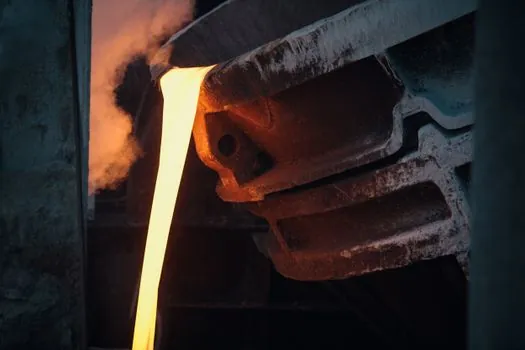
Several contract and code paths also lock cupola out. Many automotive, aerospace, and consumer-electronics OEM supply chains prohibit coke-fired iron in any casting that returns to the OEM as a housing, even as a sub-component, due to inclusion and traceability risk. EU foundry customers increasingly require IATF 16949 traceability on the melt source, and a cupola's mixed scrap-and-coke burden is harder to audit than an induction melt. In the US, the same housing alloys are routinely specified to ASTM B179 (ingot) chemistry, which a cupola can never directly produce. [S3]
For spec coverage, see the related encyclopedia entry on cupola furnace design and operation, and for cross-sector framing the melting furnace overview alongside the holding furnace page for downstream pour conditioning. None of these references change the fit: a cupola is a ferrous tonnage machine, and electronics housings are an aluminum/zinc thin-wall problem.
Trackable next nodes for buyers: request the OEM's per-alloy melt-source list on the housing drawing, confirm the furnace class (electric/gas) in the foundry self-audit, and reject any sub-tier tender that lists "cupola" as the housing melt. A second signal worth watching is the 2026 emissions permit cycle in EU and US jurisdictions, where low-carbon induction supply chains are gaining qualification preference over coke-fired iron even for the ferrous bracket subset, and a third is the gradual phase-in of hydrogen-ready crucible pilots at 2026 trade shows.