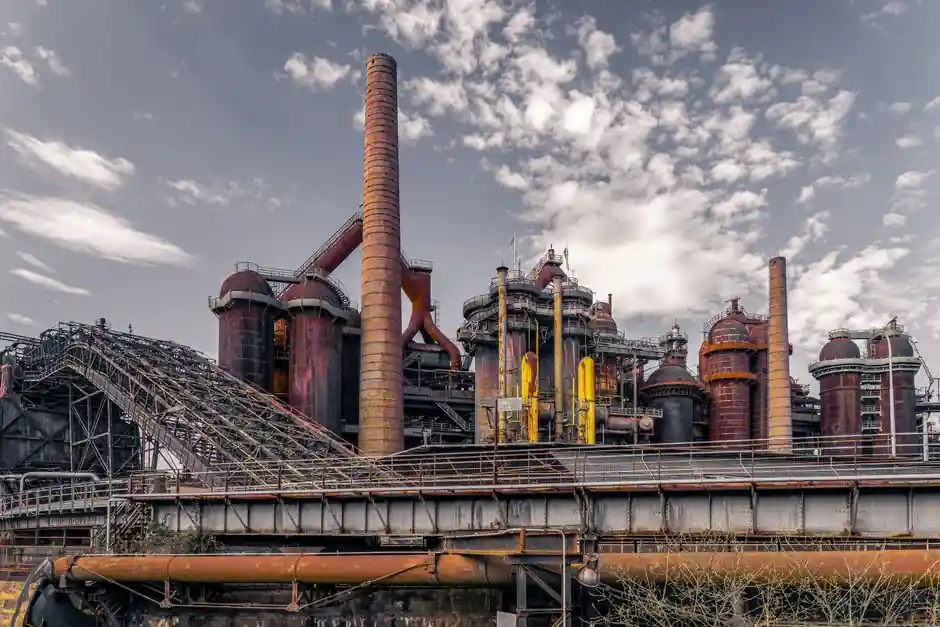
A cupola furnace is a vertical, refractory-lined shaft melter that uses coke bed and forced air to liquefy ferrous charge, typically delivering 1450-1550°C tap iron for grey, malleable, or ductile cast iron pours.
For lighting-fixture makers, the alloy mix matters: solid copper, brass, and tin chandelier bodies and lanterns (as produced by heritage workshops in copper, brass, and antique tin [S1]) are non-ferrous, so the correct melter is usually an induction furnace or crucible furnace, not a cupola.
Cupola vs. Crucible vs. Induction for Lighting Hardware
Cupola furnaces operate as continuous-feed, coke-fired shaft units, with melt rates commonly ranging from 1 to 30 t/h depending on internal diameter (commonly 500-1500 mm for small foundries) and blower pressure, and they remain the lowest-cost per-ton route for high-volume grey iron runs in foundry service [S3]. The trade-off is chemistry control: cupola iron picks up 0.3-0.6% carbon from the coke bed and 0.02-0.08% sulphur, which is acceptable for iron lamp posts, gooseneck arms, and cast brackets but disqualifies the process for the copper-alloy (C110, C260, C360) and tin components that dominate a colonial-style fixture bill of materials [S1].
A crucible furnace is the third option for small-batch heritage work, with batch sizes of 5-200 kg per lift, clay-graphite or silicon-carbide crucibles rated to roughly 1200°C, and good fit for a 5-10 piece handcraft shop that pours weekly rather than hourly.
Where a Cupola Still Fits in a Lighting-Fixture Build
Cast iron lamp posts, pier-mount bases, goose-neck bracket arms, and decorative medallions used on commercial exterior lighting lines (such as the 150 W LED luminaire bracketry and bullet fixtures sold through industrial supply channels [S4][S5]) are still routinely poured from cupola iron because the alloy's fluidity and damping behaviour suit the thin-wall, vibration-resistant castings these parts require. A small cold-blast cupola, 600-800 mm ID, tapped at 1500-1550°C, can pour 0.8-1.5 t/h into green-sand molds for batch sizes of 200-500 post lanterns per day, which matches the order cadence of a North American heritage manufacturer hand-building to order in copper, brass, and iron combinations [S1].
Cupola iron's main limitation for outdoor lighting hardware is corrosion: untreated grey iron will oxidize rapidly in coastal or de-icing-salt exposure, so foundries serving heritage customers typically specify a 3-5 mm wall minimum plus a powder-coat or hot-dip galvanize finish, or substitute ductile iron (60-40-18 or 65-45-12 grade) for critical load-bearing posts. For wrought-iron-look exterior fixtures, the cupola's ability to feed a continuous sand-line of brackets, finials, and scroll arms is the reason most North American heritage lighting catalogues still pair iron substructure with copper or tin decorative shells [S1].
Capacity Sizing Against Lighting-Shop Order Volume
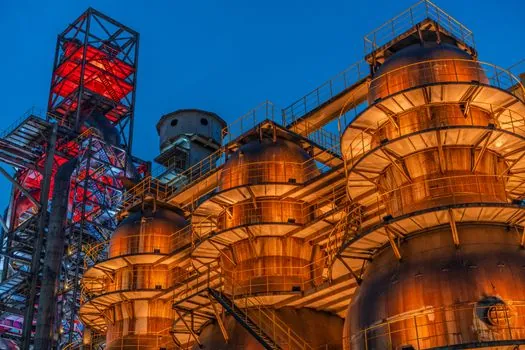
Lighting-fixture foundries typically run 5-15 pours per week, with batch sizes of 50-200 kg per pour for small parts and 500-2000 kg for post-and-base runs, which sits in the lower end of a cupola's economic window. A practical sizing rule: match the cupola's hourly melt rate to roughly 1.2-1.5 times the peak day's pour weight, so a 500 kg/day fixture shop should select a 600-800 mm ID cupola with a 600-800 kg/h rated melt rate, blown by a 7-15 kW positive-displacement blower at 15-30 kPa windbox pressure. [S4]
Heritage colonial-reproduction lighting workshops hand-finish every piece to order, so their casting volumes are modest, but the brass and copper portion of the build is a different process chain entirely [S1]. For those non-ferrous volumes an induction furnace sized to 50-150 kW with a 100-200 kg crucible is usually the right answer, leaving the cupola to feed only the iron substructure components. This dual-furnace layout is common in mid-sized heritage lighting plants and avoids the cross-contamination of having copper-bearing scrap enter the iron charge, which would tie up nickel in the cupola iron and drive hardness out of the 180-220 BHN target typical for machinable post castings.
Standards, Emissions, and Operating Discipline
Cupola operators in North America and Europe must meet particulate and CO emission limits that vary by jurisdiction, and heritage foundries pouring under 1 t/h typically fall under small-foundry exemptions that still require baghouse or wet-scrubber capture on the stack. Operator practice is governed by standard cupola procedures: a pre-heated bed, controlled coke-to-metal ratios of 1:6 to 1:10, and tap-hole management to keep slag carry-over below 5% of the pour weight. By contrast, a crucible furnace for brass and tin pours has no coke bed and produces a clean off-gas that is easier to filter, which is one reason it is preferred in mixed-material lighting shops where indoor air quality and the National Park Service historic preservation guidelines both apply to the workshop environment [S1].
The reference work at cupola furnace selection for pump and valve castings walks through the same alloy-driven logic for a different end-use, and the same decision tree applies here.
Selection Checklist for Heritage and Commercial Lighting Makers
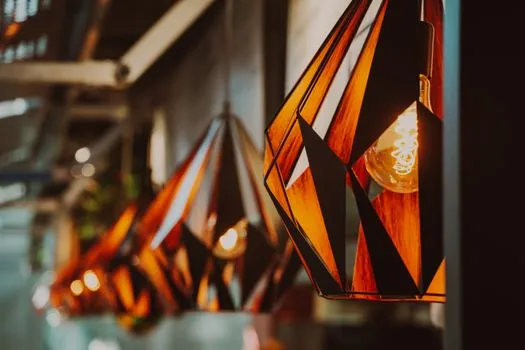
Step 1: tabulate the annual mass of each alloy, separating ferrous (cast iron, ductile iron) from non-ferrous (copper C110, brass C260/C360, leaded brass, bronze, pewter, tin). Step 2: assign each alloy family to a furnace type: iron to cupola (continuous, high-volume) or medium-frequency induction (batch, tight chemistry), copper/brass to induction furnace with channel or coreless design, small heritage volumes of tin/bronze to crucible furnace with clay-graphite pot. Step 3: size each furnace to 1.2-1.5 times the peak daily pour, and verify blower, transformer, and crucible supply. Step 4: confirm the local emissions envelope and baghouse capacity for the cupola stack, since heritage shops near residential or historic districts may face tighter PM limits than the typical small-foundry exemption. [S1]
For shops that must run mixed pours on a tight floor, the most common compromise is a single medium-frequency induction furnace (150-500 kW, 250 kg-1 t melt capacity) handling both the iron and the copper-alloy side, with the chemistry steps documented in melt cards, and a small cupola only added when iron volume crosses roughly 30 t/month. This mirrors the way a contemporary heritage lighting workshop hand-builds copper lanterns, brass chandeliers, and iron posts side-by-side [S1], and is consistent with the product mix a designer will see on a contemporary lighting showroom floor [S2].
The single most important signal to track is the change in ferrous-to-non-ferrous ratio in your order book: a steady drift toward more brass and copper bodies means the next capital purchase should be a second induction channel, not a cupola reline. The second signal is regulatory: when the local air-quality permitting authority tightens PM or CO limits on small cupolas, the cost gap that currently favors cupola iron (typically 10-20% below induction-melted iron at small batch sizes) narrows, and the holding furnace + induction route becomes the lower-risk long-term choice for a lighting-fixture foundry.