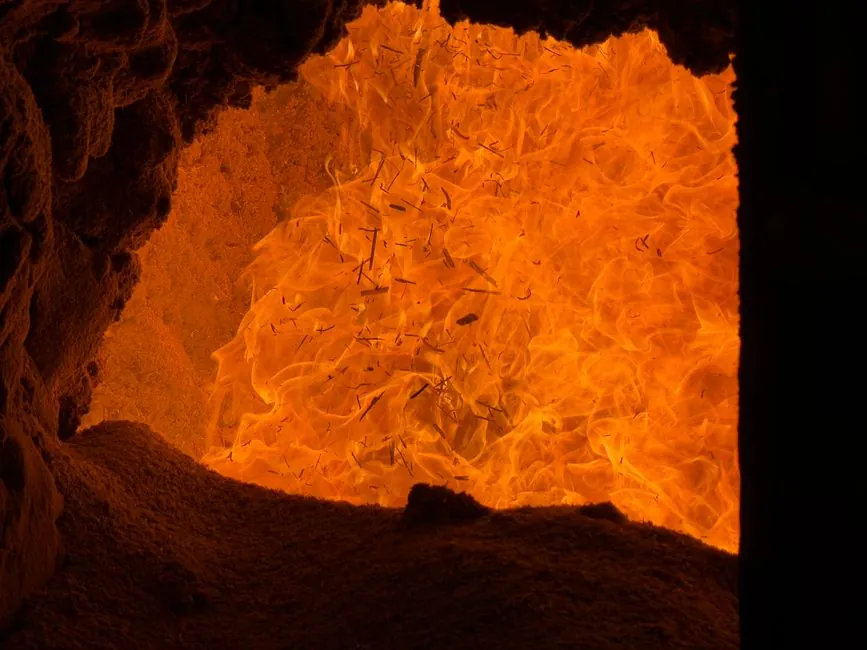
A cupola furnace is a vertical shaft melting unit charged with alternate layers of metallic burden, coke, and flux, and is best specified by foundries producing gray iron, ductile iron, or malleable iron at 3–15 t/h where low capital cost and tolerance for variable scrap outweighs the need for tight alloy control.
For the energy-equipment segment, cupolas sit alongside induction melting as the workhorse for cast-iron components: motor housings, pump bodies, valve casings, transformer tank covers, wind-turbine hub hardware, and large generator end-shields. Where the buyer is sourcing melting capacity rather than finished castings, the spec conversation should center on coke rate, air excess ratio, melt temperature, lining life, and the potential to retrofit natural-gas injection at the tuyeres to cut specific energy consumption [S1].
Operating Window, Coke Rate, and Gas-Injection Economics
Conventional cold-blast cupolas running on metallurgical coke at 8–9% of the metal charge produce melt at 1,400–1,520°C; switching the top from open to closed raises thermal efficiency and enables off-gas heat recovery. The Springer research documents that injecting natural gas through external-chamber burners at air excess 1.2–1.5 trims coke rate while pushing gas consumption to 30–40 m³/t of melt and lifting melt temperature by only 10–20°C [S1].
For energy-equipment buyers, these numbers are the baseline ROI case for a tuyere-injection retrofit on an existing 8–13 t/h cupola.
Air Balance, Batch-Bed Stability, and What Goes Wrong
Stable cupola operation depends on a counter-current flow of ascending combustion gases and descending charge, with combustion air delivered by a forced-draft blower sized to give a tuyere velocity typically 15–40 m/s at the tuyeres. The Springer study notes that poor gas-air mixing periodically suspends the batch bed, drops melt temperature, and damages the refractory lining, which is why the recommended cold-bed air excess must not drop below 1.2–1.5 and the hot-bed injection case requires 2.5–3.0 to keep the high-temperature zone narrow and moving [S1].
Common failure modes buyers should price into spares: refractory erosion at the tuyere belt (campaign life 6–18 months depending on flux and coke ash chemistry), CO spike during bed hang-ups, and stack particulate loading that can drive an emission permit. Linking cupola selection to a plant-level energy management plan, including waste-heat recovery on the off-gas and a metered air and gas train is what separates a 35% efficient melt shop from a 42% efficient one.
Who Cupola Selection Fits, and Who It Does Not
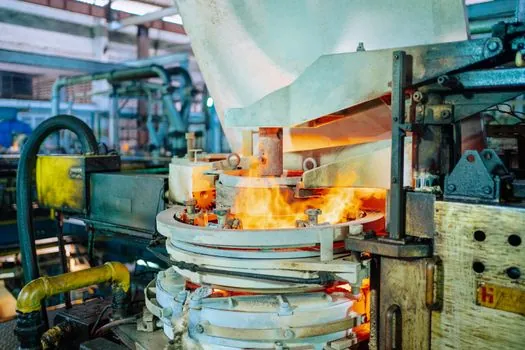
A cupola is a fit for foundries running high-tonnage gray and ductile iron for energy-equipment castings (pump bodies, valve bonnets, motor frames, transformer tank covers) where the charge is forgiving, melt temperature uniformity within ±30°C is acceptable, and the plant can handle slag handling and baghouse filtration. A cupola is not a fit for steel, high-alloy iron, or aerospace-grade castings where tight chemistry, low sulfur, and low inclusion count matter, and where an aerospace-grade cupola spec typically rules the technology out entirely. [S5]
For electronics housings and thin-wall castings below roughly 6 mm wall thickness, the same disqualifier applies: induction or channel furnaces give the clean, isothermal melt a cupola cannot match, and the electronics-housing case study walks through why. For buyers of cast-iron bearings and mill housings, the cupola remains the lowest-cost path per ton of melt, especially at 10 t/h and above, where intermediate-frequency induction becomes capital-prohibitive beyond 15 t/h.
Spec Comparison: Cupola vs Induction vs Channel vs SCR-Parallel Melting
The four dominant melting routes for cast-iron and steel energy-equipment castings line up against selection criteria as follows. Cold-blast cupola: 3–15 t/h, 1,400–1,520°C, 8–9% coke on charge, thermal efficiency 35–42% with gas injection, lowest capex per ton, high particulate and CO load. Coreless induction: 1–25 t/h, 1,450–1,550°C, 500–600 kWh/t, 60–70% electrical efficiency, very clean melt, tight alloy control, higher power-supply capex. [S1]
Channel (channel-induction holding) furnace: 10–80 t/h holding, paired with a primary melter, 90% thermal efficiency as a holder, ideal for pour-rate stability. SCR-parallel intermediate-frequency melting furnace: thyristor-controlled parallel-inverter topology, 0.5–5 t/h typical, claimed simple fault display and easy maintenance, common in mid-volume iron and steel melting in Chinese foundries [S3]. For energy-equipment buyers, the decision tree typically narrows to cupola (high-tonnage gray/ductile iron) versus induction (smaller batch, cleaner chemistry, lower emissions).
Emissions, Slag Handling, and Standards Anchors

Cupola off-gas is dominated by CO, CO₂, and entrained particulates, with CO reductions of 20–25% reported when natural gas is partially substituting for coke at the tuyeres [S1]. In EU jurisdictions the relevant safety and emissions anchors for melting equipment include ATEX 2014/34/EU for explosion protection and the IEC 60079 series for hazardous-area classification around the charge and gas train, while in the US the operating-permit path runs through state air programs and the EPA NSPS for iron and steel furnaces.
Cupola slag output runs roughly 50–90 kg/t of melt and is the dominant waste stream. The 2022 Springer review confirms that cupola slag exhibits good hydraulicity and pozzolanic behaviour suitable for partial cement replacement and as fine/coarse aggregate in concrete, making slag valorisation a real downstream revenue line rather than just a disposal cost [S5]. For energy-equipment buyers running foundry audits, requesting the slag valorisation plan and the baghouse particulate number alongside coke rate and melt temperature is now baseline diligence.
Buying Checklist and Trackable Signals
A defensible cupola purchase spec for an energy-equipment foundry should lock: melt rate (t/h) and turndown, charge size envelope, coke rate at design point, melt temperature window, refractory campaign life, air-blower kW and tuyere velocity, gas-injection readiness (pipework, mixer, burner port) to preserve the 36% productivity option documented in [S1], and a non-destructive test plan for the shell using NDT equipment during annual outage.
Two trackable signals for the rest of 2026: tender activity for tuyere-injection retrofits on existing 8–13 t/h cupolas in India and Southeast Asia, and the release of vendor-side efficiency data on combined natural-gas injection plus off-gas heat recovery, which would push the thermal efficiency figure past the 42.26% reported in the Springer baseline. Buyers tracking tapered roller bearing selection for steel mills and adjacent heavy-industry spec maps will see those signals move together with cupola retrofit demand.