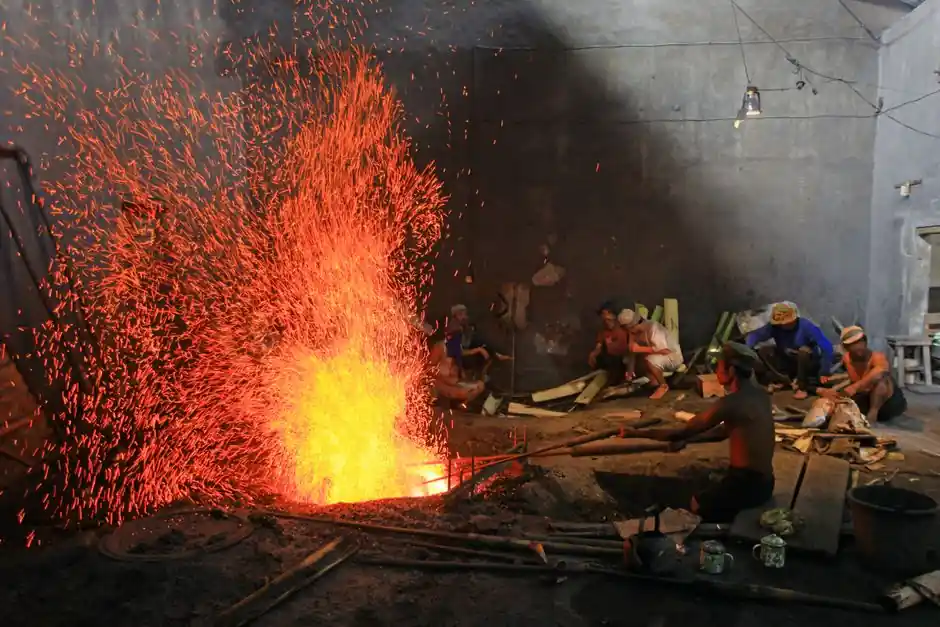
A conventional cupola can deliver approximately 1–30 t/h of molten metal, but hearth depth cannot be selected from diameter and nameplate output alone [S5].
Melting rate depends on the metal-to-coke ratio, blast rate, furnace geometry, charge condition, and operating mode; these variables must be resolved before the hearth is dimensioned [S1][S6].
What Cupola Hearth Depth Controls
The hearth is the lower collection zone where molten iron accumulates beneath the melting zone, above the taphole and slag hole. Its usable depth determines the working metal inventory that can be held between interruptions to charging and tapping, rather than serving as a simple volume rating [S5][S6].
Cupola melting is continuous: coke burns at the tuyeres, hot gases rise through the descending charge, and melted metal drains into the hearth for tapping [S4][S5]. Most conventional units use a drop-bottom arrangement with hinged doors beneath the hearth, allowing the bottom to be removed after a melting campaign for cleaning and repair [S5].
The distinction matters during capacity checks. A 30 t/h furnace is not guaranteed to melt 30 t in one hour because startup, charging, metal inventory, tapping, and the required heat balance determine the sustained rate. A furnace with ample hearth depth may tolerate short interruptions, while a shallow hearth reduces the buffer between continuous production and tapping demand.
Capacity Bands for Initial Sizing
Typical internal cupola diameters of 450–2,000 mm support melting rates of approximately 1–30 t/h [S5]. A separate foundry reference describes small cold-blast units as operating at about 2–10 t/h [S4], so furnace size alone does not define the production class.
Documented small-furnace designs provide two useful lower-capacity reference points: a 0.5 t/h design optimized around a nominal 500 kg/h melt rate [S3], and an industrial design with a stated melt rate of about 350 kg/h [S7]. These values show that geometry, charge preparation, blast equipment, and operating design must accompany any rate selection.
For preliminary comparison, a cold-blast unit of 2–10 t/h can be evaluated against conventional designs of 1–30 t/h [S4][S5]. This is only a screening range, not a guarantee. The final capacity case should state whether the quoted rate is nominal, peak, or sustained, and whether it excludes charging, tap-to-tap, and cleaning time.
Compare the Main Capacity Options
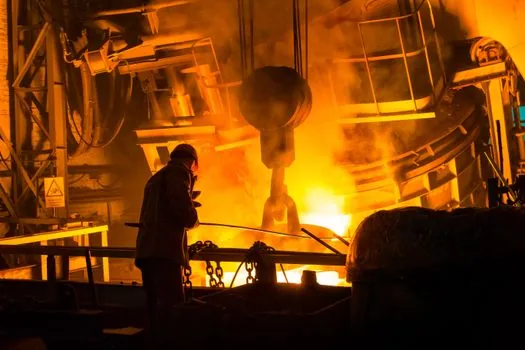
Cold-blast cupolas generally suit smaller melting duties of about 2–10 t/h, while hot-blast systems are better suited to higher output, greater scrap flexibility, and more controlled spout temperature [S4]. The hot-blast arrangement preheats blast air to approximately 400–600°C by burning the CO-rich exhaust gas in a recuperator [S4].
Against output, cold-blast cupolas offer furnace efficiency of about 60% but are uneconomical as superheating units and can struggle to reach high spout temperatures [S4]. Hot-blast units improve thermal economy, permit more scrap steel, and produce a relatively high and more consistent spout temperature [S4].
Against operating complexity, cold-blast operation has fewer heat-recovery components, while hot-blast operation adds recuperation and hot-blast equipment. The cupola furnace reference class is therefore not a single machine: blast temperature, recovery efficiency, and charging practice materially change the result.
Against charge tolerance, cupolas can process contaminated, dirty, oily, painted, mixed, loose, low-density, and zinc-coated scrap more readily than electric furnaces, which generally require cleaner, denser, homogeneous charge [S2]. That flexibility supports iron foundries using low-grade scrap, but it does not justify a larger hearth unless the steel shell, refractory, tuyeres, blower, and tapping system are matched.
Why Hearth Depth Does Not Equal Melt Rate
The melting rate of a cupola is dependent on the metal-to-coke ratio and blast rate [S6]. A deeper hearth increases liquid-metal storage, but it does not increase the rate at which the combustion zone can supply heat. Undersizing the combustion and charging system can leave the hearth unable to accept the required iron flow.
Conversely, specifying a large hearth for a low duty can create excess thermal inventory and greater exposure of liquid iron to the refractory zone. The design question is therefore whether the hearth can buffer the process at the selected output while preserving the intended tapping temperature and chemistry.
Charge composition also shifts the calculation. A charge made from pig iron, scrap steel, and foundry returns is not interchangeable with a uniform feed, and adding coke to compensate for poor charge preparation can raise slag generation and reduce process control [S5][S6]. The holding furnace option can separate melting from short-term stock control, but it adds equipment, energy, and capital rather than increasing cupola melt capacity itself.
Process Variables That Can Overrun the Hearth
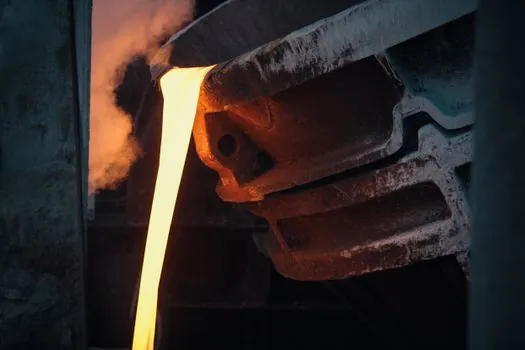
Blast rate and coke quality are the primary operating variables [S4][S6]. Coke quality and combustion reproducibility directly influence heat generation, while the metal-to-coke ratio determines the balance between fuel input and metal throughput. Variation in either can leave residual charge, alter slag volume, or reduce the rate of usable liquid iron.
Hot-blast operation also changes the thermal geometry: the melting zone lies closer to the nozzles than in a cold-blast cupola [S4]. The hearth must therefore be evaluated together with the active combustion zone, rather than with total shaft height as a proxy for melting capacity.
Environmental control adds another constraint. Cold-blast furnaces commonly release a CO-rich exhaust stream, and secondary air above the melting zone plus oxygen injection can reduce energy consumption [S4]. Dust handling commonly uses washers and fabric filters [S4]. A higher nominal melt rate without adequate gas-cleaning and heat-recovery capacity can make the furnace unusable at its design point.
For operating discipline, the oxygen enrichment of cupola blast provides a relevant comparison because blast enrichment affects both melt rate and tapping temperature, the two variables that can be confused with hearth capacity.
Specify the Duty Cycle Before Ordering
A defensible hearth-depth request should define required metal output in t/h, operating hours per day, campaign duration, charge types, acceptable spout-temperature range, allowable chemistry variation, tapping cadence, and the intended slag volume. It should also distinguish sustained production from the first-hour rate after startup. [S5]
Then require the supplier to show the bridge from capacity to geometry. At minimum, that calculation should identify furnace diameter, hearth depth and diameter, usable metal volume, tuyere area, blast rate and pressure, blast temperature, metal-to-coke ratio, expected coke rate, and tapping cycle [S5][S6]. A claimed 0.5 t/h, 350 kg/h, or larger output should not be accepted without the operating assumptions behind it.
For high-tonnage iron production with dirty or mixed scrap, cupola melting remains a practical option: cupolas represented approximately 32% of U.S. foundry iron production, or about 4.7 million tons per year, in the 2025 comparison [S2]. For frequent grade changes or tight superheating requirements, the operating disadvantages of cupolas include limited short-notice grade changes and limited superheating capability [S8].
The practical rule is straightforward: size the hearth as the process buffer, then prove that the blast, coke, charge, and combustion-zone design sustain the required tonnage. Track blast rate, coke-to-metal ratio, spout temperature, slag volume, and metal level during commissioning; stable values at the target output are stronger evidence than a nameplate capacity.