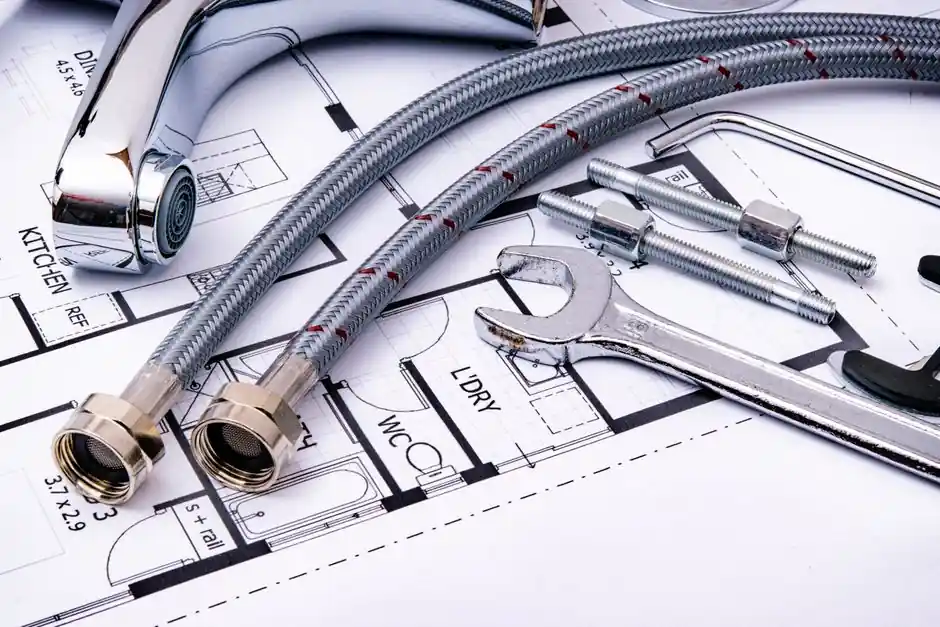
Cut-off machine selection for plumbing installation is driven by four numbers: pipe outside diameter, wall thickness, pipe material, and cuts per shift; these four values decide whether an abrasive chop saw, a cold saw, or a band-type cutting machine is the right platform [S2][S3].
Plumbing rough-in typically cuts copper Type L and K (15–54 mm OD), thin-wall stainless (0.8–1.2 mm wall), PVC schedule 40 and 80 (20–100 mm OD), and PEX or multilayer composite (16–32 mm); each material rewards a different blade geometry, tooth pitch, and coolant regime [S1].
Abrasive Chop Saw vs Cold Saw vs Band Saw: Decision Criteria
Three cut-off platforms dominate plumbing work: the handheld abrasive chop saw, the ferrous cold saw with a HSS or carbide blade, and the horizontal band saw for tube and structural pipe [S1][S5].
Abrasive chop saws run 230 mm bonded abrasive wheels, accept 1.4–1.8 kW universal motors, and reach blade speeds near 80 m/s; they cut copper, PVC, and thin steel in 2–4 seconds per section, but leave a heat-affected zone 1–2 mm deep on stainless and shed abrasive grit into the cut zone [S1].
Cold saws run 150–275 mm HSS or TCT blades at 30–60 rpm with blade speeds of 60–120 m/min, use a soluble-oil flood or mist coolant, and hold cut tolerance within ±0.1 mm on stainless and copper; the trade-off is a heavier floor-standing frame (60–150 kg) and a 0.75–2.2 kW geared drive that does not suit one-hand overhead work [S3][S5].
Horizontal band saws use a 0.9–1.5 mm bimetal band running 60–90 m/min, cut 15–150 mm OD tube with a kerf under 1.5 mm, and limit vibration on thin-wall stainless, but a portable 1.0 kW cordless band saw still has a limited run time on 50+ cuts per shift [S3].
Blade and Cutter Geometry by Pipe Material
Plumbing pipe materials split cleanly into three cut-off cutter families: carbide-tipped circular blades, diamond or abrasive wheels, and bimetal band-saw blades, and each family has its own tooth geometry rules [S1][S2].
For copper Type L and K, a 230 mm TCT blade with 60–80 teeth and a 0° rake leaves a burr-free cut, runs at 2,800–3,200 rpm, and tolerates feed rates of 30–60 mm/s; the same TCT blade with the same tooth count handles thin-wall stainless (0.8–1.2 mm wall) at 1,800–2,200 rpm with soluble-oil mist to prevent work-hardening [S1].
PVC and CPVC schedule 40 and 80 (20–100 mm OD) cut fastest with 230 mm abrasive aluminum-oxide wheels at 6,000 rpm, and 76 mm ID toothed steel blades should never be used on plastic because they chip the ID and create a stress riser at the socket [S2].
PEX and multilayer composite (16–32 mm OD) need a fine-tooth bimetal blade, 100+ teeth on a 150 mm disc, run at 1,200–1,500 rpm, to prevent the aluminum core from flaring; a 30-tooth rough-cut blade on the same tube pulls the aluminum away from the PE inner layer and creates a leak path [S2].
Motor and Drive Sizing for Repetitive Plumbing Cuts
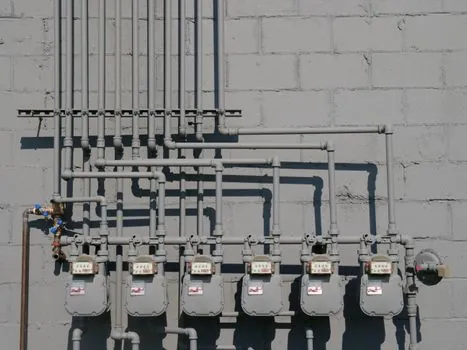
Motor sizing for a pipe cut-off saw follows a 2× rule: nameplate power should be at least twice the steady-state cutting load, with the cut-off machine sized for the peak, not the average, of the tooth-engagement cycle [S3].
A 1.5 kW universal motor on a 230 mm abrasive saw handles intermittent copper cuts at 30 cuts per hour, but continuous 8-hour duty on stainless at the same rate demands 2.2 kW and a soft-start inverter drive to limit inrush to under 2× nameplate current [S3].
For automated line work, servo-driven cold saws with 1.5–3.0 kW BLDC motors and closed-loop current feedback hold cut tolerance within ±0.05 mm at 1,200–1,500 cycles per shift; induction motors on the same cut-off cycle need a 1.5× power margin because their torque droop at 50–60 Hz lowers the feed rate by 20–30% under load [S3].
Single-phase 220 V 50 Hz supplies still cover 90% of plumbing job-site work in residential work, while three-phase 380–400 V feeds are required for any cut-off machine drawing over 2.5 kW; running a 3 kW cold saw off single-phase without a rotary phase converter trips the supply within minutes of continuous duty [S3].
Coolant, Chip Control, and Job-Site Safety
Coolant selection is not optional on stainless and copper: dry abrasive cutting on stainless above 1.5 mm wall produces a blue heat tint that violates most potable-water-system acceptance criteria, and the cut-off machine must either run a soluble-oil mist at 0.5–1.0 L/h or be limited to under 4 seconds of engagement per pass [S1][S3].
Plumbing job sites also expose a machine safety chain that the cut-off selection must respect: blade guard interlock, two-hand control, and a no-load RPM limiter; a handheld abrasive saw without a clutch-rated wheel guard will over-speed a 230 mm wheel above 8,000 rpm and shatter it inside the operator's reach [S1].
Chip and swarf control drives the same decision: dry-cut abrasive saws spread iron-bearing grit and PVC dust over the entire work area, while a wet cold saw confines the swarf to a tray; for occupied residential plumbing rough-in, the wet platform is the only realistic answer because plastic and stainless dust are both respiratory hazards above 5 mg/m³ exposure [S3].
Hand-arm vibration on a 1.4 kW handheld cut-off saw sits at 4–6 m/s² under load, above the EU 8-hour A(8) exposure action value of 2.5 m/s², which limits operator time to under 2 hours per shift; a floor-standing cold saw or band saw drops that figure below 1 m/s² and removes the time limit entirely [S1].
When a Cut-Off Machine Is the Wrong Tool
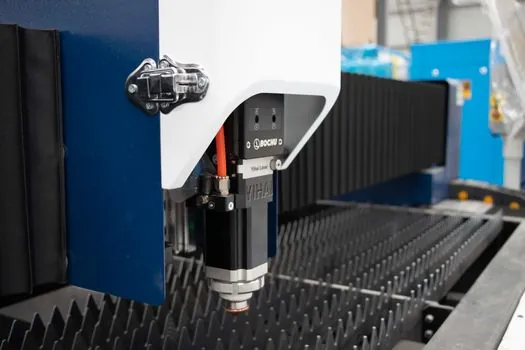
A cut-off machine is the wrong platform when the job calls for a hole in a finished surface, not a slice in a pipe; for faucet, valve, and supply-line openings in cabinets, sinks, and tile, a hole saw built for the substrate is the correct cutting machine family, and trying to use an abrasive cut-off wheel for that task produces oversized, out-of-round openings [S2].
For drywall, plywood, MDF, plastic panels, and stainless sinks, an M42 bimetal hole saw or a T.C.T. carbide-tipped hole saw is the right starting point; the same manufacturer also offers a diamond-tipped hole saw for tile and ceramic, which an abrasive cut-off wheel cannot match on cut quality or tool life [S2].
A handheld cutting machine is also the wrong tool for cast iron soil pipe above 75 mm OD: the abrasive wheel jams in the cut, the motor stalls, and the wheel chips; the correct tool is a snap-cut chain cutter or a dedicated cast-iron pipe cutter sized to the OD, used dry with a 1,000 W low-speed drill [S1].
Sourcing, Standards, and a Trackable Specs Check
Selection criteria for a plumbing cut-off machine converge on a short spec sheet: pipe OD, wall thickness, material grade, cuts per shift, duty cycle, and power supply; the platform choice (abrasive, cold, or band saw) and the blade family follow directly from these six fields, and any catalog that does not expose all six is missing a decision input [S1][S3][S5].
Continental and other OEM cut-off machine lines in the 2026 spec catalogs list HSS cold saws in 150–275 mm blade diameters, TCT cold saws in 200–315 mm, abrasive chop saws in 230–355 mm, and horizontal band saws in 1.5–4.5 kW nameplate ratings; matching one of those four families to the duty above is the entire selection problem [S5].
Trackable signals for the next review: 2026 EU Stage V handheld cut-off engine rules for gasoline abrasive saws, and any revision to ISO 1947 or ANSI B11.10 cut-off saw guarding clauses; both are open at the time of writing and will move the safety chain and the dust exposure thresholds quoted above. For a broader view of the power-tool class, see the rotary hammer vs demolition hammer decision guide.
Component reference pages worth checking: coding machine.