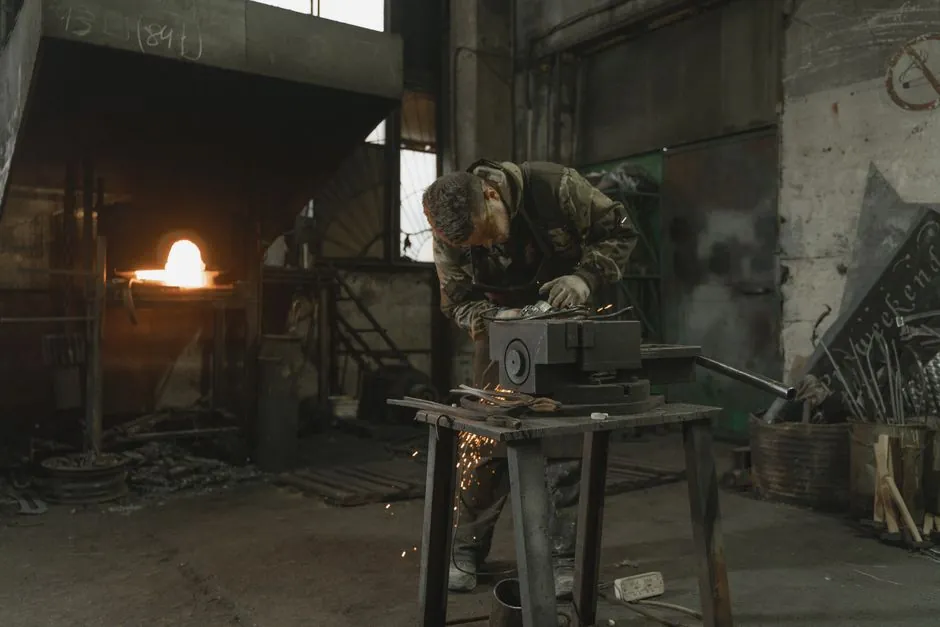
Rotary hammers and demolition hammers overlap on job sites but solve different problems: rotary hammers combine rotation with percussive impact for drilling masonry, while demolition hammers (also called breaker hammers) deliver pure axial impact for breaking concrete, asphalt, and tile [S5][S6].
Demolition hammers typically generate 15–75 ft-lbs of impact energy, roughly 4–10 times the per-blow energy of a general-purpose rotary hammer, and that gap is the single most important spec line in any spec sheet [S5]. Choosing the wrong category costs time on small chipping jobs and burns out tools on heavy slab breaks.
Defining the Two Categories by Mechanism and Chuck
A rotary hammer uses a pneumatic piston that drives a rotating chuck, accepting SDS-Plus or SDS-Max bits across a 1/2 in. to 2 in. drilling range, and most models switch between rotation-plus-hammer, hammer-only, and rotation-only modes [S5].
A demolition hammer (or breaker) carries the same piston concept but drops the rotation gearbox entirely, accepting only shank-style chisels (point, flat, scaling, asphalt cutter) in hex or SDS-Max shanks [S5][S2]. For task definition and bit-chuck classification, the rotary hammer and demolition hammer encyclopedia pages are the canonical reference.
Core Specifications That Drive the Decision
Three numbers decide almost every spec: impact energy, blows per minute (BPM), and weight. Champion Chisel's comparison puts rotary hammer impact energy at 1.5–20 ft-lbs and demolition hammer impact at 15–75 ft-lbs, with rotary hammer weight spanning 5–25 lb and demolition tools typically heavier still [S5].
BPM is the second key spec: the Cnmei Neng selection guide recommends 1000–2000 BPM for an electric demolition hammer, since below that range chipping rate drops sharply and above it vibration into the operator's hand-arm system rises uncomfortably [S7]. A 15-amp corded outlet covers most corded rotary hammers; large demolition hammers often require a 20-amp circuit or a pneumatic feed, which affects generator sizing on remote sites [S5].
Decision Matrix: Drilling, Chipping, or Both?
Use a rotary hammer when drilling is the dominant task, such as for anchor bolts, conduit penetrations, or rebar pilot holes, since rotary hammers combine rotational drilling with percussive hammering action and excel at creating clean, precise holes in concrete, brick, and stone [S5][S3]. For SDS-Max class tools, contractor reports cite 6.1 ft-lbs (Bosch) to 8.1 ft-lbs (Makita HR4013) as the working envelope for masonry chipping without a dedicated breaker [S4].
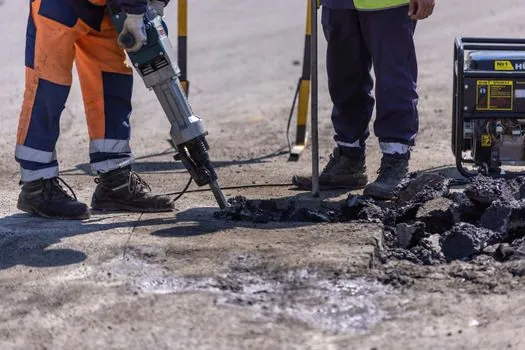
Use a demolition hammer when the task is at least 70% breaking: removing concrete slabs and foundations, breaking asphalt pavement, trenching through floors, or stripping mortar joints [S5][S6]. For heavy slab removal or foundation demolition, the higher impact class (50–75 ft-lbs) outperforms any rotary hammer per hour of work, even though it cannot drill a clean hole [S5].
Combination (combi) rotary hammers that switch to hammer-only mode cover the middle band: tile and mud-bed demo, light concrete chipping, plus drilling, and many electricians prefer one tool to two [S4]. For more on matching tool class to fastener or weld prep work, the mag base drill vs impact drill guide applies the same selection logic to drilling tools.
Bits, Chisels, and Shank Compatibility
SDS-Plus chucks cover rotary hammers up to about 1-1/8 in. bit capacity; SDS-Max starts at 3/4 in. shank and runs through 2 in. rotary hammer class and most demolition breakers above 30 ft-lbs [S5][S4]. A demolition hammer will not accept a standard SDS drill bit, and a rotary hammer drill mode will not deliver the axial-only blow a chisel needs for fast concrete breakup, so the shank spec must match the planned bit inventory before purchase.
Bit life in rebar-laced concrete is a separate constraint: contractor field reports note that core bits work in block and brick but slow significantly in reinforced concrete, and hitting rebar with a forced feed burns the diamond or carbide edge [S3]. For adjacent tool specs that share the same site, the pneumatic nail gun types and classifications reference maps a different fastening tool family against the same shank-and-duty logic.
Power Source, Vibration, and Site Constraints

Corded 15-amp rotary hammers dominate the prosumer and small-contractor tier; cordless 18V/36V platforms (M18, LXT, FlexVolt) handle light chipping but eat batteries fast on sustained demo work, with field users reporting the corded SDS-Max as a clear productivity step up over battery SDS-Plus for chipping [S3]. Demolition hammers above 30 ft-lbs are almost exclusively corded at 15–20A or pneumatic on commercial sites [S5].
Vibration and dust: high-BPM demolition work (1500–2000 BPM) accelerates hand-arm vibration syndrome (HAVS) exposure, so spec writers should pair tool selection with anti-vibration gloves and rotate operators. Chisel sharpening intervals also matter, since a dull point can double effective vibration energy transferred to the operator [S7].
Limitations and Common Mis-Selections
Putting a rotary hammer on continuous slab-breaking duty overheats the gearbox, since the rotation clutch is not designed for the sustained axial load, and field reports show chipping tasks drain rotary hammer batteries 3–4× faster than matched drilling tasks on the same pack [S3]. Conversely, a demolition hammer cannot drill an anchor hole: without rotation, a bit will not cut a clean cylinder, and the operator ends up hammering a chisel into a round hole, a slow and bit-destroying approach.
Refurbished OEM tools (Bosch, Makita, Hilti, Milwaukee) are a common mid-tier path, with specialist dealers such as Tyler Tool and Acme Tools cited as alternate sources [S4]. The same total-cost thinking applies across tool categories, as mapped in the sander total cost of ownership spec model.
Selection Checklist for a 2026 Spec Sheet

Match by impact energy class first (1.5–20 ft-lbs rotary vs 15–75 ft-lbs demo), then by shank (SDS-Plus, SDS-Max, hex 1-1/8 in., hex 1-1/4 in.), then by power (15A corded, 20A corded, 18V/36V cordless, pneumatic), and finally by BPM band 1000–2000 for electric chipping [S5][S7].
Trackable signals: SDS-Max combi hammer launches in the 8–10 ft-lbs range keep narrowing the productivity gap with dedicated breakers for tile and mud-bed work, and 18V/36V cordless demolition-class tools remain the most-watched 2026–2027 product category, with corded models still setting the bar on per-hour cost for sustained slab removal [S5][S3].
The underlying component specifications are covered under aerial work platform.