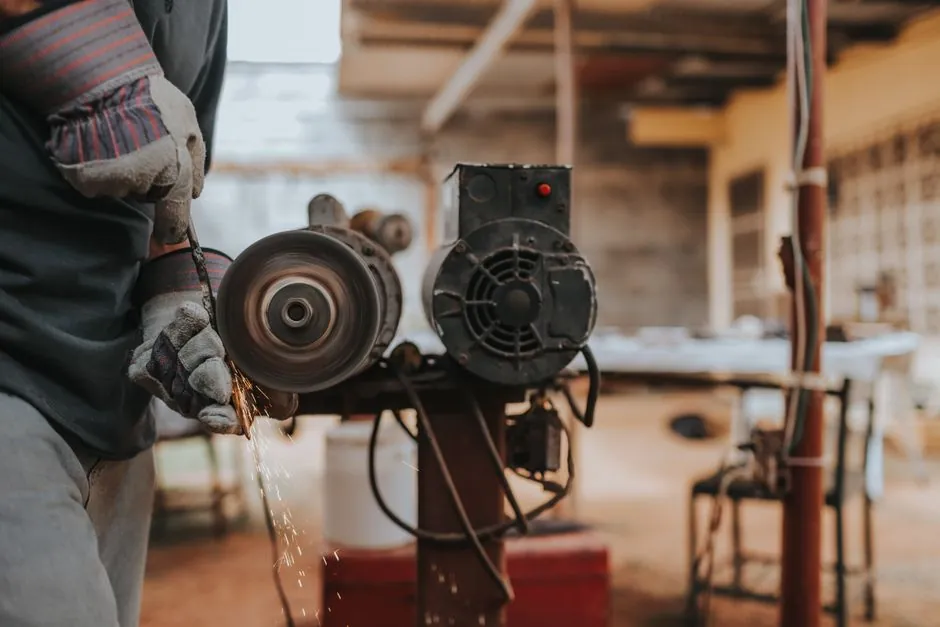
A cut-off machine spark shield must cover the operator-facing side of the wheel with 180-degree coverage and direct sparks, dust, and cut material away from flammable surroundings [S3][S5][S2].
The placement applies to portable and fixed abrasive cut-off equipment operated on metal or masonry, with PPE, wheel guarding, workholding, and machine-specific instructions forming the wider safety control set [S2][S4][S5].
Where the Spark Shield Belongs
The wheel guard must sit between the operator and the cut-off wheel, with the wheel and work zone positioned so sparks travel away from the operator, bystanders, and combustible materials [S3][S1][S2].
A grinder-style guard does not provide the required coverage when fitted with an F41 flat cut-off wheel or F42 depressed-center cut-off wheel. A cutting guard with half-moon-shaped 180-degree coverage is specified for those cut-off applications [S5].
Adjust the guard rather than rotating the cutting line to compensate for poor orientation.
For a fixed saw, anchoring the machine prevents movement during operation, while guarding remains correctly installed and adjusted [S4]. Portable equipment should be oriented in the work area before the wheel is started, with bystanders, children, and animals excluded from the operating zone [S1][S2].
Cutting Guard, Face Shield, and PPE Compared
The cutting guard is the machine-mounted barrier against wheel fragments and the primary control for spark direction. A face shield provides secondary protection and does not replace the guard [S4][S5].
This comparison defines the hierarchy: machine guard first, then face shield, then eye protection. A face shield worn without safety glasses or goggles leaves the eye exposure uncontrolled [S4].
Machine Setup and Work-Zone Controls
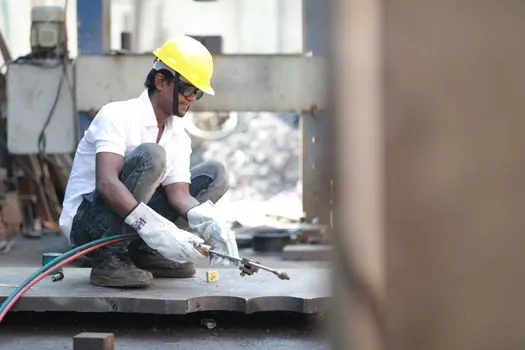
Machine orientation is a physical control, not an administrative instruction. Position the cut-off machine so its spark stream travels toward an area without flammable objects, and keep the shield adjusted for the wheel diameter, cut direction, workpiece, and operator stance [S1][S2].
Before a test cut, remove or protect combustibles in the immediate area. Do not rely on PPE to control fire risk because spark ignition and inhalation exposure are not controlled by personal protective equipment [S4].
Secure the workpiece in a vice or clamp so it cannot move, bend, or roll during the cut. Movement can twist the wheel, create pinch conditions, and lead to fragmentation [S5].
Inspect the wheel and tool before use, replace wheels with cracks or other damage, and jog the tool for a few seconds to verify that it runs true [S5]. Never flex the wheel, force it through a cut, or use a cut-off wheel for grinding unless the wheel is specifically marked for both operations [S5].
Guard Adjustment and Interlocking
A shield is effective only when it is properly mounted, positioned, and secured without interfering with the cut. A practical installation check covers attachment points, clearance from the wheel, operator-side coverage, movement under load, and interference with the workpiece [S6].
Movable shields that can be opened without tools should be interlocked with the machine control. This prevents the operator or another worker from opening the shield while the machine can still run [S7].
Do not modify the guard into a shape that leaves the operator exposed, and do not remove it to improve access. The safety check should confirm that the guard remains in its specified position after adjustments, that fasteners are secure, and that the workpiece cannot contact the shield [S6].
For machines whose controls and parts differ, use the manual for the specific model rather than transferring guard dimensions or operating instructions from another cut-off machine [S2].
Operator Protection Around Cut-Off Machines
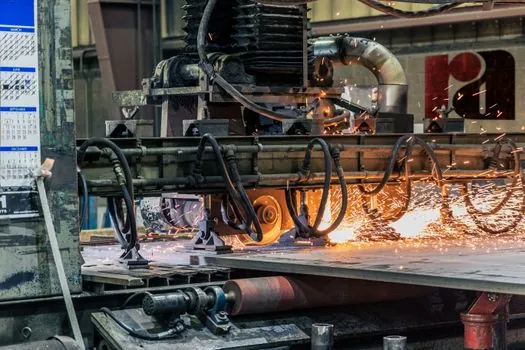
A cut-off operation presents eye, face, foot, hand, hearing, dust, and spark-fire hazards. The recommended protection set includes safety glasses or goggles, a face shield, hearing protection, safety shoes or boots, and suitable respiratory protection where dust requires it [S4][S5].
For an abrasive cut-off saw, the face shield is secondary protection and must be worn over safety glasses or goggles [S4]. The face shield limits the exposed face and upper-body area but does not eliminate the need for safety glasses.
Do not run the machine unattended, operate while fatigued or impaired, or permit untrained users to operate it without practical instruction [S2].
Common Placement and Compliance Failures
Use the correct cutting guard for the cut-off wheel, orient the machine so sparks travel away from the operator toward areas free of flammable objects, and keep combustible material out of the spark path [S5][S1].
A fourth failure is treating the face shield as the main barrier. The face shield is secondary protection, while the cutting guard supplies 180-degree operator-side coverage for suitable cut-off wheels [S4][S5].
Fifth, a damaged or flexed wheel can fragment because of cracks, side loading, excess pressure, or a moving workpiece [S5]. Guard placement cannot compensate for an unsuitable wheel, poor mounting, or an unsecured workpiece.
The verification record should include the machine model, wheel type, guard type, guard position, spark direction, operator stance, flammable-material clearance, PPE, and test-run result [S2][S3][S5]. Before work resumes after a guard adjustment, repeat the functional check and confirm that no shield component interferes with the wheel or cut [S6].
Track two practical signals at each setup: confirm that the operator remains behind the shield with sparks moving away, and document that the 180-degree cutting guard or its machine-specific equivalent is fitted and adjusted before wheel start-up [S2][S3][S5].