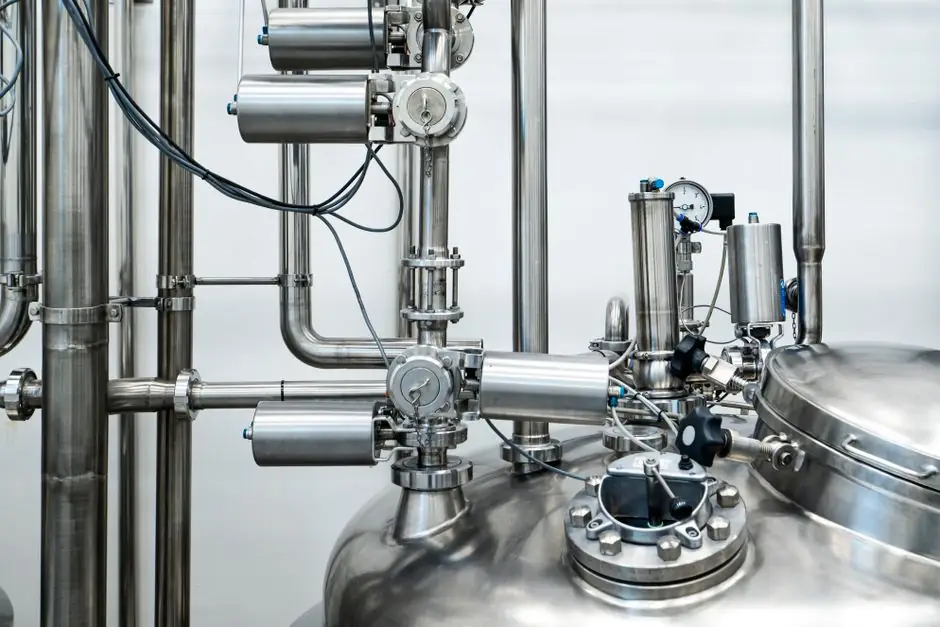
Cycloidal reducers land in food plants on high-torque mixers, frequent start-stop conveyors, and variable-load packaging lines, where their multi-pin rolling contact handles shock loads that would score a standard helical or worm reducer [S1][S2].
Food-grade builds require stainless or coated housings, food-grade lubricant, sealed output shafts, and a mounting envelope that survives daily washdown [S1].
Where a Cycloidal Reducer Earns Its Slot in a Food Line
Cycloidal gearboxes use one or two cycloidal discs driven by an eccentric input shaft inside a fixed ring of hardened pins, so the load is shared across many simultaneous contact points instead of one or two gear teeth [S2][S3]. The mechanical result is high reduction ratio in a single stage, strong overload capacity, and minimal backlash, which is why servo-driven packaging, robotic pick-and-place, and frequent-start conveyors all lean on this family [S4].
For food plants, the cycloidal reducer maps cleanly onto three duty profiles published by gearbox suppliers: high-load mixers with high startup torque and continuous duty, frequent start-stop machines such as indexing conveyors and fillers, and variable-load processing equipment where viscosity and batch size swing the torque demand minute to minute [S1]. The compact coaxial footprint is a real win in skids where a right-angle planetary reducer would force redesign.
Efficiency, Ratio, and Thermal Budget: the Real Numbers
A 30:1 cycloidal stage at 87% efficiency loses more energy as heat than a two-stage helical at 97%, so continuous-duty mixers at low speed need a thermal check, not just a torque check.
Single-stage reduction ratios commonly span 11:1 up to 119:1 in standard catalogues, with two-stage stacks reaching 7,000:1 or higher for slow-speed agitator drives [S2][S4]. Shock-load capacity typically reaches 200% of rated torque for short transients, which matters for dough mixers hitting a cold mass and conveyors indexing under a slug of product [S2]. Efficiency and ratio together set the motor sizing rule: specify motor kW for the worst-case load, then add the gearbox losses, never the other way around [S5].
Selection Criteria: Eight Parameters That Drive the Decision

Food-line gearbox selection is a multi-axis problem, and treating it as a single horsepower number is how plants end up replacing gearboxes inside the warranty window [S5]. The parameters that actually decide between a cycloidal, helical-bevel, parallel-shaft, or RV reducer build are required output speed, running torque, startup load, continuous operation time, machine layout, cleaning environment, shaft connection, and maintenance access [S1].
Lay those eight against the duty profile and the candidates sort themselves. A vertical agitator in a sauce kettle wants K-series helical-bevel for right-angle drive and continuous-duty thermal headroom. A horizontal dough blender with shock loading wants a cycloidal or planetary build for the multi-pin torque path. A packaging conveyor running 16 hours a day at a fixed ratio usually wins on an R-series inline helical for efficiency, not on a cycloidal unit [S1]. Spec the gearbox to the worst-case duty, apply the real service factor for starts per hour and reversals, and document the basis on the drawing so the unit is not misdiagnosed at first failure [S5].
Comparison: Cycloidal vs Helical-Bevel vs Planetary vs Worm
For a food OEM choosing between the four common reducer families on a mixer or conveyor duty, the decision grid is roughly as follows, with efficiency from [S5] and the rest from [S1][S2][S4]:
Cycloidal: efficiency 85-95%, single-stage ratio 11:1 to 119:1, shock load high, backlash low, footprint coaxial compact, washdown build available, best for high-torque mixers, start-stop conveyors, robotic packaging.
Worm: efficiency 50-90% dropping with ratio, ratio 5:1 to 100:1, shock load low, footprint right-angle compact, best for low-duty, low-cost indexing where efficiency loss is acceptable [S4][S5].
Read the grid as follows: pick cycloidal when shock load or single-stage high ratio dominates, pick helical-bevel when continuous duty and thermal headroom dominate, pick planetary when servo accuracy and stiffness dominate (see also the articulated robot spec map for food and beverage for the servo-side context), pick worm only when budget and short duty cycle dominate. Efficiency loss is real money: a 10-percentage-point gap on a 5 kW continuous-duty mixer is roughly 0.5 kW of waste heat, 24 hours a day, every day.
Hygiene, Materials, and Washdown Constraints
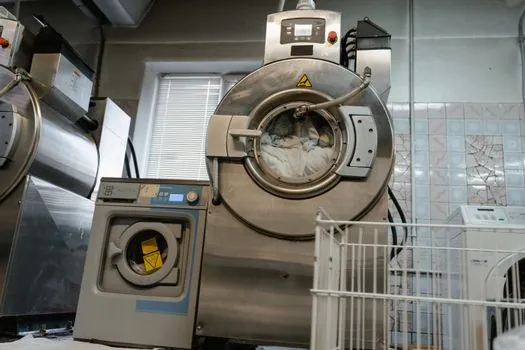
Food processing is harder on a gearbox than most general-industrial duties because the unit sits inside a washdown zone, sees caustic cleaning chemicals, and must not shed lubricant into the product stream. Supplier guidance treats cleaning environment, shaft sealing, and maintenance access as first-class selection parameters, not afterthoughts [S1][S5].
Practical specifications: stainless or epoxy-coated housing for direct washdown zones, food-grade H1 lubricant for any unit with a breather or seal near the product, sealed output bearings to keep cleaning fluid out of the gear cavity, and a smooth exterior without crevices that trap product residue. Hollow-shaft mounting (F-series) simplifies motor integration but needs a sealed shrink-disc or torque-arm cover to keep cleaners out of the shaft interface [S1]. Plan maintenance access at specification time, because gearboxes that cannot be sampled for oil condition or visually inspected never get sampled or inspected, and that is how a small seal leak becomes a full housing replacement [S5].
Failure Modes and Limits to Plan Around
Cycloidal designs are robust but not immortal, and the failure modes that show up in food plants are predictable. Sustained overload scores the cycloidal disc profile, cyclic under-spec shock loads spall the output bearings, and resonance from a misaligned coupling cracks the housing at the mounting boss after years of service [S5]. A unit undersized at the service-factor level does not announce itself on day one; it announces itself 18 months in.
Lubricant choice also matters: standard mineral oils can break down under repeated steam-cleaning cycles, so food-grade synthetics earn their premium on washdown lines [S1].
Sourcing, Standards, and Trackable Signals
Food-grade gearbox specification is governed less by a single standard and more by a stack: material compliance (FDA 21 CFR for indirect food contact, EU 1935/2004 for food contact materials in the EU), lubricant certification (NSF H1 for incidental food contact), and general industrial gear standards for rating and testing (ISO 6336 for load capacity, AGMA 2001 for rating). Verify the supplier's documentation on each of these before purchase, not at audit time [S1][S5].
Trackable signals for buyers between now and the next quarterly review: confirm whether the supplier publishes a duty-cycle derating curve for washdown ambient temperatures, whether the cycloidal disc material is a through-hardened chrome steel or a case-hardened alternative, and whether the unit carries a documented service factor for the actual starts-per-hour and reversals of the food line [S5]. For lines that include pick-and-place packaging, the articulated robot spec map for food and beverage covers the matching servo-side selection so the gearbox and the robot are not specified in isolation.