Industrial cyclone separators in 2026 are still specified by the same three numbers they were specified by 30 years ago: cut-size d50, gas-side pressure drop, and inlet dust loading — and the only meaningful change is that the wear-protection options have multiplied [S1]. Scheuch lists its mechanical/pneumatic centrifugal and gravity separators explicitly for the "simple removal of dust and pre-separation of particles from the exhaust gases created by combustion processes" [S1].
A cyclone is a no-moving-parts vessel: dust-laden gas enters tangentially, spirals down an outer vortex, turns up through the vortex finder, and exits clean. Particulates above the cut-size are thrown against the wall and discharged through the hopper. Operating principle has not changed, but the geometry choices — single vs dual inlet, cone vortex stabilizer, immersion-tube dual collection — drive efficiency by 10–25 % in published studies [S2][S6].
How Selection Criteria Map to Real Operating Numbers
A cyclone is not a filter; it is a pre-separator. A cone vortex stabilizer study on a sulfur-granulation cyclone showed that the geometry choice directly reduced particle escape from the cone body into the upward flow, raising grade efficiency without raising pressure drop [S2]. The practical implication: do not size a cyclone to hit a stack emission number — size it to drop a known percentage of mass above 10 µm, then put a baghouse or electrostatic precipitator behind it. Scheuch's product line explicitly bundles cyclones with downstream filtration in the same catalogue [S1].
For design purposes, the four inputs that govern everything else are: (1) actual gas volume flow in m³/h at operating temperature, (2) inlet dust loading in g/m³, (3) target cut-size d50 in µm, and (4) allowable ΔP in mbar or kPa. Cut-size and ΔP are linked — pushing d50 lower by halving the cyclone body diameter roughly doubles pressure drop. Allowable ΔP in upstream-fan-limited systems is typically 50–150 mbar; in process-gas service with blowers rated for higher static, designers go to 200+ mbar.
Geometry Options: Single Inlet, Double Inlet, Stabilizer, Dual Zone
Double-inlet (double-vortex) cyclone separators are commonly specified when the gas stream is split from a rectangular duct and the designer wants to keep the cyclone body cylindrical rather than oval. Numerical and experimental work on double-inlet geometries has mapped the velocity flow field and the resulting separation efficiency against single-inlet baselines [S4]. The trade-off is internal welding complexity and a longer body for the same throughput.
Cone vortex stabilizers are an internal fitment — a concentric cone inside the cyclone cone — that suppresses the short-circuit flow from the cone body back into the upward core. The published study showed separation efficiency rising as stabilizer dimensions were tuned, with the dominant mechanism being the reduction of particle escape from the cone body to upward flow [S2]. Specify this as a retrofit option on existing units where post-cyclone dust load is higher than the design value.
Dual-zone cyclones with static guide mechanisms use an immersion tube column surrounding the cyclone axis over the full separation height. The outer swirling flow discharges to a first solids hopper, the inner swirling flow concentrated inside the immersion tube discharges to a second hopper, and the patent text describes a controlled suction path that improves classification between the two zones [S6]. This is a higher-cost geometry, justified on abrasive or bimodal dust streams where clean separation of coarse from fine matters to downstream conveying.
Abrasion, Material Selection and Wear Protection
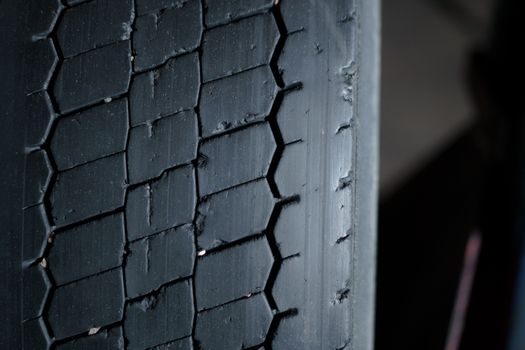
Erosive wear is the dominant failure mode in a cyclone, not corrosion. Scheuch flags "application-specific concepts to protect against wear" as a configurable option, which in practice means replaceable wear liners, basalt tiles, polyurethane coating, or Ni-hard castings in the cone and dust-hopper interface [S1]. For materials above 50 g/m³ inlet loading with sharp-edged particles (alumina, foundry sand, fly ash with unburned carbon), specify a minimum 6 mm replaceable liner in the lower cone — field data consistently shows the unprotected cone wearing through inside two operating campaigns.
Body material is usually carbon steel with internal lining; for corrosive service (chlorine-bearing off-gas, wet acid mist) specify rubber-lined or FRP. For high-temperature process gas above 400 °C, specify stainless or refractory-lined bodies. The 1980s-era US4257786A patent for an overflow pipe with a diffusion-type or spiral outlet end is a useful prior-art reference when negotiating with vendors on dust re-entrainment at the gas outlet [S5].
Sourcing: Vendor Tiers, Lead Time, and Quote Hygiene
The 2026 sourcing picture for cyclones is fragmented: Scheuch (Austria) sells heavy-duty industrial units for the gas industry with a typical DirectIndustry response window over five days [S1]. Indian suppliers including Mesotech Engineering Systems, Laxmi Air Control, Karyasiddhi Environmental Engineering, and Xinzheng Ruifeng Particle Equipment Factory all list cyclone separators as catalogue products on ChemicalBook, indicating active stock-and-build capacity at the smaller end of the size range [S3]. For OEM replacement and engineered-to-order units in the 10 000–200 000 m³/h range, expect 10–18 week lead time; for catalogue-class units under 20 000 m³/h, stock delivery is realistic.
Quote hygiene: confirm whether the vendor is quoting the cyclone body only, the cyclone with support steel and access doors, or the cyclone with integral hopper and rotary valve. Hoppers, rotary valves, and explosion relief panels are routinely excluded from "cyclone price" and added as line items. For comparison, see how the same scoping discipline applies to steam separator vs Y-strainer selection — the boundary between vessel and ancillaries is identical.
Integration With Downstream and Upstream Equipment
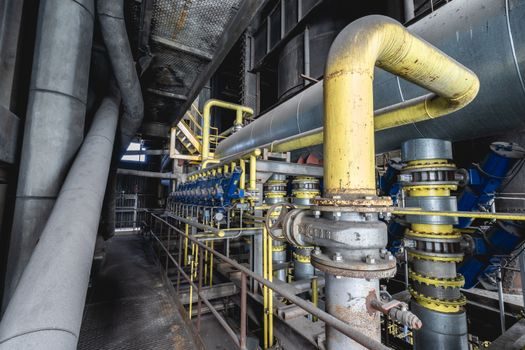
Pre-filter positioning matters: a cyclone in front of a precision filter or filter element stack extends element life by 3–10× because the coarse mass is removed centrifugally before it loads the media. Conversely, a cyclone behind a wet scrubber is largely redundant unless the scrubber is intentionally operated in by-pass. For upstream integration, a correctly sized cyclone lowers the dust burden entering an ESP and stabilises its rapping performance; an undersized cyclone shifts work onto the ESP and shortens its plate-cleaning cycle. [S1]
Process control linkage: cyclones do not need control loops, but their outlet ducting does. Specify a dust-loading sensor or opacity meter downstream if the unit is the final emission point; if downstream of a baghouse, an pressure transmitter on the clean-side plenum gives the operator a faster proxy for filter condition than the cyclone's own ΔP. Where a flow meter is already installed on the inlet, cross-trend it against the cyclone ΔP — a rising ΔP at constant flow indicates cone wear or hopper bridging before the stack opacity shows it.
Who a Cyclone Is For, and Who It Is Not For
Cyclones are for plants with: (a) high inlet dust loading above 5 g/m³ where a downstream filter is over-specified for the bulk mass, (b) abrasive or hot dust streams where filter media would fail quickly, (c) explosion-hazard dusts where the cyclone acts as a passive inline classifier upstream of a protected filter. They are not for plants that need sub-5 µm emission compliance from the cyclone alone — the cut-size of a reasonably-sized cyclone is 8–20 µm, and pushing below 5 µm requires an unreasonably small body diameter with unacceptable ΔP. [S2]
Final decision rule: if your compliance point is the cyclone outlet, you are buying the wrong equipment — buy a baghouse or ESP. If your compliance point is downstream of a secondary collector and you need to cut dust load and protect the collector, the cyclone is still the cheapest mass-removal device per m³ of gas handled, and the 2026 vendor landscape offers both engineered and catalogue options at the sizes most plants need [S1][S3].
Track two signals going forward: (1) whether EPA and EU Industrial Emissions Directive revisions tighten cyclone-outlet PM limits in the next revision cycle, which would force more dual-zone geometries [S6]; and (2) whether 3D-printed cone vortex stabilizers [S2] become a catalogue retrofit option at the small/medium end, displacing the current "weld a cone inside" custom approach.