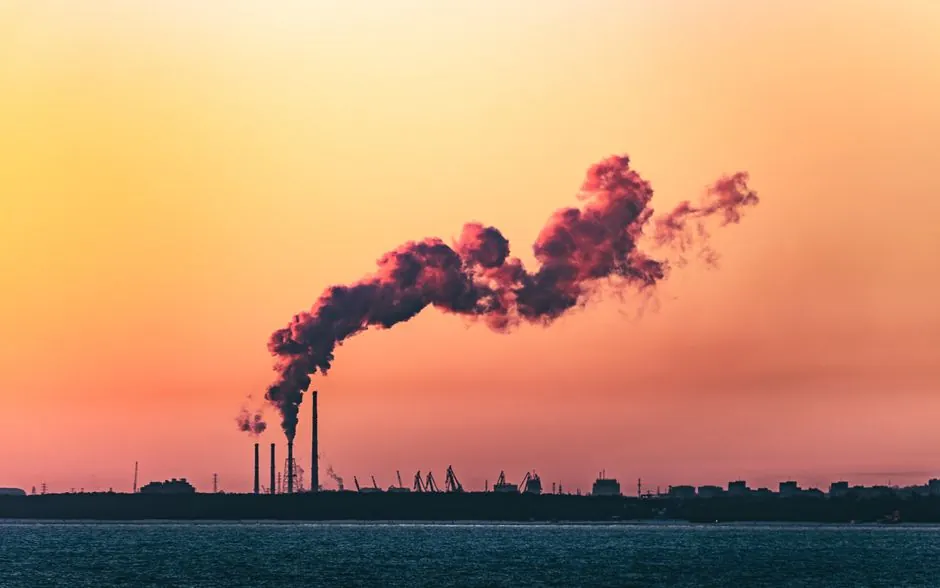
Operational direct air capture (DAC) facilities in 2026 are removing CO2 at $400–$600 per tonne on a first-of-a-kind (FOAK) basis, while modelled full-chain costs across the literature span $152–$1,000 per tonne depending on sorbent chemistry, energy source, and downstream transport [S5][S6][S1].
To remove gigatonnes of CO2 per year by 2050, analysts converge on a sub-$100/tonne target, a number originally set in US policy and now adopted globally as the affordability benchmark, even though no commercial plant has yet hit it [S8][S4].
What 2026 DAC actually costs: range, drivers, and FOAK vs NOAK
Cost estimates for DAC sit between $152 and $398 per tonne in the latest Carbon180 assessment, adjusted for inflation, while July 2026 analysis of operational plants puts FOAK capture costs at $400–$600/tonne before transport and storage [S1][S5]. A Kashtan et al. 2026 modelling study spanned $100–$1,000/tonne, with the upper end calibrated to observed commercial pricing [S6]. The 2026 commercial market review from Enki.AI flags $600–$1,000/tonne at the high end of operating plants, with a $300–$600/tonne band more common at newer sites [S9]. The wide spread is driven by sorbent type (solid amine functionalised supports vs liquid potassium hydroxide vs alkaline carbonate slurries), energy mix, capacity factor, and whether the figure is capture-only or full-chain including compression, transport, and geologic sequestration. The IEA's 2022 baseline concluded that deployment and innovation could bring capture costs below $100/tCO2, a trajectory FOAK data has so far only partially confirmed [S4].
Cost-driver breakdown: energy, sorbent, capacity factor, and storage
Energy dominates the levelised cost: theoretical minimum power for 1 Gt/year of DAC equals almost 10% of total US electricity generation, with real-world consumption pushing that to roughly 30%, or about 180 new 1,000 MW nuclear reactors if powered by nuclear alone [S3]. Wind/solar paired with battery storage would cost on the order of $4 trillion for the same removal rate, on top of new high-voltage transmission [S3]. Sorbent lifetime and replacement cadence is the second-largest cost line: solid sorbents degrade with thermal cycling and steam stripping, while liquid KOH systems consume water and reagent. Capacity factor matters because DAC fans and contactors must run near-continuously to amortise capex; a 90% vs 60% capacity factor typically shifts levelised cost by 20–35% in published models [S6]. Downstream transport and Class VI well injection add $10–$50/tonne depending on pipeline distance and sequestration hub availability, and a December 2025 RGGI auction cleared at $26.73/tonne, illustrating the gap between compliance market pricing and DAC's actual cost [S3].
Subsidies, social cost of carbon, and the $100/t target

Current US federal subsidies reach $180/tonne for DAC, against operational costs that still sit 2–5x above that level, so subsidy plus compliance revenue is still short of breakeven at most sites [S3]. Using the social cost of carbon as a benchmark, even $300–$500/tonne DAC systems can deliver net benefits, but only if the captured tonne is verifiably permanent and additional [S2]. The $100/tonne target is best read as a cost-curve aspiration: Mission Zero's February 2025 analysis flags it as a US policy artefact that has been globally adopted without grounding in delivered commercial data [S8]. For a process engineer, the useful number is the cost-curve slope, not the headline target: published learning rates suggest each doubling of cumulative deployed capacity trims capture cost by 10–20%, but only with sustained deployment, not pilot projects [S4][S1].
Comparison: solid sorbent vs liquid solvent vs hybrid DAC
Solid sorbent DAC (amine on porous support, Climeworks-style) typically posts $400–$600/tonne capture-only at FOAK, with lower thermal regeneration energy than liquid systems but shorter sorbent life and higher sensitivity to moisture [S5][S9]. Liquid solvent DAC (KOH/calcium hydroxide, Carbon Engineering-style) runs $150–$300/tonne at modelled scale, with longer contactor lifetimes but higher water and reagent throughput; this is the architecture most often cited in the $152–$398/tonne range [S1]. Hybrid and moisture-swing systems sit between the two on energy but introduce unproven long-term sorbent stability. On decision criteria: solid wins on modularity and water use, liquid wins on projected NOAK cost, and both lose to geologic sequestration-plus-utilisation pathways when CO2 is used in concrete or synthetic fuels rather than injected. For plant-level spec work, sorbent selection drives the flow meter requirements on the regeneration loop, the pressure transmitter range on the CO2 compression train, and the air quality monitor spec on the inlet contactor, since each architecture has a different thermal and chemical profile.
Use cases, limits, and where DAC is not the right tool
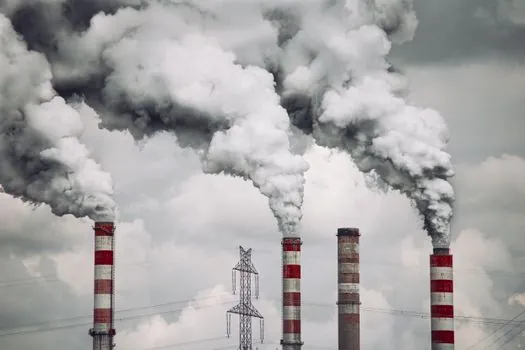
DAC is for hard-to-abate residual emissions where source reduction is impossible: aviation, cement, and certain chemical process streams, plus engineered carbon removal credits for voluntary markets [S1]. It is not for grid-scale decarbonisation, where direct electrification and renewables deliver a tonne of CO2 avoided for a fraction of the cost, and where wind/solar curtailment makes the energy opportunity cost prohibitive [S3]. Roughly 130 DAC plants were operating or planned as of 2026, with the largest single facility (Mammoth, Iceland) removing 36,000 tonnes of CO2 per year, a scale that is meaningful for proving the tech but vanishingly small against the 36+ Gt/year of global emissions [S1]. Storage risk is a real constraint: the NCEA cost-benefit analysis cites the 1986 Lake Nyos event in Cameroon, where a sudden CO2 release killed 1,700 people, as a non-trivial failure mode for billion-tonne underground injection [S3]. The 2026 ESI cost analysis adds that downstream transport and sequestration alone can double the delivered cost if no shared CO2 pipeline infrastructure exists near the plant [S5].
Market size, jobs, and where the cost curve is going
The global direct air capture market size is projected to grow from $91.21 million in 2026 to $4,256.21 million by 2034, according to industry forecasts [S7]. Carbon180 estimates at least 300,000 new jobs in construction, engineering, and manufacturing at full gigaton scale, against a $1 trillion addressable carbontech market for products made from captured CO2 [S1]. The IEA's pathway to sub-$100/tonne depends on three convergent moves: a 5–10x scale-up of installed capacity, a switch to dedicated low-carbon heat and electricity at every site, and shared CO2 transport and sequestration hubs to amortise downstream capex [S4]. A related industrial analogue is the closed-loop machining with in-process probing approach in discrete manufacturing, where instrumentation density drives cost down the same way continuous contactor monitoring will for DAC, and the spec-driven selection logic in PTFE vs compressed fiber sealing washers maps directly to sorbent loop gasket choices in liquid-solvent DAC trains.
Track the next 12 months for: (1) the first commercial disclosure of a NOAK capture cost below $300/tonne at a plant larger than 100 ktCO2/year, and (2) any revision to the US 45Q tax credit schedule that would lift the per-tonne DAC value above $180 and shift project finance math. Watch the IEA's next DAC tracking update and the Carbon Removal Standards organisation for verified delivery certificates that finally pin down real-world permanence.