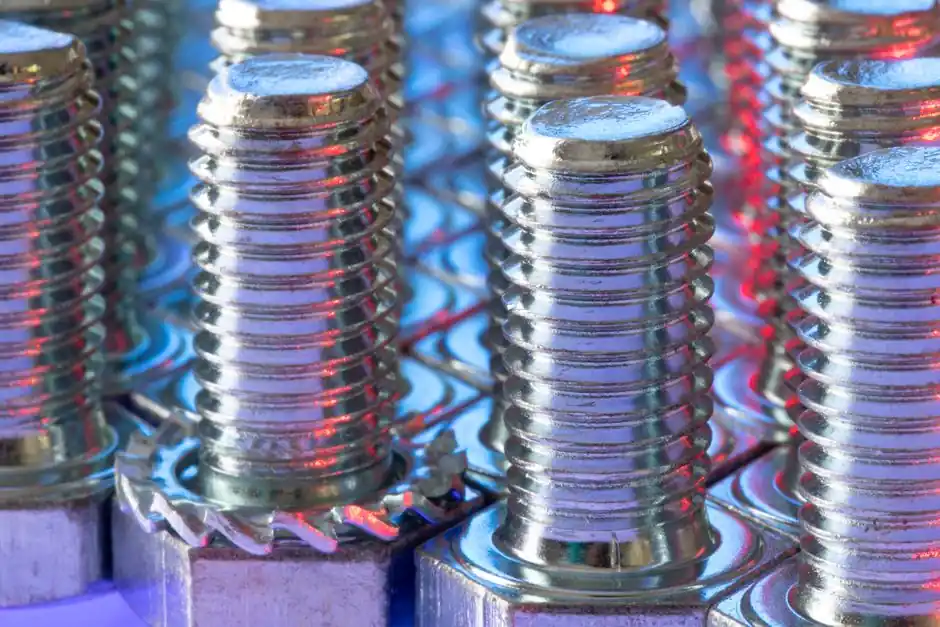
Data center builds concentrate mechanical, electrical, and plumbing (MEP) loads into thousands of post-installed anchor points in concrete slabs and walls, with fastener products securing server racks, raised floors, cable trays, and HVAC skids across the facility [S1]. The selection problem is not exotic: the dominant failure modes are wrong substrate match, undersized embedment, and missing cracked-concrete approval. Anchors for data center work fall into three mechanical families, friction (expansion), keying (undercut, screw), and bonding (adhesive), each with a distinct load-transfer mechanism defined in current anchor engineering literature [S3].
For specification writing, treat the anchor choice as a function of four inputs: base material (cracked vs. uncracked concrete, CMU, hollow-core plank), load type (tension, shear, combined, seismic), environment (interior conditioned, battery room, exterior pad), and serviceability (flush-mount requirement, removable vs. permanent). Material grade (zinc-plated carbon steel, Type 303/304/316 stainless) and corrosion class follow from the environment column, not the load column [S4].
Anchor Family Comparison: Friction, Keying, Bonding
Torque-controlled expansion (wedge) anchors develop capacity through radial expansion stress against the hole wall, with follow-up expansion adjusting for base-material cracking and load increases [S3]. They are the workhorse for heavy equipment: generator skids, UPS frames, transformer pads. Displacement-controlled drop-in anchors, by contrast, sit flush and rely on a setting tool driving an internal expander plug downward, forcing the body outward against the hole substrate over a defined distance [S4]. Screw anchors (concrete screws) and undercut anchors transfer load by mechanical interlock with the base material rather than friction, and undercut anchors are documented as the most robust solution for variations in base-material condition [S3].
Adhesive (bonded) anchors transfer load through the bond between adhesive, anchor element, and concrete, with hole-wall cleanliness governing capacity. Newer dual-action systems combine a concrete screw with a resin capsule shredded during installation, producing both mechanical interlock and adhesive bond in the cured state [S3]. For data center work, the family choice maps onto use case: wedge for structural tie-downs, drop-in for flush MEP supports where threaded rod will be installed later, adhesive or dual-action for rebar laps in slab thickenings and for high-cycle fatigue or vibration-sensitive attachments.
Selection Criteria and Hardware Sizing
Anchor diameter in data center work is driven by insert diameter and threaded rod acceptance. Standard drop-in anchors (Simpson Strong-Tie DIAB series and equivalents) accept 1/4 in., 3/8 in., 1/2 in., 5/8 in., and 3/4 in. threaded inserts, with hollow drop-in variants (HDIA) accepting a narrower 1/4 in. to 5/8 in. range and using a die-cast Zamac 3 alloy shell rather than steel [S4]. Internal threads are uniform national coarse (UNC) or coil-thread type, and the lipped top feature on drop-in bodies limits anchor position in the drill hole to enforce correct embedment depth [S4].
Embedment depth and edge distance are the two parameters that separate a passing installation from a tie-down that pulls out under seismic load. A 1/2 in. wedge anchor at 2-1/4 in. embedment behaves very differently from the same anchor at 3-3/4 in. embedment, and the deeper setting can roughly double tension capacity on the same substrate. Specifiers should require the manufacturer's published setting depth, edge distance, and spacing for the cracked-concrete condition, then derate by the actual job-site concrete compressive strength (f'c) if it is below the catalog baseline.
Material and Corrosion Class

Drop-in anchor bodies are commonly available in zinc-plated carbon steel for interior dry areas, and in Type 303, 304, or 316 stainless steel for corrosive exposure [S4]. The HDIA shell is Zamac 3 (zinc-aluminum-magnesium-copper) die-cast alloy, suited to light-duty MEP in hollow base materials [S4]. For data center environments, the typical spec is zinc-plated carbon steel inside the white space, Type 304 stainless in battery rooms and exterior generator yards, and Type 316 where chloride exposure (coastal sites, de-icing salt runoff) is documented. Washers and lock nuts, which carry the vibration-resistance load for cooling fans and HVAC equipment, are spec'd alongside the anchor to match the corrosion class [S1].
Forged or fabricated anchor bolts used in embed plates and column base plates for data center steel follow a different supply chain, with AISC-certified fabrication and hot-dip galvanizing as the typical finish for exterior and high-humidity zones [S2]. These cast-in-place items are specified at the structural drawing stage, while post-installed expansion anchors dominate the MEP and equipment contractor scope.
Seismic, Cracked Concrete, and Code Compliance
Cracked-concrete approval is the line that separates a defensible data center anchor spec from a rework. ICC-ES AC193 and AC308 are the acceptance criteria most U.S. specifiers cite for mechanical and adhesive anchors respectively, with seismic category ratings (A through F) stamped on the evaluation report. For data center work in Seismic Design Category C and above, require anchors with a cracked-concrete seismic listing matched to the design category. Unlisted anchors, even with higher static capacity numbers, are not acceptable for life-safety tie-downs on UPS modules, generator skids, or battery racks. [S1]
Combined tension and shear loads, the typical case for a generator skid under seismic acceleration, must be checked against the interaction equation in the evaluation report. A common spec note reads: "Provide post-installed anchors with ICC-ES ESR report demonstrating cracked-concrete capacity for Seismic Design Category D, with tension and shear values for the specified embedment depth and edge distance." That single sentence, tied to the project's structural drawing, eliminates the most common approval friction during commissioning.
Installation Quality and Field Verification
Published expansion performance assumes a clean hole, correct drill bit diameter, and hammer-driven or torque application to the manufacturer's specified installation torque [S3]. Field practice deviates frequently: oversized holes from worn bits, dust left in the hole, and under-torqued installations are the three failure modes that pull-out tests catch but visual inspection misses.
For facilities where future reconfiguration is planned (typical for hyperscale white space), drop-in internally threaded anchors allow threaded rod to be removed and reinstalled without damaging the substrate, while wedge anchors leave the stud captive [S4]. That single difference, flush plus removable versus flush plus permanent, often determines which anchor family the MEP drawings call out for cable tray supports versus equipment pads.
Failure Modes and Limits to Watch
Expansion anchors in tension on cracked concrete depend on the expansion force staying above the load that opens the crack. Torque-controlled designs include follow-up expansion to compensate, but displacement-controlled designs (drop-in) do not adjust for crack widening after installation [S3][S4]. In environments where thermal cycling or long-term slab deflection could re-crack concrete, torque-controlled wedge anchors are the more forgiving choice. Adhesive anchors tolerate crack movement as long as the bond does not degrade, but they lose capacity rapidly in fire unless a fire-rated formulation is specified, and the unevaluated condition (wet hole, cold-install below the product's published temperature range) is the most common field deviation.
Hollow base materials (CMU, hollow-core plank) reject expansion anchors that rely on full-depth engagement. Hollow drop-in variants (HDIA) are designed for this case, with horizontal embossments engaging the shell wall and a die-cast Zamac 3 body suited to light-duty MEP rather than equipment tie-down [S4]. For heavier loads on CMU, adhesive anchors with screen tubes or through-bolt with back-plate are the documented alternatives.
Trackable Signals and Related Spec Reading

For follow-on specification work, the next decision nodes are seismic category confirmation on the structural drawing, MEP support family standardization (drop-in vs. wedge) across construction documents, and torque-verification sampling rate. The same anchor selection logic is applied in adjacent cold-storage facilities, where temperature cycling dominates the substrate cracking analysis, and in cleanroom builds, where stainless wedge and drop-in choices dominate the spec because of corrosion and cleanability constraints, as laid out in cleanroom expansion anchor selection: stainless wedge, sleeve, and drop-in choices and expansion anchor selection for cold storage warehouses. For related fastener-family context, the alloy steel bar vs plate for forged components write-up covers the bar-stock side of structural anchor bolt fabrication. [S4]
Spec-level background on the components involved: expansion anchor, data logger, and chemical anchor.