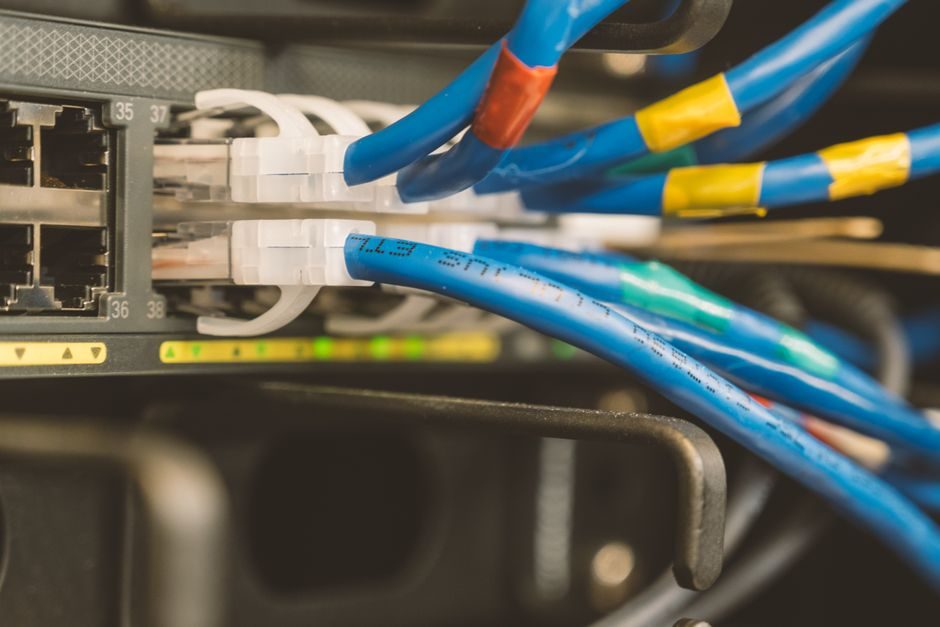
A modern data center is no longer a building with servers — it is a tightly engineered industrial system where power, pressure-sensor-driven coolant monitoring, software-defined orchestration and physical build standards are designed together, with the largest 2026 hyperscale builds specifying liquid-cooling-ready racks, ≥100 kW per rack densities and software-defined data center (SDDC) control planes on top [S1][S3].
For a process engineer reading this as a production reference, the useful frame is to split the facility into four production lines: electrical supply and UPS, thermal management, IT hardware manufacturing/intake, and software/orchestration stack. Each has its own spec gates, supplier base and failure modes.
What "Data Center Production Technology" Actually Covers
The term covers both the physical build of a data center facility (power, cooling, fire, structural) and the manufacturing-style intake of IT hardware plus the software stack that runs it. The physical layer follows ISO/IEC 22237 series for the facility itself and TIA-942 for telecommunications infrastructure, with Uptime Institute Tier I–IV defining availability targets from 99.671% (Tier I) to 99.995% (Tier IV) annually [S1].
On the IT side, production now means standardising on a software-defined data center (SDDC) — Red Hat's definition being the virtualization of compute, storage and networking with policy-based automation across all three, typically delivered through OpenShift or OpenStack control planes on RHEL or similar enterprise Linux [S3]. Hyperscale operators tie this to a hardware line of 19-inch rack deliveries pre-staged with compute sleds, fabric switches and busbar power distribution rather than point-to-point wiring.
The Four Production Lines Inside a 2026 Build
Line 1 — Electrical: medium-voltage feeder to a 2N or N+1 UPS bank, then to a PDU on the rack, with the UPS typically built around lithium-ion batteries and static-bypass architecture sized to ride through 10–15 minutes of generator spin-up. Distribution inside the white space has shifted from whip cables to overhead busbar (rated 100 A to 1200 A typical) to support rapid rack moves [S1].
Line 2 — Thermal: air cooling with hot/cold aisle containment is now the baseline; the 2026 step-change is direct-to-chip liquid cooling (D2C) and full immersion for AI training racks, where single-rack power has crossed 40 kW and is heading past 100 kW. Heat-recovery loops into district heating are specified on several 2026 European builds [S1].
Line 3 — IT hardware: GPU servers (NVIDIA H100/MI300 class in 2025; Blackwell-class arriving through 2026), high-radix 400/800 GbE fabric, NVMe-oF storage and 100% software-defined networking. The production-rate bottleneck is GPU supply and HBM memory throughput, not rack space.
Line 4 — Software/orchestration: SDDC, infrastructure-as-code (Terraform/Ansible), and AIOps for capacity planning. This is also where most of the operational "production" happens day to day, with operators tracking PUE, WUE and CUE in real time [S3].
Selection Criteria: What Drives a 2026 Spec Decision
Three decision gates dominate: (1) workload mix — AI training pushes density and cooling, traditional enterprise pushes VM consolidation; (2) availability tier — Tier III vs Tier IV changes UPS topology, generator count and concurrently maintainable design; (3) energy and water footprint — EU operators are now forced by the EU Energy Efficiency Directive (EED) recast, in force from 2024, to report PUE and to reuse waste heat above thresholds above 1 MW IT load, with national transpositions tightening reporting windows through 2026 [S1].
For brownfield retrofits the question is whether existing air-cooled flow-meter and chiller infrastructure can carry the new density, or whether a phased overlay of D2C cold plates on AI racks is the cheaper path. For greenfield, operators increasingly design for ≥40 kW/rack from day one and pre-install coolant piping above the rack, even if rows start air-cooled, to avoid later retrofit outage cost.
Comparison: Air Cooling vs D2C vs Immersion on 2026 Spec Gates
Air cooling with hot/cold aisle containment is the lowest-CapEx option, scales cleanly to 15–20 kW/rack with rear-door heat exchangers, and remains the right answer for general-purpose enterprise. Single-phase and two-phase immersion both go past 100 kW/rack but introduce a dielectric fluid inventory, fire detection re-design and a service-lift workflow overhaul. If the workload is dominated by GPU training, immersion has the best $/kW; for mixed enterprise plus inference, D2C is usually the lowest-risk path [S1].
For the orchestration layer, the trade is similar: a fully SDDC stack (OpenStack or VMware Cloud Foundation equivalent) gives policy-driven automation but needs a real platform team; a lighter Kubernetes-on-bare-metal plus infrastructure-as-code path (Red Hat OpenShift patterns) is faster to deploy and easier to staff, which is why it dominates mid-size 2026 builds [S3].
Who This Build Path Is For — and Who It Is Not
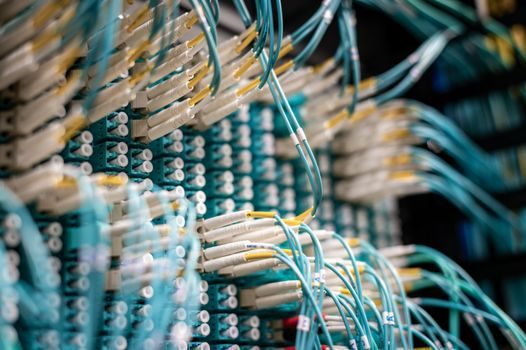
The Tier IV, 2N, full-immersion, heat-recovery path is engineered for hyperscalers, large colos and sovereign AI clouds where downtime cost runs into the six-figures per minute and 10-year TCO dominates over CapEx. It is the wrong shape for a 200 kW in-house IT room in a hospital, factory or university, where Tier II air-cooled, single-UPS, N+1 cooling on a small CRAH/CRAC plant is still the right answer and SDDC is overkill [S1][S3].
The SDDC layer itself is for organisations with multi-site footprints and a platform team. A single 6-rack closet should stay on a hypervisor plus documented runbooks, not on a full software-defined control plane, because the staffing cost of the latter exceeds the hardware saving. A common 2026 mistake is paying for OpenStack-class tooling on a build that never grows past 1 MW.
Standards, Suppliers and Real Failure Modes
Key reference standards: ISO/IEC 22237-1 to -5 (facility), TIA-942 (telecommunications), Uptime Institute Tier I–IV (availability), EN 50600 (the European equivalent) and ASHRAE TC 9.9 (thermal envelopes, with the A1 class running 18–27 °C, the current spec target for most 2026 builds). On the power side, IEEE 1188 covers VRLA, IEEE 1106 covers Ni-Cd, and IEEE 1676 covers lithium-ion batteries in stationary applications; switchgear follows IEEE C37 series [S1].
The failure modes that show up most often in 2026 incident reports are: coolant leak on D2C manifolds (caught early only if a pressure-transmitter loop is on every CDM and tied into BMS alarms, not just SCADA), busbar overheating on retrofitted overhead power, and HBM-bound GPU clusters idling because the SDDC scheduler cannot bin-pack a mixed-precision workload. Liquid cooling also reintroduces a data-logger requirement on every rack's inlet/outlet for warranty and for ASHRAE WUE reporting [S1][S3].
Build-Out Reference and Sourcing Signals
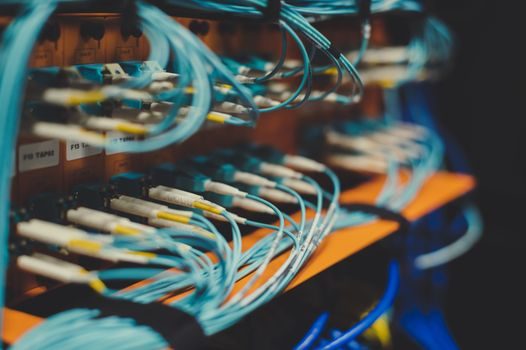
Hyperscale 2026 builds (Microsoft, AWS, Google, Meta and the European Gaia-X-class operators) are moving to prefabricated skid modules — the entire UPS-plus-switchgear-plus-coolant skid arrives factory-tested and is lifted into position, cutting on-site commissioning from months to weeks. The downstream effect on the industrial supply chain is that switchgear and chiller suppliers are the rate limiters, not the server OEMs — see the upstream materials picture in this site's Power Grid Supply Chain 2026 reference for context on tier-2 bottlenecks in transformers and busbar copper. New 2026 build spec sheets to watch: liquid-to-air CDUs rated 1–2 MW each, 800 VDC inside the rack (an emerging standard to cut copper mass), and BMS protocols converging on BACnet/SCADA dual-stack for brownfield interop [S1].
Two trackable signals for the next 12 months: ASHRAE TC 9.9's next revision work on wider A1 envelopes (driven by immersion), and the IEC SC 47D work item on standardised rack-level 800 VDC distribution. Either of those landing as a published standard will reshape 2027 specs the way the current A1 envelope shaped 2024–2025 builds.