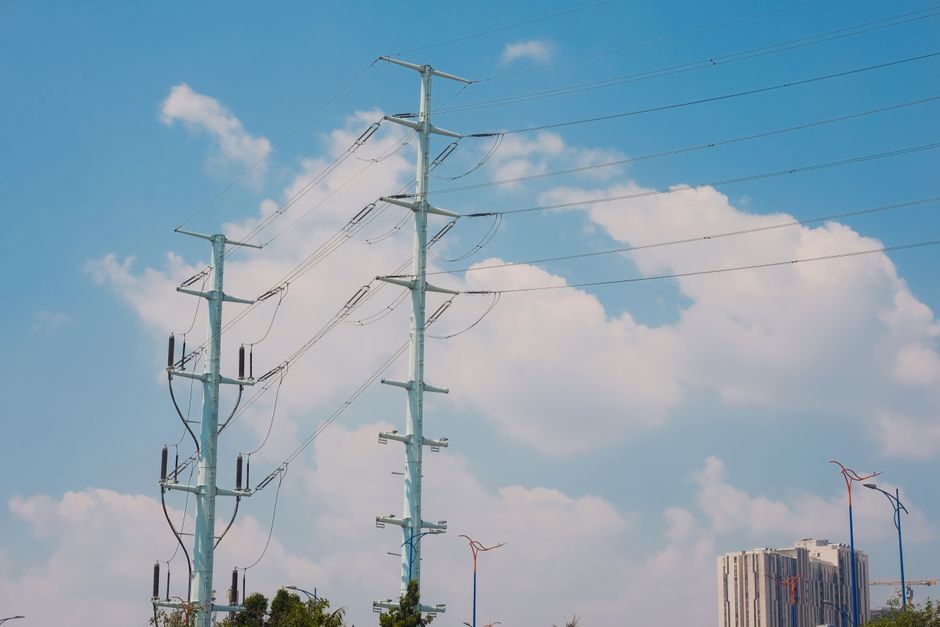
Three structural pressures now define a 2026 grid-equipment procurement cycle: transformer and HVDC converter queue depth (18-30 months at major OEMs), a structural shortage of grain-oriented electrical steel (GOES) and HV-grade copper conductor, and Scope-3 supplier disclosure that is moving from voluntary to tender-mandatory across European TSOs [S6][S7].
Pakistan's combined generation capacity of 38,719 MW (CPPA-G + K-Electric baskets, FY21 reference) is one of several reference points illustrating how downstream the supply chain reaches — every utility-tied procurement node, from step-up transformers to LV switchgear, now needs a documented carbon and tier-2 mineral trail [S3]. Buyer-side data tooling has matured alongside the pressure: PowerGEM continues to ship grid and energy-market simulation software for transmission planning, while 2026 supply-chain analytics platforms (SourceForge-reviewed: Market Inside, ImportGenius, Tendium) pull customs and supplier data into the same dashboards used for grid-equipment sourcing [S2][S6].
GOES and Copper: The Two Real Tier-2 Bottlenecks
GOES (grain-oriented electrical steel) and HV-grade copper remain the binding constraints on transformer production in 2026, and procurement teams that have not secured M-series GOES allocations are now quoted 24-30 month lead times from European and Korean OEMs [S6]. Domestic Chinese production of GOES has grown, but CRGO grades used in 400 kV and above step-up units are still concentrated in a small number of mills.
Copper conductor supply for HV/EHV cable and transformer windings is the second binding constraint. Cables above 220 kV use copper cross-sections that compete with EV traction-motor and windings demand, so a 2026 sourcing strategy that hedges between copper-tap and aluminum-conductor (for sub-132 kV distribution) is now standard practice rather than cost optimisation [S6].
HVDC Converter, Grid-Forming Inverter and BESS Queue Depth
HVDC converter-station lead times at major European and East Asian OEMs (ABB/Hitachi Energy, Siemens Energy, GE Vernova) extend 30-36 months in 2026, driven by thyristor/IGBT valve hall assembly, DC bushings, and converter-transformer slots [S6]. Grid-forming inverter (GFM) controls are now a separate qualification gate: GFM-capable BESS inverters are being tendered with explicit grid-code references rather than as an add-on, and the supply chain around firmware certification (type-testing at 1500 V DC, fault ride-through, synthetic inertia) is gating project COD dates.
For readers mapping related industrial spec gates, the Conveyor Chain Selection 2026: Four Spec Gates Before You Quote piece is a useful analog on how a tier-2 raw-material squeeze reshapes quotation gates, and the Silent Chain 2026 Price & Cost Guide: Pitch, Width and Material Cost Levers article walks through how pitch-and-width spec gates map back to material cost levers in a different chain family.
Scope-3 Carbon and Supplier Pre-Qualification: New Tender Pass-Fail
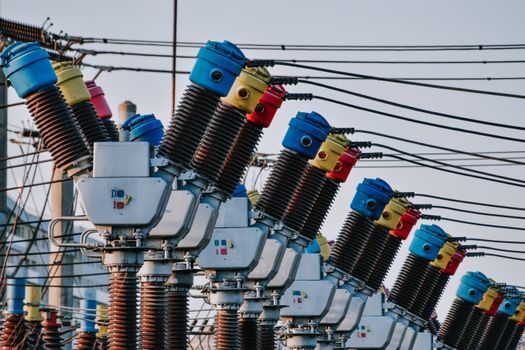
Research published on grid supply-chain carbon accounting, led by State Grid Jiangsu and Yingda Carbon Asset Management (Shanghai), formalises a supplier carbon-footprint evaluation along the chain — tracking procurement items through every production stage and quantifying management, social, economic and environmental value of the resulting reduction [S7]. The framework has moved from a 2015 research paper into a 2026 tender clause: European utilities, including those in Germany and the Nordics, now require product-level carbon-footprint disclosure at the bill-of-material level for transformers, HV cable, and switchgear.
For B2B buyers, the practical effect is a new pre-qualification step before technical evaluation. A 2026 supply-chain analyst role, as defined in current Coursera-aligned guidance, increasingly demands data-analysis, supplier-performance modelling, and data-governance skills — the same competencies that a 2026 supply-chain manager role (job description example: Thai facility, 2026 listing) requires for forwarder selection, warehouse utilisation, and inventory-accuracy oversight [S1][S4][S8]. The net effect is a procurement team that runs a carbon-and-tier-2 audit as a pass/fail gate before price negotiation.
Material and Voltage-Class Trade-Off: Copper vs Aluminum, Oil vs Dry-Type
A spec-versus-spec comparison is now the cleanest way to short-list 2026 transformer buys: [S1]
• Conductor: copper-tap for 132 kV+ and any unit feeding sensitive load (data centres, hospital) — typically 18-25% higher purchase cost but lower losses and higher short-circuit withstand; aluminum-conductor for sub-33 kV distribution where weight and cost dominate [S6].<br/>• Insulation: oil-immersed remains the default above 10 MVA and is required at 220 kV+ (dry-type resin cast is not available at that voltage class); dry-type (cast-resin, class F/H) is now standard for indoor sub-33 kV substation builds where fire-load and floor-loading matter [S6].<br/>• Steel: GOES is the binding constraint; NGOES is no longer accepted in major OEM 2026 BOMs for any unit above 5 MVA.<br/>• Sustainability: products with documented Scope-3 disclosure at transformer and HV-cable level are winning European TSO tenders; products without disclosure are being downgraded to back-up or non-critical lots [S7].
Who the 2026 Grid Supply Chain Is FOR — and Who It Is NOT
This supply-chain map fits EPC contractors tendering 132 kV+ substations, renewable developers needing GFM-BESS inverter slots, and utility procurement teams that must report Scope-3 — a cohort that has both the volume and the documentation depth to clear the new pre-qualification gate [S6][S7]. It is less useful for residential-grade solar inverter sourcing, where the binding constraint is certification (IEC 62109, IEEE 1547) rather than GOES or copper allocation.
For adjacent industrial spec work, the Electric Motor Suppliers 2026: Sourcing Map and Spec Benchmarks article and the Electric Motor Upstream and Downstream: 2026 Spec & Cost Map piece both use the same tier-2 mineral-tracing logic on a different but parallel BOM (winding copper, electrical steel, permanent magnets) — useful context for any procurement team that is asked to standardise supplier audits across transformer and motor categories.
Failure Modes and Constraints: Where 2026 Bids Get Rejected
The 2026 rejection reasons cluster around four patterns: missing product-level carbon disclosure (tender fail at pre-qualification), missing GFM certification for BESS inverters, single-source GOES allocation with no mitigation plan, and DC-bushing or converter-transformer slot missing from the OEM delivery schedule [S6][S7]. A bid that addresses all four in writing is now the entry bar; price competitiveness only enters evaluation after these pass.
A reference point: a transformer-bushing failure typically forces a 12-18 month replacement cycle, and 2026 utility-side spare-parts inventories have been thinned by just-in-time procurement — a single missing bushing can park a 220 kV unit for a season. Procurement teams that maintain a 6-9 month safety stock of critical spares now have a meaningful reliability advantage, even if the carrying cost draws audit attention [S6].
Sourcing and Standards Discipline
Reference standards that govern the 2026 grid supply chain are well-defined: IEC 60076 for power transformers, IEC 60840 / 62067 for HV/EHV cable, IEC 61850 for substation communication, IEEE 1547 for interconnect, and IEC 62933 for BESS. GOES grade is referenced in IEC 60404; cast-resin dry-type in IEC 60076-11. Buyers should match the BOM line to the clause rather than the marketing brochure. [S2]
Two trackable signals to watch through 2026 H2: (1) GOES allocation announcements and any new CRGO capacity coming online at Cleveland-Cliffs, ThyssenKrupp, or Baosteel — each materially shifts the 24-30 month lead-time band; (2) European TSO tender outcomes on HVDC converter stations, where the awarded OEM and converter-transformer sourcing trail are leading indicators for the 2027-2028 delivery schedule.
For component-level specifications, see dc power supply, switching power supply, and chain conveyor.