
Specifying raw inputs for hyperscale, colocation, and edge data centers now follows a five-family material map: silicon wafer substrates, copper conductors and busbar stock, aluminum heat-sink and chassis extrusions, rare-earth permanent magnets for cooling pumps and UPS rotors, and high-purity quartz/fused-silica glass for fiber preform and EUV-grade windows [S1][S3].
The decision a buyer faces is not "which metal" but which purity, temper, and audit-trail combination survives the OEM qualification audit at the lowest total cost of ownership — a question shaped by 2024-2026 supply shocks in electrolytic copper, NdFeB magnet rare earths, and high-purity quartz, all flagged as single-source risks on the Raw Material Outlook platform [S3].
Silicon Wafer and Substrate Spec Bands
Hyperscale-grade logic and memory fabs run on 300 mm Czochralski (CZ) monocrystalline silicon wafers, with prime-grade resistivity bands centered on 1-100 Ω·cm for CMOS and tighter 0.001-0.005 Ω·cm for heavily doped substrates, and oxygen concentration typically held below 14 ppma (old ASTM) to suppress thermal-donor drift [S1].
For power-conversion and UPS stages inside the data center white space, 200 mm and 150 mm wafers dominate, with float-zone (FZ) variants specified where minority carrier lifetime must exceed 1 ms — a band that rules out CZ material on cost-leader SKUs. Solar/edge micro-datacenter builds can drop to 6-inch (150 mm) multicrystalline off-cuts, but lose the binning yield needed for >99% uptime SLAs [S1].
Lead-time on prime 300 mm lots from qualified merchant suppliers (SUMCO, Shin-Etsu, GlobalWafers, and Siltronic) runs 8-14 weeks for LTA customers and 20-30 weeks for spot allocations, with 6-inch and 8-inch FZ lines increasingly bid-only through 2026 [S3].
Copper, Aluminum and Conductive Stock
Electrolytic tough-pitch (ETP) copper C11000 remains the default busbar, busway, and transformer winding stock, specified at 101% IACS minimum conductivity and 99.9% Cu minimum; oxygen-free C10100 at 101% IACS and 99.99% Cu is mandated for high-current PCB innerlayers and busbar crimp interfaces above 800 A [S1].
Aluminum 6063-T5 dominates heat-sink extrusion and cold-plate cover plates for liquid-to-chip loops, while 6061-T6 is held in reserve for structural chassis and rack frames where tensile must clear 310 MPa. Copper-to-aluminum transition interfaces must follow IEC 61238-1-1 compression-lug practices to control galvanic drift at the coolant manifold [S1].
On the procurement side, the Sourcing Value platform publishes a "typical 6% or $50 per MT" savings benchmark on raw-material negotiation cycles [S1].
Rare-Earth Magnets and Rotating-Machine Specs
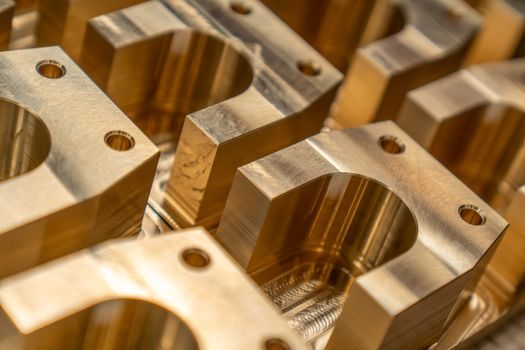
NdFeB sintered magnets — typically N35SH, N42SH, or N52SH grades — supply the rotor field in chiller compressors, cooling-pump BLDC motors, and UPS flywheel alternators; the SH suffix mandates an HcJ floor of ≥ 1592 kA/m (20 kOe) so the magnet survives continuous 150-180 °C rotor temperatures without irreversible flux loss [S1].
Samarium-cobalt (SmCo) 2:17 grades step in when ambient exceeds 200 °C or where dysprosium-free chemistry is contractually required; SmCo holds Br down to -0.03 %/°C versus NdFeB's -0.11 %/°C, which is the spec difference that decides chiller-room vs outdoor-cabinet deployments [S3].
2026 sourcing risk: NdPr oxide spot price volatility and a near-single-source concentration of sintered NdFeB in East Asia have pushed buyers to lock 2-3 year offtake contracts and to demand auditable RMI (Responsible Minerals Initiative) RMAP conformant smelters — a requirement that the Raw Material Outlook ESG module tracks line by line [S3].
Quartz, Fused Silica and Photonic-Grade Glass
High-purity fused quartz (HPFQ) and synthetic fused silica — grades like GE 214, Heraeus HLQ, and Tosoh ED-C — sit on the inside of semiconductor-process furnace tubes, EUV reticle pods, and fiber-optic preform laydown towers; impurity ceilings drop to <1 ppm Fe, <1 ppm Na/K/Li combined, and OH content bands of 1-200 ppm chosen by wavelength [S1][S2].
For data-center fiber cabling, single-mode G.652.D and bend-insensitive G.657.A2 preforms are drawn from natural or synthetic silica soot deposited by MCVD or OVD; cladding diameter is held to 125 ± 0.7 µm with a 0.35-0.40 NA and a 8-10 µm mode-field diameter at 1310 nm, per IEC 60793-2-50 [S1].
Buyers specifying fused silica and quartz preform inventory for 2027 builds should plan around the multi-month lead time of premium HPFQ crucible stock — a bottleneck flagged repeatedly on the Raw Material Outlook platform [S3].
Material-Option Comparison for Hyperscale Specifiers
Across the five families, the decision matrix below is what a procurement engineer actually runs against a BOM before issuing an RFQ. [S1]
For busbar and high-current busway, ETP C11000 copper wins on conductivity and joining ease, OFE C10100 wins on hydrogen-embrittlement resistance, and 6063-T5 aluminum wins on weight and $/kg — at a 60% conductivity penalty that forces a 1.6× cross-section upsize. For rotor magnets, NdFeB N42SH wins on energy product (≥ 342 kJ/m³) and $/kg, while SmCo 2:17 wins on thermal stability and Dy/Tb-free chemistry. For thermal substrates, copper C110 heatsinks win on thermal conductivity (~390 W/m·K) and cost, while aluminum 6063-T5 wins on extrusion complexity and density, and diamond/Cu composites remain a research-line option for direct-to-chip cold plates [S1][S3].
ESG, Auditing and Sourcing Software Stack
Every material line in a 2026 data-center BOM is now expected to ship with a digital material certificate (DMC) and a smelter-level RMAP or ASI chain-of-custody evidence file; the Raw Material Outlook platform runs the value-chain ESG remediation workflow that hyperscalers plug into during supplier onboarding [S3].
On the cost-engineering side, Sourcing Value and similar platforms translate BOM-level raw-material inputs into a single should-cost dollar number that contract negotiators can audit line by line — a "negotiated dollars" lever that the vendor benchmarks at roughly 6% of addressable spend per PO [S1].
For engineers mapping the broader raw-material landscape, the parallel Wind Turbine Raw Material Sourcing Guide breaks down the same five-family logic from a blade-and-nacelle perspective, while copper material selection fundamentals and magnetic material properties provide the underlying metallurgy references used to ground those spec bands.
Limits, Failure Modes and Trackable Signals
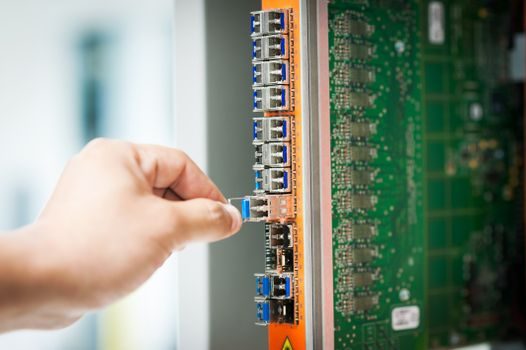
The biggest sourcing-floor failure modes in 2026 are not exotic — they are grade-mix drift on 300 mm wafer lots, oxygen-embrittlement of C110 busbar at >350 °C joint temperatures, irreversible flux loss in N35-series NdFeB above 80 °C continuous operation, and OH-band excursion in EUV-grade fused silica that drops EUV transmission below the 70% line at 13.5 nm [S1][S3].
Watch for two signals into Q4 2026: (1) Q3 2026 silicon wafer LTA renewal pricing, which historically sets the spot-allocation premium for the following 6-9 months, and (2) the next Raw Material Outlook platform update on NdPr oxide and Dy/Tb smelter RMAP audit status, which will govern offtake contract terms for 2027 deliveries [S1][S3].