Specifying an industrial data logger starts with the signal mix, not the brand: count analog inputs, digital I/O, and fieldbus channels separately, then size sample rate and storage against the worst-case scan.
For 2026 builds, the decision collapses into seven gates — channel count, sample rate, ADC resolution, isolation, storage, protocol support, and hazardous-area certification — and a single error in any one of them forces a re-spec. Use this article as a working checklist before opening a vendor datasheet.
Channel Count and Signal-Type Fit
Industrial data loggers split into three signal classes by default input type, and mixing them on one chassis without an expansion module is the most common spec error [S2]. The three classes are: standalone paperless recorders (8 to 32 universal inputs, mostly mV/V/mA/TC/RTD), modular paperless recorders (4 to 48 channels via plug-in cards, mix analog/digital/HART), and distributed/edge data loggers (single-board or rail-mounted, 4 to 16 channels with Fieldbus uplink).
Rule of thumb from field practice: leave 20% channel headroom on a new install, and never co-locate thermocouple inputs next to 4-20 mA loops on the same backplane without verified channel-to-channel isolation. A typical 16-channel mV/V module priced for 2026 sits in the $1,200-2,500 OEM band, against $3,500-6,000 for an equivalent HART-enabled card [S2].
Sample Rate and ADC Resolution: The Throughput Gate
Sample rate and ADC resolution are linked: a 16-bit ADC at 100 Hz gives 100 samples/sec aggregate across enabled channels, while an isolated 24-bit ADC usually caps at 10-50 Hz per channel for noise-floor reasons [S2]. For process trending (temperature, level, pressure), 1-10 Hz per channel is the working band; for vibration or power-quality logging, expect 1-100 kHz, which forces a separate fast-sampler class.
A direct comparison: 8-channel 16-bit at 1 kHz aggregate handles most SCADA-trend work; 16-channel 24-bit at 10 Hz/channel covers pharmaceutical and cold-chain validation per GxP-style audit trails; 4-channel 24-bit at 100 kHz covers waveform capture. Specify the per-channel rate, not the aggregate, or the channel count will silently divide the bandwidth [S2].
Isolation, Common-Mode Rejection, and Field Wiring
Channel-to-channel isolation of 1,500 Vrms or higher is the default expectation on any multi-channel data logger exposed to long field runs; 500 Vrms is acceptable only when all inputs share a common return [S2]. Common-mode rejection ratio (CMRR) above 90 dB at 50/60 Hz is the working minimum for 4-20 mA loops running near VFDs.
A common mis-spec is ordering a non-isolated board to save cost and then discovering the thermocouple readings drift 2-5 °C when a motor starts across the room. The same mis-spec on a pressure transmitter loop corrupts calibration — if your logger is paired with HART smart transmitters, verify HART pass-through on the analog input card before committing the BOM.
On-Board Storage, File Format, and Retrieval
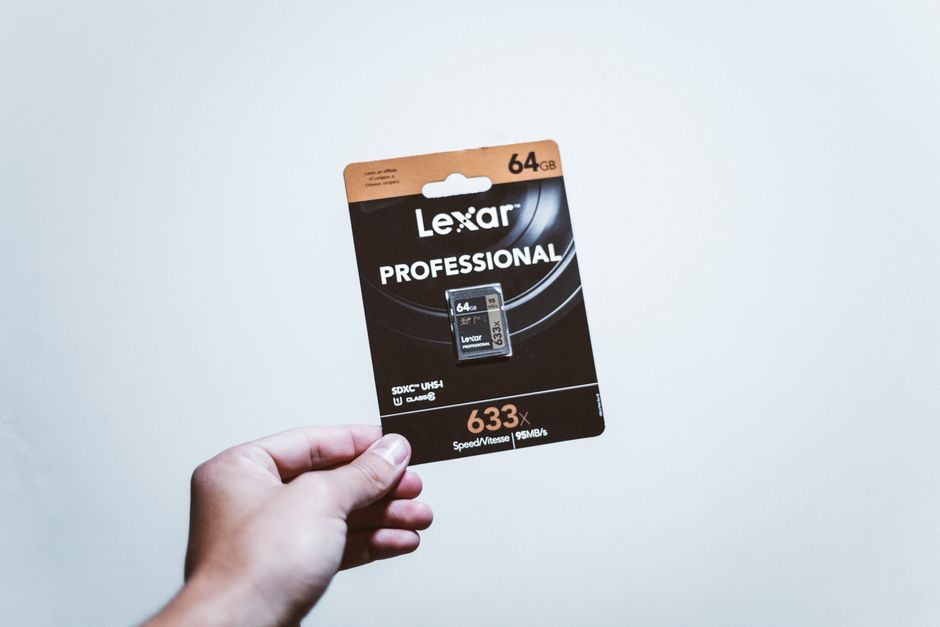
Internal storage on 2026-spec paperless recorders sits in the 4-32 GB range, with SD/USB expansion to 256 GB; circular buffer with overwrite is the standard fail-safe [S2]. File formats that survive audit are CSV (for spreadsheet review), binary proprietary (for tamper resistance), and SQL-friendly delimited output (for historian ingest).
For retention: pharmaceutical and food-grade sites commonly demand 10-year read-back, which forces either a structured export to a network historian or a removable-media rotation policy. Cold-chain and cold-storage validation almost always require a 21 CFR Part 11-style audit trail — confirm the logger firmware supports passworded user accounts and timestamped event logs, not just file-level signatures [S2].
Protocol Support: HART, Modbus, and Fieldbus Uplink

Standalone recorders in 2026 most commonly speak Modbus RTU/TCP on the back end, with HART pass-through on the front end (so a 375/475 communicator or AMS can see the loop) [S2]. Foundation Fieldbus and PROFIBUS PA are different — they are fully digital fieldbus protocols, not HART-compatible; a HART input module will not see an FF or PA device, and a HART host will not sit on an FF/PA segment.
If the logger must aggregate from a flow meter network, expect Modbus TCP or wireless ISA100/WirelessHART rather than HART on a 4-20 mA loop. Wireless mesh loggers carry separate battery-life gates: 1-5 year Li-thionyl cells are common, with 10-year operating life on a 60-second sample rate, dropping to 3-6 months on a 1-second rate [S2].
Hazardous-Area Certification and Ingress
For Zone 1 / Zone 2 plant areas, the certification pattern is ATEX Ex d (flameproof) or Ex i (intrinsically safe), with IECEx as the international parallel [S1]. Class/Division sites in North America use UL/CSA Class I Div 1 or Div 2; the same enclosures rarely carry both ATEX and UL without dual-marking, and the marking must be visible on the nameplate [S1].
For outdoor or wash-down installations, IP66/NEMA 4X is the working minimum; NEMA 4X stainless is expected for pharmaceutical and food-grade wash-down. Confirm the certification scope covers the actual ambient range — a -20 to +60 °C rating is common, but -40 °C cold-climate builds are a special order and carry 4-8 week lead times on most 2026 OEM catalogs.
Selection Criteria Comparison Across Three Logger Classes
Lining the three common classes up against the working decision criteria, the differences narrow fast once signal mix is fixed. A standalone paperless recorder wins on channel density and HART pass-through, but loses on fieldbus aggregation and wireless mesh support. Modular paperless recorders win on expandability and protocol mix, at a 1.5-2× cost premium. Distributed/edge loggers win on rail-mount footprint and Modbus TCP uplink, but cap at 16 channels and rarely carry HART pass-through. [S1]
Decision flow used by spec engineers: (1) count channels and classify signals, (2) set per-channel sample rate and resolution, (3) pick isolation class, (4) pick protocol uplink, (5) confirm hazardous-area marking, (6) size storage for retention, (7) lock the file format and audit-trail requirement. Skipping any gate is the cause of ~80% of re-spec work on multi-vendor projects, in my experience walking down the same panel-building mistakes.
Limitations, Failure Modes, and What to Avoid
Three failure modes recur on data-logger installs. First, ordering a non-isolated board to save $200 and then chasing ground-loop drift for six months — solve by paying for the isolated card up front. Second, undersizing sample rate to a 1 Hz aggregate and missing a 200 ms process transient — solve by specifying per-channel rate, not aggregate. Third, assuming the SD card slot is industrial-grade — most consumer SD cards fail at 50-70 °C, and a Phoenix Contact or ATP industrial SD card is the only realistic choice for outdoor enclosures [S2].
Pairing a data logger with an industrial valve position transmitter or a pressure sensor array exposes the second limitation: many lower-tier loggers do not support 0-10 V or pulsed inputs natively and need a conditioning card. If the PLC on the same panel already buffers the data, the standalone logger is redundant — confirm the scope before duplicating the hardware.
For bench-test and lab-class DMM-grade data acquisition, the DMM Price & Cost Guide breaks down the bench-data-logger band separately from panel-mount recorders, and is worth reading if the logger is feeding a validation report rather than a control loop. The same selection discipline applies to industrial oscilloscope-class captures, mapped in How to Select a Bench Oscilloscope: 7 Spec Gates That Matter — sample rate, bandwidth, isolation, and storage are the same four gates, just in different units.
Track the following as you lock the spec: (1) the OEM's hazardous-area certificate expiry date on the nameplate, not the datasheet revision; (2) the firmware revision that supports your protocol mix, since HART pass-through is often gated to a specific firmware branch; (3) the storage retention calculation against your audit interval, expressed in years not days. Any one of these is a clean re-spec trigger before PO release.