
Oil and gas DC power systems, ranging from 24 V instrument buses on wellheads to 750 V motor-drive DC links in compressor stations, are now routinely validated with regenerative DC electronic loads in the 5-60 kW class, displacing resistive load banks on heat, footprint, and energy-cost grounds [S2][S3].
The 2026 buyer's-guide landscape lists Keysight, Chroma ATE, B&K Precision, EA Elektro-Automatik, ITECH, and Kikusui as the dominant US-market brands, with AMETEK, Magna-Power, Siglent, and Rigol filling specific price tiers [S3]. The global electronic load market is projected at $4.32 B in 2026, growing to $6.51 B by 2034 at a 5.25% CAGR, driven by EV, renewable, and grid-edge DC test demand [S6].
Where a DC Electronic Load Fits in Oil and Gas Power Architecture
Upstream and midstream sites run a layered DC architecture: 12/24 V battery banks for instrumentation and SCADA, 48 Vdc telecom-grade rectifiers for control rooms, 110/220 Vdc substation batteries covered by IEEE 1188-style maintenance regimes, and increasingly 540-750 Vdc battery energy storage on hybrid PV/gas plants. A programmable electronic load sinks each of these buses during acceptance and periodic testing, replacing the wire-wound resistor banks that dominated the 1980s-2010s [S2][S5].
Linear loads with MOSFET/IGBT pass stages still win on noise and bandwidth, but at multi-kW levels the cooling bill on an offshore platform or in a desert MCC room is operationally unacceptable.
Selection Criteria Specific to Oil and Gas Sites
For hazardous-area deployment, a DC load is typically installed in a non-classified control room or a purged analyser house, not inside the Class I Div 1/Zone 1 boundary, so ATEX/IECEx certification of the load itself is rarely required; the requirement instead falls on the DUT-side wiring and the upstream AC feed. What does matter is operating temperature, IEC 60068-style shock/vibe data, and IP-rated enclosures for skidded power containers [S5].
Six criteria drive the actual purchase decision in this sector:
1. Power envelope vs bus voltage. A 110 Vdc station battery at 200 A discharge is a 22 kW test, so the load must sustain 22 kW at 90-130 V. The safe operating area (SOA) of a 1000 W load does not automatically include 1000 W at its minimum voltage; the SOA curve is the deciding document, not the nameplate wattage [S2].
2. Four-mode operation. CC, CV, CR, and CP are baseline; CC is the workhorse for battery discharge and DC supply verification, CV tests charger regulation, CR emulates heater-string and motor loads, and CP is the right mode for fuel-cell and PV simulator work [S3][S5].
3. Slew rate and transient response. Sub-millisecond transients matter when qualifying DC-DC converters feeding variable-frequency drives. A/µs spec, not just bandwidth, is the relevant number [S2].
4. Isolation and grounding. For 540-750 Vdc systems on BESS skids, isolated input stages and proper HV interlock are non-negotiable; OEM safety chains should meet IEC 61010-1 for the test instrument itself.
5. SCADA integration. LAN/LXI, Modbus TCP, or CAN interfaces let the load ride the same SCADA used for load cell and lamps and light fittings monitoring, supporting closed-loop battery health routines.
6. Calibration. Annual calibration traceable to NIST or equivalent is standard; oil and gas QA plans typically cite ANSI/NCSL Z540.1 or ISO 17025 paths [S3].
Linear vs Regenerative: A Decision Map
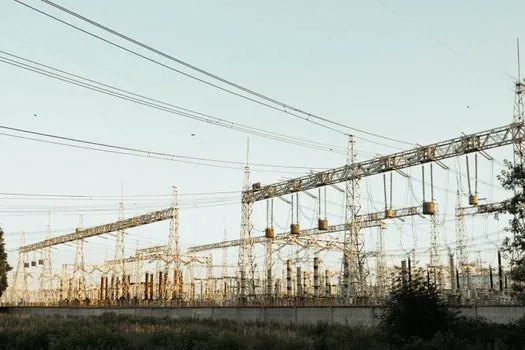
Linear DC electronic loads operate power MOSFETs or IGBTs in the linear region, sinking current as programmed and dissipating all input power as heat through heatsinks and forced-air cooling. They deliver the lowest ripple and the cleanest CC/CV behaviour, but at multi-kW levels they become room heaters and the cooling bill is non-trivial [S2].
Regenerative DC electronic loads route the absorbed power through an isolated DC-DC booster to the AC side, where a grid-synchronised inverter exports it as clean AC current. The Kikusui PXZ series is positioned by the vendor as the industry reference for this architecture, with claimed efficiency above 90% at full load [S2]. Chroma's 63700 family, including the 63700H high-speed variant, scales from 1.5 kW to 90 kW+ in modular form for larger rectifier and BESS testbeds [S4].
Quick comparison on the criteria that matter to an oil and gas test engineer:
- Energy efficiency: regenerative 85-95% vs linear <40% net efficiency (rest is heat, not useful work) [S2].
- Noise on DUT: linear wins (lowest current ripple); regenerative adds HF switching noise on the input bus, usually filtered.
- Heat load on facility: linear rejects 100% of absorbed power; regenerative rejects 5-15%.
- Capital cost: linear is 30-50% cheaper at the same wattage; OPEX flips the equation in 12-24 months for high-utilisation test cells.
- Transient speed: high-speed regenerative units (e.g. Chroma 63700H) now match mid-tier linear slew rates.
For a 5 kW-and-up BESS or 750 Vdc drive acceptance bench, the 2026 default is regenerative. Below 1 kW, linear remains the pragmatic pick for noise-sensitive bench work.
Recommended Vendor Tiers for Oil and Gas Test Benches
Tier 1, full-feature / global service: Keysight, Chroma, Kikusui. Keysight's DC electronic-load portfolio covers precision bench and high-power modular configurations with integrated measurement and automation stacks [S1]. Chroma's regenerative 63700 / 63700H lines plus the 17040 High Power Regenerative Pack (up to 1.2 MW class at the system level) address the largest oil and gas BESS and rectifier testbeds [S4]. Kikusui's PXZ series, available in the US through Kikusui America, anchors the regenerative camp on energy recovery [S2].
Tier 2, mid-power and OEM skids: EA Elektro-Automatik (distributed via Tektronix channels in the US), ITECH, AMETEK Programmable Power, Magna-Power. These are common inside containerised test skids and on EPC FAT benches where service logistics matter more than absolute lowest ripple.
Tier 3, bench/field portable: B&K Precision, Siglent, Rigol, plus the Vitrek DL Series. Vitrek targets the niche of compact, high-accuracy units aimed at production-line and field service use [S7].
For a typical 2026 upstream DC test cell, an EA ELR 9000 HP or Kikusui PXZ in the 5-15 kW range paired with a Chroma 17040 if the program later scales to multi-MWh BESS acceptance is the pragmatic configuration.
Oil and Gas Use Cases the DC Load Must Cover
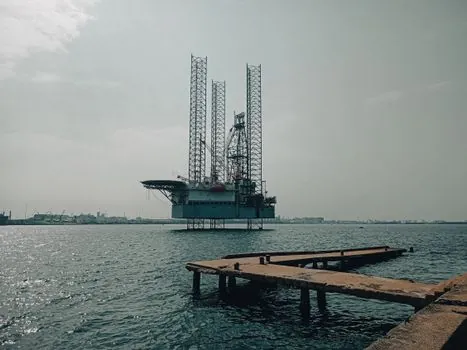
1. Stationary battery discharge testing. NERC PRC-005 and IEEE 1188 govern maintenance of stationary batteries at substations and gas plants; CC discharge at the 3- or 8-hour rate is the standard health check. Programmable loads automate the discharge and capacity calculation, replacing manual resistive-bank testing [S5].
2. Charger and rectifier validation. 110/220 Vdc battery chargers and 24 Vdc instrument power supplies need CC, CV, and load-step response testing. A bench DC load with sub-100 µs transient response catches regulator instability that a resistor bank would miss [S2][S5].
3. BESS and hybrid PV/gas acceptance. 540-750 Vdc battery skids paired with PV arrays are common in upstream hybrid plants; a regenerative load sized to the skid's continuous rating is needed to sink full nameplate without overheating the room [S4].
4. DC bus and drive commissioning. Variable-frequency drives on pumps and compressors expose the DC link to fast transients; a load capable of CC, CP, and high slew rate verifies DC-link capacitor sizing and pre-charge behaviour [S2].
5. Cathodic-protection rectifier testing. Impressed-current CP rectifiers run at 10-50 Vdc and a few amps, well below the usual DC-load minimums; CR mode on a small bench unit is the most cost-effective test path [S5].
Limitations, Failure Modes, and What a DC Load Will Not Do
A DC electronic load is a single-quadrant or two-quadrant (source-and-sink) instrument; it cannot reproduce a three-phase AC motor's back-EMF or a pulsating reciprocating-load signature. For AC-driven loads, a regenerative AC electronic load such as the Chroma 63800R family, or a back-to-back AC source/load, is the correct instrument [S4].
Regenerative units fail the connection test on weak or unstable AC grids: if the host site's grid impedance or voltage THD is out of the inverter's tolerance, the load will trip or refuse to export. For offshore platforms with limited short-circuit capacity, this is a real pre-purchase concern, and bench-top linear loads with smaller AC draw are often the fallback.
Common failure modes in fielded units are cooling-fan degradation (linear, dissipative units in dusty upstream sites), DC-link capacitor aging in regenerative stages, and connector wear on high-cycle production benches. A spare-fan kit and a 3-year recapping schedule are typical [S2][S7].
Standards, Calibration, and Sourcing Signals

Relevant standards for instrument-level qualification include IEC 61010-1 for electrical safety, IEEE 1188 for stationary battery maintenance, ANSI/NCSL Z540.1 or ISO/IEC 17025 for calibration traceability, and IEC 60068 for environmental testing. For hazardous-area deployment of the DUT, the load itself is generally located in a safe area, so ATEX/IECEx certification of the load is normally not in scope; the site safety file governs the wiring, not the instrument [S3][S5].
Trackable signals for 2026-2027 sourcing: Kikusui's PXZ roadmap and Chroma's 63700H high-speed variant should be confirmed at the next vendor roadshow; the broader electronic load market is projected to grow at a 5.25% CAGR to $6.51 B by 2034, which keeps lead times competitive across the major brands [S2][S4][S6]. For comparison context on adjacent test gear, see this LCR meter sizing and selection reference and the broader LCR meter suppliers map for 2026.