
A demolition hammer pre-use inspection splits into 7 grouped sub-checks (housing, power system, controls, impact mechanism, bits, vibration system, lubrication) with each item carrying a pass/fail line, drawing on the HVI jackhammer inspection template updated 2025-05 [S1].
Two inspection cadences dominate the public checklists: a 4-8 hour daily check covering exterior cleaning, lubricator oil, and bit wear [S1], and a per-shift pre-use pass covering power cord, retainer, trigger, and vibration mounts [S1][S2]. The Mitti/SafetyCulture breaker safety template adds operator-competency verification and double-insulation or grounding confirmation as a hard accept/reject gate [S2].
Housing, Power Source, and Controls: Pass and Fail Criteria
Static checks for the casing, power feed, and controls are the first rejection gate; a demolition hammer fails pre-use if any single item is open-coded [S1][S2]. The HVI template lists clean exterior, intact housing (no cracks/dents), legible serial plate, and full parts present as basic acceptance conditions [S1]. For electric breakers the cord is checked for cuts, frays, and exposed conductors; pneumatic models are checked for air hose cracks and leaks, and hydraulic units for line leaks and secure fittings [S1][S2].
Controls must operate smoothly: trigger free of sticking, safety lock functional, throttle full range, emergency stop verified where fitted [S1]. The Mitti template adds industrial plug condition, strain-relief integrity, and double insulation or proper grounding as discrete accept/reject items, framing the decision as a binary safe-to-accept or corrective-action call [S2]. SiteMate extends this to hazard identification, tool selection, and PPE fit before any mechanical check [S3]. For comparison, a similar pattern is used in asphalt paver pre-shift walkthroughs, where the operator gates the machine on fluid leaks and lighting before walking mechanical systems.
Impact Mechanism: Piston, Retainer, and Front/Rear Seals
Impact-mechanism checks catch the failures that do not show on a static look: piston/cylinder damage, retainer security, and seal leakage [S1]. The HVI template requires no visible damage or excessive wear on piston and cylinder, no oil leakage from front or rear seals, and a retainer that securely holds the bit, with normal stroke length confirmed by eye during test run [S1].
Tool holder or chuck condition is its own line item: no cracks, no excessive wear, bit retention spring or sleeve functional, bit fully seated [S1]. On pneumatic breakers the inline oiler is checked at the same interval because starved lubrication is the most common root cause of front-head seizures, a failure mode that the demolition hammer reference page documents in the lubrication section. By contrast, rotary hammer models separate the impact block from the rotation gearbox, so a chuck wear call on a rotary does not predict seal failure on a pure breaker.
Bits, Chisels, and Tool Retention
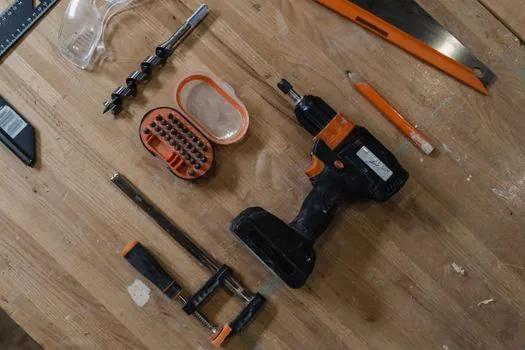
Bit and chisel condition is the most frequently replaced line item, with mushrooming, cracks, and over-short length the standard reject criteria [S1]. The HVI checklist requires no mushrooming or cracks, proper sharpness for the substrate, length not worn below the tool's usable minimum, retention sleeve or spring functional, and the bit properly seated and secured in the holder [S1].
The pdfcoffee mirror of the same template codes the action in shorthand: bit damage, replace; moil holder defect, take immediate action; casing damage, take immediate action [S4]. This is the typical pass/fail syntax used on a one-page site form: defect on line N triggers the line's pre-printed response (take immediate action, replace, or refer to supervisor). A worn bit is the single most common operator-level rejection, and the inspection is the only place it is caught before the bit jambs in the retainer and damages the piston. The same retention logic shows up on pneumatic nail guns, where a dry driver blade or weak return spring is a pre-shift replace, not a repair.
Vibration Control, Lubrication, and Hand-Arm Vibration Exposure
Anti-vibration mounts and lubrication system checks are the two long-horizon items: they fail slowly, but they are what determines whether the tool stays inside hand-arm vibration (HAV) exposure limits over a shift [S1]. The HVI template requires anti-vibration handles intact and securely attached, shock absorbers or springs in good condition, rubber isolation mounts free of cracks/tears/deterioration, and a dampening mechanism verified by test run [S1].
Lubrication checks cover oil level, no housing or seal leaks, inline oiler function on pneumatic models, and clear grease fittings [S1]. The daily 4-8 hour interval for lubricator top-up is the highest-frequency maintenance line on the form, and is the most common root cause of premature chuck and seal wear when skipped [S1]. A side-by-side comparison of the failure modes: housing damage is a one-shift reject, bit wear is a same-day replace, and vibration mount deterioration is a slow-fail that quietly extends operator HAV exposure, so the same checklist has to be read on three different time scales at once.
Documentation, Operator Competency, and Records

The pre-shift inspection is only half the safety case; the other half is who signed it and what they were wearing [S1][S2][S3]. HVI's header block captures make/model, equipment ID, weight class, power source, site, date, inspector, and supervisor, which is the minimum metadata an OSHA-aligned record needs [S1]. Mitti's template adds the binary gate that only competent, authorized operators use the machine, with corrective actions tracked as discrete line items, not free text [S2].
SiteMate bundles the inspection into a wider safety pass covering hazard identification, tool selection, work practices, and PPE, treating the breaker checklist as a sub-form of a broader plant-and-equipment safety review [S3]. Two operational tips that the HVI author flags as field-learned: inspect when the tool is cool and disconnected (avoids burn and accidental-start injuries), and listen during the first 10-20 seconds of operation for sounds that static checks cannot catch, such as early piston slap or retainer rattle [S1]. Tracking these findings on a per-machine basis over weeks is what surfaces design-level flaws in specific models; a single checklist is a gate, a stack of them is a trend.
When to Repair Versus When to Tag Out
The pre-use form draws a hard line between field-fixable and tag-out defects, and that line is consistent across the four reference checklists [S1][S2][S3][S4]. Field-fixable items: bit replacement, lubrication top-up, and air-hose fitting re-seat, all recoverable on-site without breaking the work plan [S1]. Tag-out items: cracked housing, damaged power cord, inoperative safety lock or emergency stop, retainer that will not hold the bit, oil leak from front or rear seals, and any anti-vibration mount that has cracked through [S1][S2].
The pdfcoffee shorthand makes the triage explicit: line 2 (casing) and line 3 (moil holder) trigger "take immediate action," line 4 (moil) triggers "replace" [S4]. Mitti frames the same decision as safe-to-accept or corrective-action-required, with no middle ground, which matches OSHA's defect-do-not-use posture on hand-held impact tools [S2]. The Sitemate template extends the gate one level up: if hazard identification, tool selection, or PPE fit fails, the inspection is aborted before the mechanical section is walked, because no mechanical pass compensates for a process failure above it [S3]. Trackable signals to watch on the next revision cycle: standardized vibration-mount condition language, formal HAV trigger-value thresholds on the form, and a coded line for electric GFCI verification, three items the current public templates leave to operator judgement.
Spec-level background on the components involved: pressure transmitter.