
Bridge construction sites in 2026 use demolition hammers across three distinct load cases: deck-slab breakout, pier and abutment concrete reduction, and pavement removal on approach slabs, with electric SDS-Max units in the 10-16 kg class dominating the first two, and pneumatic or hydraulic breakers still leading the third per AASHTO-aligned demolition practice [S4][S5].
Matching the hammer to the substrate and the production rate is more decisive than brand choice: 1500-2000 W input, 1000-2000 W impact energy, and 1300-1500 bpm impact frequency are the working envelopes most concrete breakout rigs sit inside, while pavement removal typically steps up to 1700-2200 W electric or a compressor-fed pneumatic [S2][S4][S6].
Power Class vs Workload on a Bridge Site
Electric demolition hammers between 10 kg and 16 kg deliver the impact energy needed to split thick deck slabs and pier-cap concrete without exhausting the operator, and they are the size bracket most frequently specified for bridge-deck partial demolition in current product guides [S4]. Below 10 kg the tool drifts into chipping-hammer territory and loses productivity on reinforced deck concrete; above 16 kg, fatigue and vibration exposure start to dominate the labour-cost calculation on all-day shifts [S3][S4].
For continuous production on long approach-slab runs, pneumatic jackhammers fed by a portable air compressor are still the contractor default because the per-blow energy and the sustained cycle rate stay high without thermal cutout, which is the main reason road-repair crews continue to standardise on compressor-driven rigs rather than large electric units [S4].
Chuck System, Bit Choice, and Impact Energy
SDS-Max is the de-facto chuck for the bridge-deck concrete class because it accepts the wide chisel and pointed bits that survive rebar strikes, and it is the shank fitted to workhorse models such as the Bosch 11335K Brute and the Makita HM1202C referenced across the contractor press [S6][S8]. The competing SDS-plus system is limited to smaller rotary and chipping tools, so it should be ruled out for primary bridge-concrete breakout even where the operator already owns a rotary hammer on the same site [S4].
Chisel geometry matters as much as the hammer body on bridge work: pointed (moil) bits concentrate energy for first-break hole starting and pier-cap seam opening, while wide flat chisels are the right tool once a fracture line exists, for sweeping through asphalt lifts, and for removing multiple bricks or formwork at once [S3][S4].
Pneumatic vs Hydraulic vs Electric: Decision Criteria

The three power sources trade off in a way that maps cleanly onto bridge tasks: electric gives low noise and zero on-site emissions for urban deck work, pneumatic gives the highest continuous impact rate for pavement and abutment mass concrete, and hydraulic delivers the highest single-blow energy for heavy substructure and pile-cap reduction when paired with a carrier [S4][S7]. A 2200 W class electric breaker such as the XtremepowerUS 2200W fills the middle ground where the site bans compressor fleets but production still has to beat a small chipping hammer [S6].
Bridge-Specific Demolition Workflow and AASHTO Linkage
Demolition-hammer selection on a bridge does not start at the tool catalogue, it starts at the engineered demolition plan, because the AASHTO documents listed in the Bridge Demolition Engineering index (LRFD Bridge Construction Specifications, LRFD Bridge Design Specifications, MBE, and the AASHTO Guide Design Specifications for Bridge Temporary Works) define how loads, sequences, and temporary works are checked before a chisel is ever lifted [S5]. The same index groups the equipment the hammer will work alongside: cranes on tandems for critical lifts, concrete cutting chains, pile cutters, and heavy-lift gear for the deck and pier segments once the hammer has fractured the surrounding concrete [S5].
In practice the hammer is the concrete-reduction tool inside a larger demolition method statement: the deck-slab concrete is hammer-broken into manageable lifts, the rebar is cut with oxy-fuel or mechanical cutters, the segments are rigged to an overhead bridge crane for removal, and the temporary works are sized against AASHTO temporary-works guidance [S5]. Skipping the engineered plan and going straight to "buy the biggest hammer on the fleet" is the most common way bridge demolition budgets blow out, because the limiting factor is almost always lift plan and debris handling, not the hammer blow rate.
Safety, Vibration, and Operator Selection
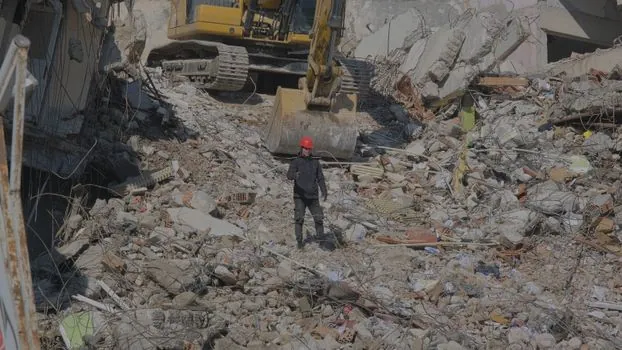
Vibration exposure, eye and hearing protection, and dust control are the three safety constraints that override raw impact-energy selection on a bridge deck, and rental-side guidance now lists vibration control, ergonomic grip geometry, and ear protection as mandatory rather than optional on any hammer over the 10 kg class [S3][S4]. For interior cells of box girders and for night-shift work in urban air-shed zones, the tool choice usually narrows to a corded electric SDS-Max in the 1500 W range, because diesel and pneumatic options are excluded by the contract specification.
Where the work is purely horizontal-deck breakout and the operator is on the tool all shift, the 10-16 kg bracket also keeps the hand-arm vibration dose inside typical 8-hour exposure-action thresholds that fleet safety plans reference, although the exact trigger value has to be confirmed against the current vibration directive in force on the project.
How This Connects to the Wider Tool Fleet
Demolition hammers do not work alone on a bridge: the rotary hammer selection for tunnel construction guide covers the smaller SDS-plus class used for anchor and rebar-drilling prep, while the rotary hammer vs demolition hammer spec guide is the right reference when the question is whether a job needs a rotary-drill or a pure breaker. For interior finishing on the same bridge project, the demolition hammer selection for interior finishing spec map handles the sub-10 kg chipping-hammer decisions, and the wider construction tools and construction machinery and equipment pages frame how the breaker fits into a full site fleet. [S3]
Final selection on a 2026 bridge build should lock the power source to the deck or abutment task, the chuck to SDS-Max, the bit geometry to the fracture pattern, and the safety controls to the operator-shift model, with the engineered demolition plan and AASHTO temporary-works references as the upstream gate [S5]. Two trackable signals to watch into 2026 are the AASHTO MBE update cycle for demolition method selection language and the shift in contractor fleets from 1500 W to 1700-2000 W corded SDS-Max as a quieter replacement for pneumatic breakers on urban bridge redecking work.