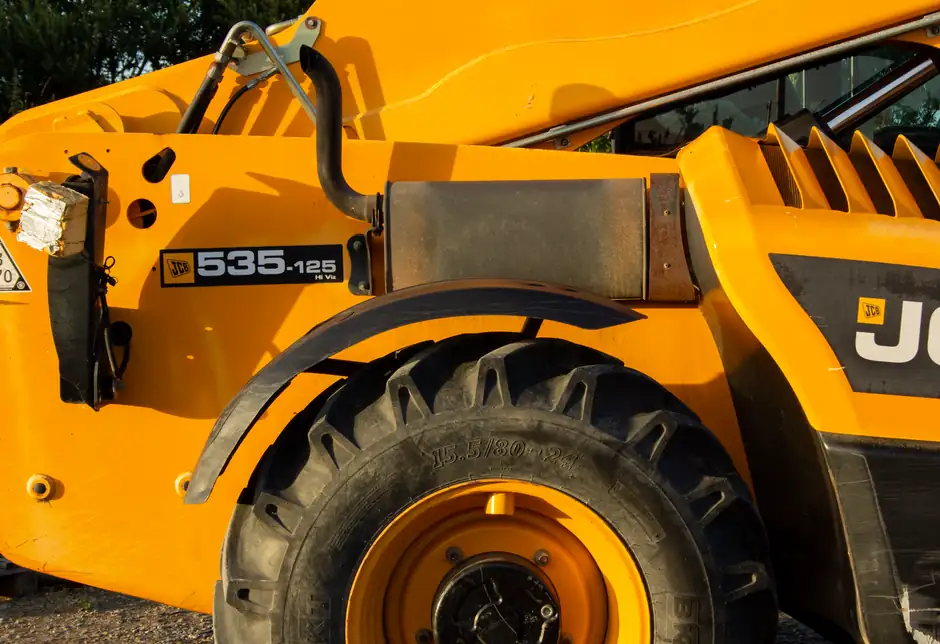
Demountable loader cranes change vehicles and workloads, while fixed installations simplify structural integration and daily operation.
The comparison covers mounting security, hydraulic integration, lifting availability, maintenance, and suitability for commercial fleets or dedicated carrier chassis.
Core mounting decision
Choose a demountable mounting when one crane must serve multiple vehicles, separate fleet assets, or seasonal operating patterns. Choose a fixed mounting when the crane is dedicated to one chassis and near-continuous lifting performance is more important than redeployment flexibility. [S1]
This distinction is operational rather than merely structural. PALFINGER groups loader cranes into TEC, MLT, and SLD ranges, covering configurations intended for different accuracy, versatility, and reliability requirements, with regional availability and naming varying by market [S1]. The installation guideline states that crane mounting requires correct chassis selection and precise installation [S2].
Demountable systems: mobility and fleet sharing
A demountable loader crane separates the lifting unit from the carrier, allowing the unit to move between compatible vehicles after the original task is complete. The main benefit is asset utilisation: one crane can cover a workshop, delivery fleet, construction site, or municipal service operation without permanently occupying one chassis. [S3]
The installation guideline addresses correct chassis selection and precise mounting of the crane. The PALFINGER installation guidance treats chassis selection as part of the mounting process, rather than treating the crane and vehicle as independent products [S2].
Demountable systems fit fleets with changing vehicle assignments, short-duration crane use, or several low-utilisation carriers. They are less attractive when the crane operates continuously, where repeated installation work would erode its availability advantage.
Fixed systems: structural continuity and availability
A fixed loader crane is permanently installed on one chassis, creating a purpose-built lifting vehicle with fewer crane-to-vehicle changes. The installation can integrate the crane structurally and hydraulically with the carrier, which simplifies operating discipline and keeps the lifting package attached to the assigned vehicle. [S1]
PALFINGER's loader-crane portfolio includes the TEC, MLT, and SLD ranges. Regional products differ by market, so a fixed mounting should be specified against the exact model offered for the operating territory rather than against a generic loader-crane range.
Fixed systems suit contractors, plant-hire companies, utility contractors, and logistics operators that dedicate a chassis to lifting. They are less suitable when seasonal demand, fleet rebalancing, or sale and redeployment of the carrier chassis makes a permanent installation commercially restrictive.
Decision criteria compared
On redeployment time, the demountable option wins when a crane changes between compatible vehicles several times; the fixed option avoids removal and reinstallation work but remains attached to one carrier. On installation complexity, the fixed arrangement normally provides a cleaner vehicle configuration, while the demountable arrangement adds interface management [S2].
On structural integration, the fixed option has the advantage of being engineered around one chassis and one duty cycle. The demountable option gains flexibility, but each carrier interface must satisfy the crane manufacturer's mounting requirements [S2].
The key comparison is therefore: demountable for fleet flexibility and shared utilisation, fixed for continuous availability and vehicle-specific integration. Neither mounting style determines lifting capacity by itself. Capacity is set by the selected crane, boom configuration, operating radius, lift height, hydraulic system, chassis structure, and the load chart.
Carrier and load-control requirements
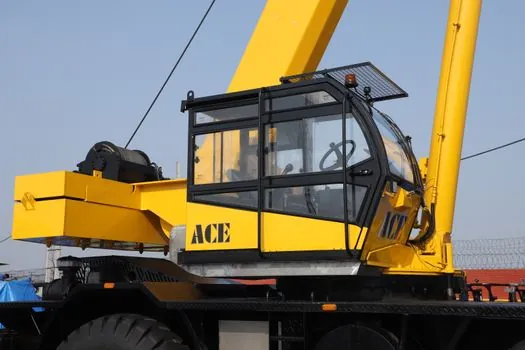
Loader cranes are used for repetitive positioning and controlled lifting, with precise crane positioning reducing time lost during repeated lift cycles [S1]. The carrier must be selected before the crane because chassis geometry, frame strength, axle distribution, hydraulic capacity, and local operating rules affect the usable lift chart [S2].
Penny Engineering highlights transporting water-sports equipment and landscaping gear with trailers as applications where a crane can help load and unload items.
These applications illustrate why mounting choice should follow the load cycle. A permanent installation on a plant or beavertail trailer supports repeated loading and unloading at one location. A demountable unit may suit several trailers, but every host vehicle still needs a verified structural and hydraulic interface [S2].
Safety, access, and operating constraints
A loader crane's rated capacity is valid only within the specified load-chart envelope, including radius, extension, boom configuration, and operating conditions. Demounting does not make an unsuitable chassis acceptable, and a fixed mount does not compensate for a chassis that lacks the required frame or axle capacity. The vehicle and crane combination must be treated as one engineered lifting system [S2].
For trailer installations, mechanical handling reduces manual lifting exposure, and Penny Engineering identifies 25 kg for men and 16 kg for women as the cited manual-lifting limits under the Manual Handling Operations Regulations, while requiring mechanical aids where reasonably practicable [S3]. Those figures concern manual handling, not loader-crane safe working load, and must not be used to select crane capacity.
PALFINGER's regional portfolio includes load-holding valves and performance-focused hydraulics for selected Asian knuckle- and stiff-boom offerings [S1]. Hydraulic architecture, load holding, control type, and supporting documentation must be confirmed for the exact model, not inferred from another range.
Specification and procurement checklist
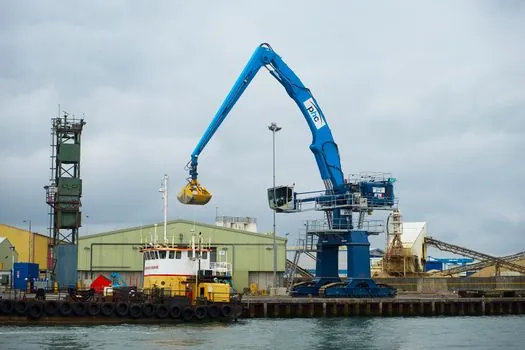
Specify the required lift at the working radius first, then work backward to the crane model, boom configuration, hydraulic flow, valve arrangement, and chassis reinforcement. Obtain the manufacturer's load chart and installation guideline for the exact configuration; PALFINGER's guidance identifies chassis selection and precise mounting as central installation requirements [S2].
For a demountable system, document the approved host vehicles, connection geometry, locking arrangement, hydraulic coupling process, electrical supply, minimum frame requirements, and removal inspection. For a fixed system, document the structural reinforcement, drilling or weld details where applicable, hydraulic piping, stabilizer or outrigger requirements, and the load-chart boundary on the completed vehicle [S2].
Verify local road, workplace-lifting, and trailer regulations at the procurement stage. PALFINGER notes that loader-crane availability and naming vary by market, including North America, Latin America, Europe, Asia, and the Middle East [S1], while trailer applications cover several manufacturers and vehicle formats [S3].
The next engineering step is to define one representative duty cycle with lift height, radius, payload, cycle count, transfer frequency, and carrier type, then compare the fixed and demountable configurations against the same load chart and operating envelope [S2].