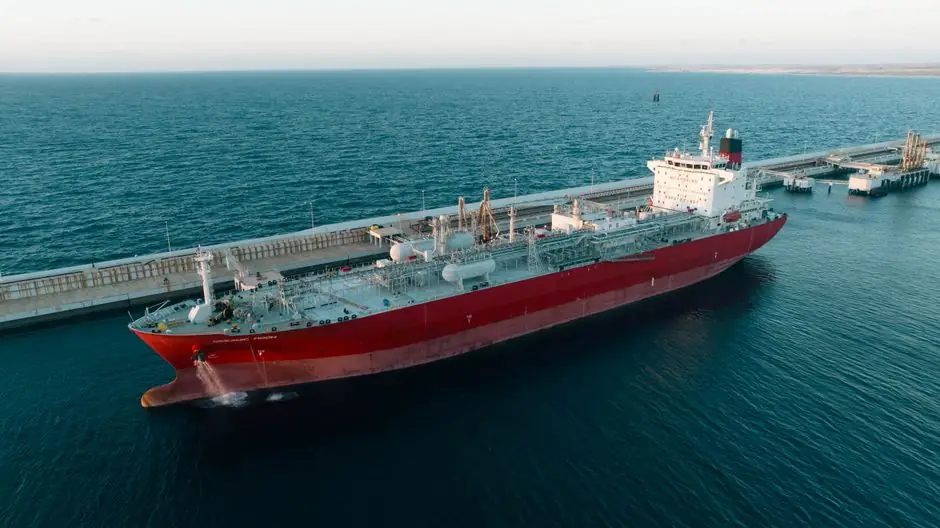
Remote-sector LNG demand across agriculture, mining, forestry, and infrastructure grew at roughly 7% per year from 2018 to 2023, with supply delivered as natural gas cooled to -162°C and condensed to about 1/600th of its gaseous volume for cryogenic road or marine transport [S2].
Pricing index selection: oil-linked vs Henry Hub
Oil-linked pricing against Brent or JCC remains the dominant reference in long-term Asian and European LNG SPAs, while Henry Hub-indexed contracts have expanded in Atlantic-basin portfolios since 2020 [S3]. The index choice, not the cargo volume, is the largest determinant of exposure to global energy-market volatility and revenue alignment under any given contract.
For a buyer whose offtake feeds a combined-cycle power block or an industrial boiler, an oil-linked index tends to correlate with diesel and fuel-oil substitution value, while a Henry Hub index correlates with North-American shale supply and US LNG export economics; the two move on different macro drivers, and the wrong mix locks the buyer into a hedge that does not match their downstream product's selling price [S3].
Contract duration and volume allocation
Contract tenor typically ranges from 3-5 years (spot and mid-term) through 15-25 years (long-term SPA), and must be matched to the off-taker's underlying project debt tenor and demand ramp profile [S3]. A 20-year SPA on a Henry Hub index exposes the buyer to US shale supply abundance and is structurally different from a 20-year Brent-linked SPA tied to oil-sector capex cycles.
Volume allocation clauses deserve the same scrutiny as price: take-or-pay thresholds of 80-90% are common in long-term SPAs, and failure to lift committed volumes triggers a liability equal to the contracted price times the un-taken quantity, not the spot price at the time of non-lifting [S3]. Buyers with seasonal demand (agricultural drying, mining-haul trucking, winter heating) need explicit make-up rights and downward flexibility in this clause before signing.
Geographic sourcing and logistics

Geographic sourcing controls shipping days, insurance premia, and regasification-fee exposure: Qatar, Australia, and the US Gulf dominate supply; a buyer in Northeast Asia, Northwest Europe, or South Asia faces materially different delivered-cost stacks from each basin [S3]. LNG is delivered by cryogenic ships to import terminals or by road tanker to on-site storage tanks sized for the project's draw profile [S2].
For remote-sector buyers, road-tank delivery in 20-25 tonne cryogenic tankers is the standard last-mile option, and the receiving site's vaporization capacity (ambient air vaporizers, shell-and-tube water bath heaters, or forced vaporizers) must be sized to match peak hourly send-out, not just daily volume, or the trailer fleet will queue and demurrage charges will erode the procurement savings [S2].
Who LNG procurement is for, and who it is not for
LNG procurement is suited to off-takers with steady baseload demand above roughly 50,000 MMBtu per year, located beyond the reach of a high-pressure gas pipeline, or with a hard requirement for fuel diversity away from diesel and HFO [S2]. It is NOT suited to small intermittent users (below 10,000 MMBtu/yr), where LPG, CNG, or grid power typically beats LNG on unit economics, nor to buyers who cannot fund or lease compliant cryogenic storage with full safety instrumentation [S2].
Buyers should also confirm regulatory and audit oversight is in place before contract execution; a 14 May 2026 New Zealand Controller and Auditor-General letter flagged conflict-of-interest management, decision criteria, and record-keeping as the exact issues any public-sector or regulated private-sector procurement will be measured against, and is the checklist a buyer's own governance team should mirror [S1].
Selection criteria comparison: SPA, mid-term, and spot

Long-term SPAs (15-25 yr) score high on price certainty and bankability but low on flexibility and index agility; mid-term tenders (3-7 yr) balance portfolio diversification against volume risk; spot cargoes offer maximum optionality but expose the buyer to JKM or TTF volatility on every lift [S3]. For a mining project with a 15-year reserve life and a single processing plant, the long-term SPA on Henry Hub is the defensible default; for a forestry aggregator with three seasonal drying sites and a 5-year horizon, a mid-term Brent-linked tender with make-up rights is the lower-regret choice [S3].
Across all tenors, the procurement checklist holds: independent price-index validation, documented conflict-of-interest clearance, written decision criteria, and a published communications protocol for supplier engagement, the same four controls the New Zealand audit office required for a public LNG import procurement in 2026 [S1]. A similar governance frame for private-sector LNG procurement is detailed in this aerospace procurement spec-gate walkthrough, where supplier maps and cost discipline apply almost one-to-one to LNG supplier engagement.
Storage, vaporization, and safety constraints
On-site storage must be sized in cubic metres of LNG at -162°C with full secondary containment, pressure-relief, and gas-detection instrumentation compliant with NFPA 59A and equivalent local codes; the storage volume, not the daily offtake, drives the safety-instrumented-system cost line [S2]. Vaporization equipment selection (ambient air vs forced water bath vs submerged combustion) is dictated by site climate, water availability, and permitted NOx emissions, and the wrong choice will bottleneck send-out during a cold snap.
Buyers in coastal and tropical sites commonly use ambient air vaporizers (AAVs) for their zero-fuel penalty, while inland sites with freezing winter conditions switch to water-bath or forced vaporizers to maintain send-out rate when humidity drops; sizing margin of 20-30% above peak hourly demand is standard practice to absorb fouling and ambient degradation [S2]. Receiving-terminal pressure transmitters and send-out flow meters (see pressure transmitter selection and flow meter specs) must be specified for cryogenic service with low-temperature certified seals and NACE MR0175 compliance where sour-gas trace exposure is possible.
Cost structure and emerging market signals

The receiving-site handling loss is the line most buyers underestimate, especially when shifting from a 160,000 m³ terminal to a 50 m³ on-site tank.
Trackable signals over the next reporting window: New Zealand Ministry of Business, Innovation and Employment RFP outcome for the proposed LNG import facility (procurement was at Request-for-Proposal stage on 14 May 2026 with no provider selected) [S1], and any further JKM/TTF/Henry Hub spread narrowing that would shift the index-selection math for new tenders. For related industrial procurement and sourcing maps, see this US drone procurement supplier map and the precision filter sourcing spec map for parallel governance patterns.
Spec-level background on the components involved: linear guide.