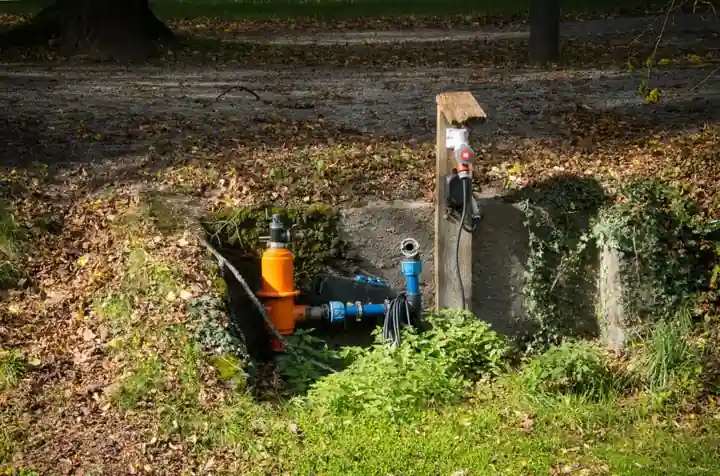
An irrigation pump must deliver the required flow at the calculated total dynamic head, with 2.31 ft of water head equal to 1 psi.
An irrigation pump should be selected to match the requirements of the water source, the water distribution system, and the irrigation equipment [S1].
Define the irrigation duty before selecting a pump
Total dynamic head is the sum of total static head, pressure head, friction head, and velocity head. The required inventory must identify the water source, required pumping flow rate, total suction head, and total dynamic head before a pump model is selected [S1].
Irrigation head is interchangeable with pressure because a 2.31 ft column of water corresponds to 1 psi. Pipe distance, elevation, irrigation-system pressure, and the selected flow rate collectively determine the required head [S1].
A useful distinction is between pumps that create irrigation pressure and transfer pumps that mainly move water through hoses. Irrigation equipment is normally specified by flow rate in GPM and pressure, while transfer pumps are often described by GPH and are not the same class of equipment [S3].
Compare the pump families against actual duty
Booster pumps are often centrifugal pumps and are generally used where higher pressures or a pressure differential are required, such as for filter flushing or fertigation [S3].
Centrifugal pumps are common for turf irrigation and pressure boosting, using one or more impellers to raise water pressure. Booster pumps add pressure to an existing system and may support filter flushing or fertilizer injection [S3].
A dry-claw, dry-screw, or other process-vacuum machine is the wrong primary choice for water delivery. The dry claw vacuum pump and dry screw vacuum pump families remove air or process vapors from a vacuum system, while irrigation duty requires an identified water flow at a specified head [S2][S4][S6].
Use vacuum pumping only for a defined auxiliary duty

Vacuum pumps are available in different types that offer varying displacement capacities and ultimate vacuum levels [S2]. Vacuum level, pumping speed, operating cost, and maintenance must be evaluated together because an unsuitable selection can be expensive [S4].
Rotary-vane pumps offer lower initial cost and compact construction but use oil for sealing, lubrication, and cooling. Oil inspection is required regularly, and the cited guidance recommends changing it approximately every 3,000 operating hours [S2].
Rotary-screw pumps are particularly suited for large industrial vacuum users in the glass, plastics, canning, and food-packaging industries [S6]. If the actual requirement is a liquid-ring pump, compare its operating limits with the stated pressure duty; one selection reference states that water-ring pumps are preferred when the required absolute pressure exceeds 3,300 Pa [S8].
Select against four measurable criteria
The comparison must cover four criteria: required flow, required head or vacuum level, operating duration, and service conditions. Centrifugal and turbine pumps are judged by GPM and total dynamic head, while vacuum pumps are judged by displacement, ultimate vacuum, pumping speed, and compatibility with carried liquid or vapor [S1][S4].
Do not choose the mainstream centrifugal option when the duty is actually air removal at a controlled vacuum level. A conventional water pump does not establish the same vacuum performance envelope as a process-vacuum pump, and a vacuum generator may fit only when it can meet the specified flow and pressure demand [S4].
Account for suction conditions and failure modes
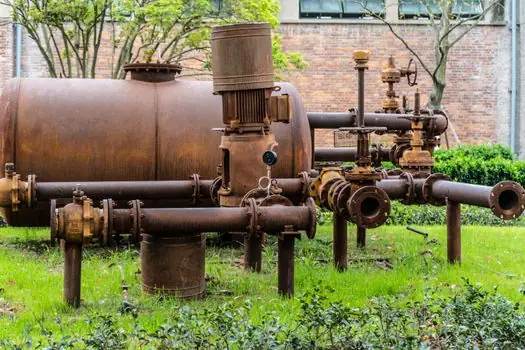
Cavitation occurs when fluid pressure falls rapidly below vapor pressure, allowing bubbles or voids to form and collapse. The resulting shock waves can damage pump components and produce pitting, while low system pressure can also cause rapid cycling that burns out a pump [S3].
NDSU publication AE1057, reviewed February 2022, identifies suction head and total dynamic head as mandatory selection inputs [S1].
Vacuum-pump selection also requires attention to vapor contamination. Rotary-vane pumps can suffer oil contamination when solvents condense in the oil, so condensers or cold traps are used upstream to protect the pump [S2]. A water-ring arrangement must likewise be checked against the actual liquid and pressure requirement rather than selected from pump category alone [S8].
Verify construction, efficiency, and operating records
Pump efficiency must be matched to the duty point, and the manufacturer’s pump curve should be used to confirm that the required flow and total dynamic head fall within the usable operating region. Speed changes alter the pump curve, so selected speed and impeller configuration must be included in the review [S1][S7].
For a vacuum pump, the record should include ultimate pressure, displacement, pumping speed, electrical input, cooling requirements, duty cycle, fluid or vapor compatibility, and maintenance intervals. Rotary-vane oil service at approximately 3,000 hours and hybrid-pump oil life stated as up to 10 times longer than a rotary-vane pump are useful maintenance benchmarks, not universal service intervals [S2].
Construction details should follow the source water. Irrigation water may contain dissolved minerals, sediment, biological material, or fertilizer residues, so intake screening, corrosion-resistant wetted parts, seal arrangement, and cleanability require confirmation from the manufacturer’s material and duty data [S1][S3].
Build a defensible procurement specification
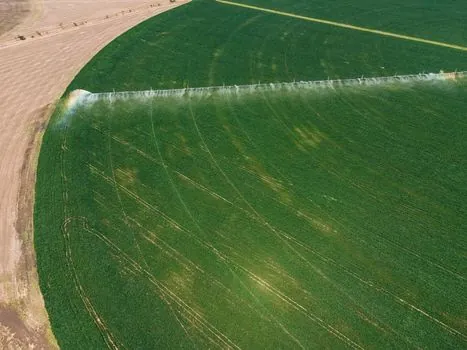
The procurement package should state the water source, design flow in GPM, total dynamic head in ft, suction conditions, pipe and emitter friction data, operating hours per day, elevation, allowable suction lift, water chemistry, and required pump-curve operating range. These are the core inputs used to match an irrigation pump to the source, distribution system, and irrigation equipment [S1].
For an auxiliary vacuum package, add required absolute pressure or vacuum level, vapor and liquid load, pumping speed, permitted residual oil, exhaust treatment, continuous or intermittent duty, and available utilities. Rotary-screw equipment should be considered for large industrial vacuum loads, while rotary vane or diaphragm equipment should be selected according to depth of vacuum, displacement, chemical compatibility, and maintenance burden [S2][S4][S6].
For deeper pump-selection guidance, compare multistage centrifugal pumps for irrigation with the required head and flow, then confirm the final selection against the published pump curve rather than nominal horsepower [S1].
The next verification step is to submit the measured duty to the pump supplier: request a curve showing flow, head, efficiency, power, NPSH-related suction limits, materials, and speed, and require the proposed operating point to be marked on it.