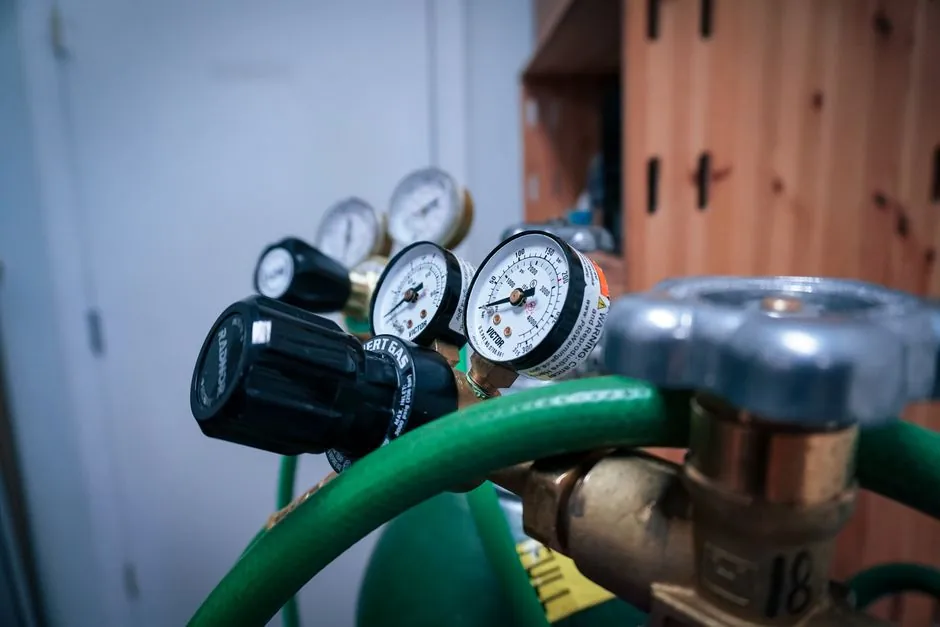
A diaphragm valve isolates or modulates HVAC water, refrigerant, and chemical-dosing service with no stem leakage, but the correct selection depends on body geometry, fluid compatibility, and actuator demand.
For hydronic heating and cooling, compare weir and straight-through bodies, elastomer diaphragms, manual or powered actuation, and the distinction between isolation duty and proportional throttling.
Define the HVAC duty before choosing the body
A diaphragm valve uses a flexible elastomeric membrane to regulate flow by pressing against a raised seat or weir; the actuator moves a compressor, and the diaphragm is normally the only component directly exposed to the process fluid [S2][S3]. This arrangement prevents fluid from reaching the stem and gives diaphragm valves no stem leakage [S3].
Weir-type bodies suit regulation because the diaphragm travels a short distance from a raised central weir to close, reducing the force required by the actuator [S3]. The weir type is therefore the normal choice for modulating control, while the straight-through type is preferred where pressure drop and clean transport matter more than stroke economy [S2][S3].
Typical HVAC uses include freshwater circuits, chemical dosing lines, cooling circuits, and other fluid-handling duties where corrosion resistance, hygienic construction, or tight shutoff is valuable [S2][S3]. Diaphragm valves can start, stop, throttle, and isolate process media [S2].
Weir versus straight-through: compare the operating tradeoffs
Weir-type and straight-through diaphragm valves differ in actuator travel, pressure loss, and flow path, which should be evaluated together rather than treating either geometry as universally better [S3].
For broader mechanical context, the same selection logic applies when comparing a diaphragm valve with a conventional control valve. A diaphragm valve has no stem leakage and a limited wetted mechanical parts count, while conventional valves may offer a wider range of characterized flow coefficients and actuator arrangements [S2][S3][S4].
Match the diaphragm material to the fluid and temperature
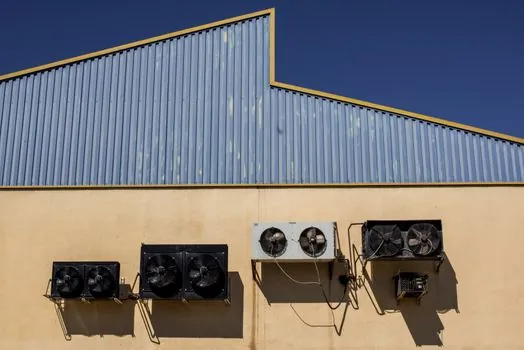
Natural rubber, EPDM, PTFE, and neoprene are identified diaphragm materials, but each selection must be tied to the actual fluid chemistry and the manufacturer's temperature and pressure ratings [S3]. The material also determines chemical compatibility, service temperature, and expected diaphragm life [S3].
For HVAC applications, establish whether the membrane sees hot or chilled water, glycol, refrigerant, treated water, or a chemical injection stream. A valve selected only for its nominal valve size will not be a defensible selection unless its wetted material is compatible with that service [S2].
Do not assign a universal temperature range to all diaphragm valves because the limit depends on the specific elastomer, reinforcement, body, seat, bonnet, and actuator combination [S3]. Require the manufacturer to state the allowable pressure-temperature envelope for the exact material and size. The application must also remain within that envelope, not merely below a catalog pressure rating.
Choose actuation by control function
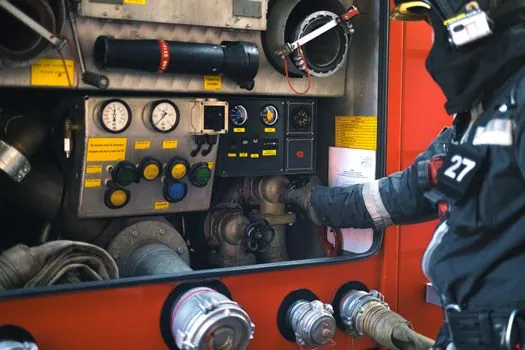
Manual handwheels are suitable for infrequent operation where automation is unnecessary, pneumatic actuators provide fast action where compressed air is available, and electric actuators support remote positioning where compressed air is not available [S3].
For HVAC control loops, the actuator must deliver enough stroke and force to close against the selected body's differential pressure, not just move the compressor through an unloaded stroke. A diaphragm valve controls flow by pressing a flexible diaphragm against a raised seat or weir inside the valve body. An electric actuator may be needed where precise positioning or remote operation is required, while a pneumatic actuator is practical when plant air is available [S3].
Two-way valves are the normal selection for single-line isolation, on/off service, or simple proportional control.
Use diaphragm valves for the right service class
Diaphragm valves are suitable for both on/off and throttling applications. In HVAC systems, that supports chemical dosing, selected hydronic-control duties, and fluid-isolation points where stem leakage and wetted-part contamination are primary concerns.
They are not the automatic choice for every HVAC valve position. Ball valves are generally applied for isolation, including component shutdown and maintenance, rather than throttling [S4][S5].
A diaphragm valve is also a poor shortcut for demanding proportional control outside its characterized range. It can handle on/off or narrow-range throttling, but a system requiring broad turndown, high-temperature throttling, or a verified pressure-drop curve across the full travel should be evaluated against globe or other characterized control valves [S4].
Set pressure, temperature, flow, and code limits
Selection must record at least 6 service variables: fluid name and concentration, design and operating temperature, maximum allowable working pressure, normal flow and pressure drop, diaphragm material, and actuation method [S2][S3]. Pipe size alone is insufficient because flow capacity and pressure loss depend on the body geometry and valve opening.
For boiler-room or HVAC installations, check whether the specified valve must meet ANSI B16.1 or ANSI B16.5 flange dimensions and whether the application requires UL or FM listing [S8]. Do not apply a standard or listing unless it applies to the exact valve configuration, size, pressure class, medium, and installation.
Also verify actuator fail action, accessible installation clearance, allowable differential pressure at closure, maximum and minimum controlled flow, and whether the actuator is suitable for frequent cycling. A pneumatic actuator with an instrument air supply of 4–6 bar is common in process plants, but the research material does not establish that range for every HVAC actuator [S3].
Apply a shortlist logic for HVAC procurement
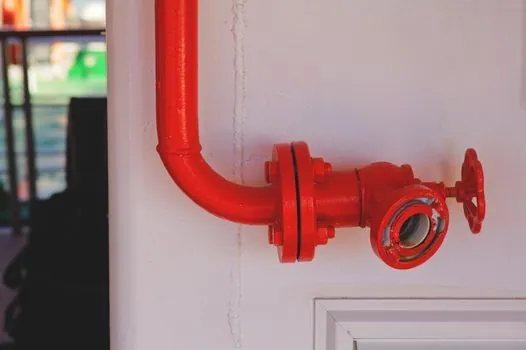
Select a weir-type two-way diaphragm valve with a chemically compatible elastomer when the duty is proportional water, glycol, or chemical-service control and the diaphragm is the principal wetted barrier. Select a straight-through body when minimizing pressure drop is more important and the required stroke and closing force can be met by the actuator [S2][S3].
Use manual actuation for infrequent isolation, pneumatic actuation for fast remote control with plant air, and electric actuation for remote positioning where air is unavailable [S3]. Specify three-way construction only for genuine mixing or diverting duty [S3].
Complete the procurement check with the fluid compatibility matrix, pressure-temperature curve, actuator sizing, connection standard, certification requirement, and maintenance access. Additional service-specific guidance is available for diaphragm valve selection in chemical processing, where contamination and material compatibility can outweigh pressure-drop considerations.