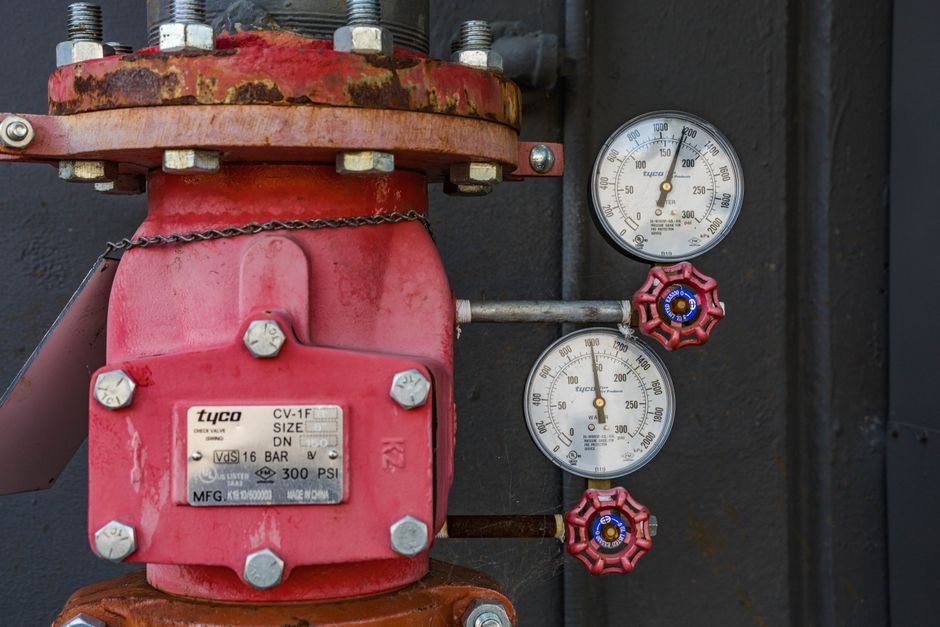
Diaphragm valves in the 2026 OEM catalogue span an extreme size envelope — from Koganei's PVS-series chemical pilot valve with a 1.5 mm [0.059 in] internal-pilot orifice [S2], to BERMAD's WW-748 pressure-sustaining pump-protection valve reaching DN 900 mm (35.433 in) and PN 25 bar (362.6 psi) [S6] — and selection is driven by the interaction of media chemistry, sealing duty, pressure class and actuation type, not by port size alone.
The 2026 product set also includes Brandoni's 12.000 series electric flow-control / level-control valve covering DN 50–800 mm and PN 16/25/40 bar at 0–70 °C [S1], BERMAD WW-750-80 and WW-753-80 hydraulic level-control valves at DN 40–600 mm [S3][S5], and BERMAD 105-M hydraulically-operated regulating valves at DN 40/50/65/80 mm for water service [S4]. Across all of these, the elastomeric diaphragm is the only wetted sealing element, which is the single defining engineering fact behind every selection decision.
Where a diaphragm valve fits, and where it does not
The diaphragm isolates the bonnet, stem and actuator from the process fluid — no packing gland, no stem seal leakage path, no lubricant contamination [S1][S3]. Brandoni lists the 12.000 version's principal functions as automatic ON-OFF, pressure regulation, pressure relief/sustaining, level control, flow control and shut-off for excess flow, all combinable in a single valve body [S1]. BERMAD's 700 SIGMA EN/ES series adds "excellent anti-cavitation properties," "drip tight sealing," "double chamber design" and a "protected diaphragm" among its product-feature claims, with the body designed for unobstructed flow at high differential pressure [S3].
Use them for: corrosive chemicals, abrasive slurries, clean water, potable water, analyser sample lines, and any application where the act of stroking a stem through a packed gland would either leak or contaminate [S1][S2][S6]. Avoid them for: high-temperature steam service above the elastomer rating, applications requiring tight throttling across a very high pressure drop where a globe valve control characteristic is mandated, and any service where the diaphragm is a scheduled consumable but the maintenance interval is unacceptable. Compared with a plug valve, a diaphragm valve has a tighter shut-off but lower temperature ceiling and shorter diaphragm life.
DN, pressure class and temperature envelope across 2026 product lines
Size range in the current sample is unusually wide: Koganei PVS at 1.5 mm orifice for chemical pilot duty [S2]; BERMAD 105-M at DN 40, 50, 65 and 80 mm (1.575 / 1.969 / 2.559 / 3.15 in) for water regulating service [S4]; Brandoni 12.000 at DN 50–800 mm (1.969–31.496 in) with PN 10, PN 16, PN 25 (and DN 50–150 of the related 13.000 piston series in PN 40 / 580.2 psi) [S1]; BERMAD WW-750-80 and WW-753-80 at DN 40–600 mm (1.575–23.622 in) for hydraulic level control [S3][S5]; BERMAD WW-748 at DN 40–900 mm (1.575–35.433 in) and 0.5–25 bar (7.3–362.6 psi) at 80 °C max for pump and collector pressure-sustaining service [S6].
Temperature ceilings in the data are modest: 0–70 °C on Brandoni 12.000 [S1] and 80 °C (176 °F) on BERMAD WW-748 [S6]. Selection rule: when process temperature exceeds ~80 °C the elastomer — typically EPDM, FKM or PTFE-faced — becomes the limiting component, and a higher-class control valve architecture (globe, plug, or PTFE-lined full-bore ball) should be evaluated instead. Pressure-class hierarchy in the sample is PN 10 / PN 16 / PN 25 / PN 40, with Brandoni's 12.000 covering 16 / 25 / 40 bar (232.1 / 362.6 / 580.2 psi) [S1] and BERMAD WW-748 capped at 25 bar [S6].
Actuation and control: electric, hydraulic and pilot-operated
Three actuation families coexist in 2026. Electric actuation: Brandoni 12.000 is offered as an electric flow-control / level-control automatic valve with a stem-bonnet-spring operator [S1]. Hydraulic / pilot-operated: BERMAD's entire 700 SIGMA EN/ES family is hydraulically operated with double-chamber unitised actuator and a separate 3-Way altitude pilot that commands the main valve open/close in response to reservoir level [S3]. BERMAD WW-748 is hydraulically operated for pressure-sustaining service and is described as supporting reducing, discharge, recirculation and jumper functions on pumps and collectors [S6]. BERMAD 105-M is a hydraulically-operated regulating valve for water at the smaller DN 40–80 mm range [S4].
Pneumatic / hydraulic pilot for chemicals: Koganei PVS is an internal-pilot chemical 2- or 3-way valve with 1.5 mm orifice that does not transmit heat to the fluid, and a single solenoid can drive up to two air-operated valves simultaneously, which suits analyser-dispensing processes [S2]. The selection rule: electric for clean on-off and slow modulation where power and signal are available; hydraulic-pilot for waterworks where line pressure is the power source and no electrical signal can be run into a flooded valve box; pneumatic-pilot for chemical / analyser duty where heat transfer to the fluid must be minimised.
Comparison: electric vs hydraulic-pilot vs pneumatic-pilot at a glance
Comparing the three families on four selection criteria using 2026 product data: (1) Typical service — electric (Brandoni 12.000) is general water-plant flow/level control [S1]; hydraulic-pilot (BERMAD 700-series) is waterworks level, pressure-sustaining, pump protection [S3][S6]; pneumatic-pilot (Koganei PVS) is chemical and analyser dispensing [S2]. (2) DN range — electric DN 50–800 mm; hydraulic-pilot DN 40–900 mm; pneumatic-pilot sub-DN 50 mm. (3) Pressure class — electric PN 16/25/40; hydraulic-pilot 0.5–25 bar (7.3–362.6 psi); pneumatic-pilot not stated in sample. (4) Temperature ceiling — electric 70 °C, hydraulic-pilot 80 °C, pneumatic-pilot not stated. A reader who already has line pressure and a 3-Way float pilot in the tank should default to a hydraulic-pilot globe-pattern diaphragm valve; a reader who needs ON-OFF from a 4-20 mA signal should default to electric; a reader feeding an analyser should default to a compact pneumatic-pilot valve [S1][S2][S3][S6].
Body pattern, seat design and standards compatibility
BERMAD's 700 SIGMA EN/ES series is described as oblique-pattern, globe-style with a raised seat assembly and a double-chamber unitised actuator that can be removed from the body as a single integral unit for in-line service [S3]. The WW-750-80 / WW-753-80 are seat-type, monobloc, in-line configurations with integral modulating low-flow capability and are available with an Independent Check Feature coded "2S" [S3][S5]. The 700-series body geometry is described as hydrodynamic, with an obstacle-free flow pass, optional V-Port throttling plug for stable low-flow modulation, and "compatible with various standards" for face-to-face dimensions [S3]. Techcon's diaphragm-valve line for fluid dispensing adds a different geometry family — high-speed jet, precision micro-shot and handheld configurations — used in adhesive and reagent metering.
Selection consequence: for tank-level modulating duty specify oblique-pattern globe diaphragm with raised seat and double-chamber actuator [S3]; for pump-protection pressure-sustaining specify monobloc seat body with V-Port option and Independent Check Feature [S3][S5][S6]; for micro-dispensing specify a compact 2- or 3-way pneumatic-pilot body with a sub-2 mm orifice [S2]. Sizing the diaphragm itself — a separate engineering step — is covered in elastomer-fabric selection guides for turbocharger and EGR actuators, where mould design, material formulation and key-process technology transfer is a paid service.
Selection gates to walk through before you specify
Gate 1 — media and chemistry. Match the diaphragm elastomer to the fluid; for water service EPDM is the default, for hydrocarbons FKM, for aggressive chemicals PTFE-faced or fully PTFE-lined bodies are used [S1][S2]. Gate 2 — DN and pressure class. Use PN 10 for DN ≥ 600 mm water mains, PN 16 / PN 25 for general water-plant duty, PN 40 only where the 12.000 / 13.000 piston series or equivalent is explicitly offered at that rating [S1]. Gate 3 — actuation and signal. Electric if a 4-20 mA or on-off command is available; hydraulic-pilot if line pressure is the only power source and the valve must operate through power loss; pneumatic-pilot if the process is chemical or analyser-grade and heat transfer to fluid must be minimised [S1][S2][S3]. Gate 4 — duty and lifetime. ON-OFF service allows a larger range of elastomer grades; continuous modulating service at high ΔP shortens diaphragm life and pushes the spec toward a globe-style control valve with a metal seat.
Two further gates are routinely skipped and cause field failures: Gate 5 — maintainability. Confirm the actuator can be removed as a single unit without breaking the body pipework, and that diaphragm spares are stocked with traceable batch and cure date [S3]. Gate 6 — documentation. Require face-to-face and flange dimensions matched to a recognised standard, not a "compatible with various standards" claim without a specific standard number on the data sheet [S3]. A practical side-by-side for sourcing is laid out in the recent check-valve selection guide, which uses the same gate-by-gate method and translates cleanly to diaphragm valves.
Trackable signals to watch through the rest of 2026
Three signals are worth tracking on a quarterly basis. (1) Pressure-class creep at the upper end: BERMAD's WW-748 already reaches PN 25 at DN 900 mm and 80 °C [S6]; any 2026 update extending that to PN 40 at DN ≥ 600 mm would shift the spec boundary against larger linear-actuated globe valves in waterworks. (2) Temperature-ceiling movement on electric-actuated models: Brandoni 12.000 is currently capped at 70 °C [S1]; an extension to 90 °C with FKM diaphragm would open chemical and hot-water service to the electric family. (3) Standardisation of elastomer compound and cure-date coding: the rubber-diaphragm industry still supports free mould design and material-formulation technology transfer, indicating that compound selection remains application-specific rather than off-the-shelf — a data point a sourcing engineer should verify on each RFQ.