Needle valve selection is a four-axis decision: port size (DN), pressure class, temperature window, and body/trim material, and skipping any one of them produces a fitting that leaks, chatters or fails to regulate [S1][S3]. On the public 2026-05 to 2026-07 OEM data, the working envelope of commercial needle valves spans DN 0.062-1 in (1.58-25.4 mm), pressures from -1 to 4,140 bar, and temperatures from -196 to +649 °C, so almost every fluid-control spec a process engineer writes can be met by a catalogued unit [S1][S2][S3].
Where a needle valve sits in the line matters as much as its rating. A needle valve is a fine-adjustment throttling device, not a block valve: a tapered metal needle engages a matching seat, and a quarter or so of handwheel travel typically takes the valve from fully open to fully closed, giving the high resolution that globe and ball valves cannot [S3][S5]. For shut-off service, a ball valve is cheaper and faster; for coarse isolation, a butterfly valve is more compact. The needle earns its place when the controlled variable is mass flow, pressure drop, or sample purge, not on/off status.
Port Size and End Connection: DN, Thread and Body Geometry
Public OEM data shows needle valves are stocked from DN 0.062 in (1.58 mm) up to DN 1 in (25.4 mm) in the high-pressure catalog, with the typical instrumentation line stopping at DN 0.5 in (≈ 12.7 mm) [S1][S3]. Below DN 0.125 in the valve is essentially a sample-line or gauge isolator; above DN 0.5 in it is approaching process-control territory where the seat length and stem torque start to dominate the actuator choice.
Body geometry is one of the most under-specified items on a purchase order. The Redfluid 560.01.NP is offered in female, male, straight and right-angle configurations on the same trim, so a panel-mount gauge isolator, a block-and-bleed manifold and a Z-pattern line install can all be served without re-engineering the seat [S3]. For a semiconductor purge line the KaoLu FC-20 ships in compact straight-through geometry at 0.125, 0.375 and 0.5 in to drop straight into a tool gas panel [S2]. Thread standards commonly crossed on the same product include NPT ASME B1.20.1, BSP parallel to ISO 228-1, BSPT taper to ISO 7-1 / EN 10226-1, and double-ring compression fittings for tube system, which means the same DN can map to four different installation interfaces [S3].
Pressure Class: Vacuum, Instrument and High-Pressure Cut
Needle valves cover three pressure bands that should not be mixed. The semiconductor-grade KaoLu FC-20 runs from -1 bar (-14.5 psi) vacuum to 20 bar (290 psi) gauge, with flow limited to 94 l/min (24.83 us gal/min) and a digital servo drive for high-resolution purge [S2]. The Redfluid 560.01.NP instrumentation Minor series runs 0-255 bar (0-3,698.5 psi) and is aimed at panel-mount gauge and impulse-line service [S3]. The Redfluid lever-operated high-pressure line runs 400-4,140 bar (5,801-60,045 psi) and is built for test benches, chemical injection and downhole tooling, with the 1,380 bar band called out as the "Medium Pressure" (MP) tier and 4,140 bar as the "High Pressure" (HP) tier [S1].
Picking across bands is the most common spec error. A 20 bar purge valve will not survive a 4,140 bar test rig; a HP needle with NPT threads will not seal at -1 bar vacuum without a different packing set. The published characteristics list also flags unusual numbers such as 0 bar minimum working pressure, which is genuinely a "vent to atmosphere" rating, not a generic placeholder, and that should be confirmed against the medium before the valve is fitted to a pressurised line [S3].
Temperature Window and Packing Material
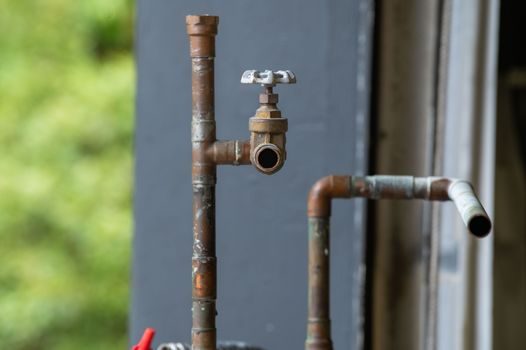
The 2026 OEM data shows the operating temperature band is a function of body, trim and packing together, not body alone. The Redfluid HP lever-operated needle runs -196 to +649 °C (-321 to +1,200 °F), which is cryogenic-LNG on the low end and superheated-steam territory on the high end, and the seat is a metal-to-metal needle point, so the temperature limit is set by the 316 stainless body and stem rather than by an elastomer [S1]. The Redfluid 560.01.NP Minor series runs -29 to +250 °C (-20 to +482 °F) with Teflon (PTFE) packing as standard, with optional GRAFOIL packing for higher temperatures [S3]. The KaoLu FC-20 with EPDM seals runs only -20 to +84 °C (-4 to +183 °F), which is fine for a clean dry N₂ purge on a semiconductor tool but disqualifies it from any hydrocarbon or steam service above ~80 °C [S2].
For high-temperature hydrocarbon or hydrogen service, the practical rule is metal seat + GRAFOIL packing + 316/316Ti body, which the Minor series lists as a buildable option on the standard form [S3]. For low-temperature / cryogenic, the binding constraint is usually the body certification (impact testing at -196 °C) rather than the packing, and the HP line carries that envelope as standard [S1]. When in doubt, the safe default is the smallest temperature envelope that still fits, because packing-set swaps in the field are the root cause of most chronic seat-leak tickets on needle valves [S1][S3].
Body and Trim Material: Brass, 316 SS, 316L, 316Ti and 13% Cr
Material is where the OEM data and the buyer enquiry data meet head-on. The Redfluid 560.01.NP ships in DIN 17660 brass or 316 / 316L / 316Ti stainless, with the stem hard-coded to 316 stainless on every body, so the wetted trim is consistent even when the body is the cheaper brass option [S3]. The KaoLu FC-20 offers 316L stainless, aluminium or PEEK body, with the aluminium variant aimed at sub-fab gas panels where weight and cost matter more than corrosion margin [S2]. The Redfluid HP line is 316 stainless as the catalogued default but is built-to-order in other alloys on request [S1].
A live 2026-06-03 buyer enquiry on the open B2B market is asking specifically for 1/4 in and 1/2 in screwed carbon steel needle valves to API 6000 trim, with 13% Cr (F6a / 410-class) trim, regulator pattern, rising stem, bolted bonnet and bolted gland, to BS5352 [S4]. That request is the textbook upstream / sweet-service spec: carbon steel body to take the mechanical load and price pressure, 13% Cr trim to resist H₂S and CO₂ corrosion in NACE MR0175 environments, and BS5352 as the dimensional and pressure-test standard. For sour service, the trim (not just the body) has to be specified to NACE MR0175 / ISO 15156, and the seat hardness typically has to land in the 22 HRC max range that the standard requires; 13% Cr is one of the materials that can be processed to meet that ceiling [S4]. Where the service is clean and dry, brass is acceptable and the DIN 17660 brass Minor gives the cheapest panel-mount option [S3].
Actuation: Handwheel, Lever, Pneumatic and Servo
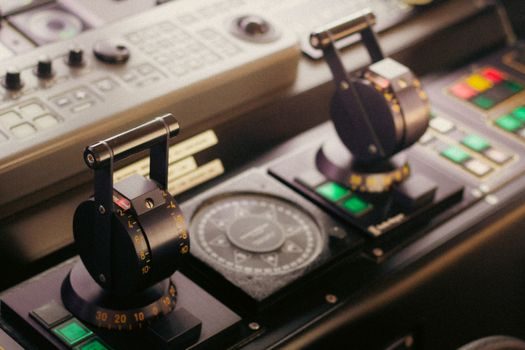
Actuation is mostly driven by the required resolution and the location. Handwheel (with fine-pitch thread) is the default for instrumentation and gauge-isolator service because it gives the most turns per unit stroke and the best tactile feedback; the Redfluid 560.01.NP ships with a Bakelite handwheel specifically chosen so the operator can feel the seat engagement without seizure [S3]. Lever operation, as on the Redfluid HP needle, is for high-pressure service where the closing torque is too high for fine handwheel use and the operator is gloved and/or standing back from the line [S1].
For purge and digital flow control, the KaoLu FC-20 is servo-driven with an optical position sensor on a single-seat body, and the OEM claim is that it delivers better resolution and lower leakage than a comparable needle because no differential pressure is required to actuate it [S2]. For automated process throttling, a pneumatic needle actuator is a third option that the broader CPV Manufacturing soft-seated globe and needle line offers in both manual and pneumatically-actuated versions, mainly for high-pressure gas and oxygen service [S6]. When the application calls for remote setpoint or SCADA throttling, the choice is pneumatic or servo, not handwheel; when the application calls for local set-and-forget, handwheel still wins on cost and on field-serviceability [S1][S2][S3].
Standards, Sour Service and Sourcing Reality
Standards are how a needle valve gets accepted at the receiving dock, and the 2026 OEM and buyer data cite three families. ASME B1.20.1 (NPT), ISO 228-1 (BSPP), ISO 7-1 / EN 10226-1 (BSPT) and DIN 259 govern the thread interfaces [S3]. BS5352 is the small-dimension steel needle-valve standard that the open buyer enquiry is calling out for 1/4 in and 1/2 in screwed carbon-steel units with bolted bonnet and bolted gland, and it is widely used in upstream oil & gas [S4]. API 6000 is the trim-class reference for the same enquiry and covers the pressure-class / material envelope for the bonnet, gland and seat [S4]. NACE MR0175 / ISO 15156 is the sour-service rule that the 13% Cr trim is being specified to satisfy [S4]. ISO 9001:2000 is the quality-system reference carried by at least one Chinese brass needle-valve exporter.
Sourcing reality in mid-2026 is a two-tier market: European and US OEMs (Redfluid SL, KaoLu via GennDih, CPV Manufacturing) hold the high-pressure, high-purity and certified-sour-service envelope, with published -196 to +649 °C and 4,140 bar ratings and verifiable material certificates [S1][S2][S3][S6]. Chinese OEM and trading-company supply, exemplified by the Okorder brass angle-needle line at 2,000-piece minimum order and 2,000,000 pieces per month throughput, covers the commodity brass, low-pressure, general-purpose envelope with ANSI / DIN / SAE / BS / JIS end connections. Engineering teams writing a 2026 spec should pick the tier that matches the consequence of failure: high-pressure test, sour hydrocarbon or semiconductor purge goes to the published-envelope OEMs with full traceability; general water / air / non-critical gas goes to the commodity brass tier.
Two trackable signals are worth following into the next quarter. First, the Matlabs Simscape / Fluids "Needle Valve (IL)" block is the current isothermal-liquid reference model, and the legacy Hydraulics (Isothermal) "Needle Valve" block is flagged for removal in a future release, which means any model-based flow-coefficient (Cv) calibration written against the old block will need to be re-validated against the IL block [S5]. Second, the live B2B enquiry flow on carbon-steel API 6000 / BS5352 needle valves at 1/4 and 1/2 in is the clearest read on upstream oil & gas capex pulse, and the next batch of qualified quotes on that spec is the cleanest forward indicator for HP / sour-service needle demand into Q3 2026 [S4].
For related coverage, see Top Solar Inverter Companies 2026: Specs, Sourcing and Selection.