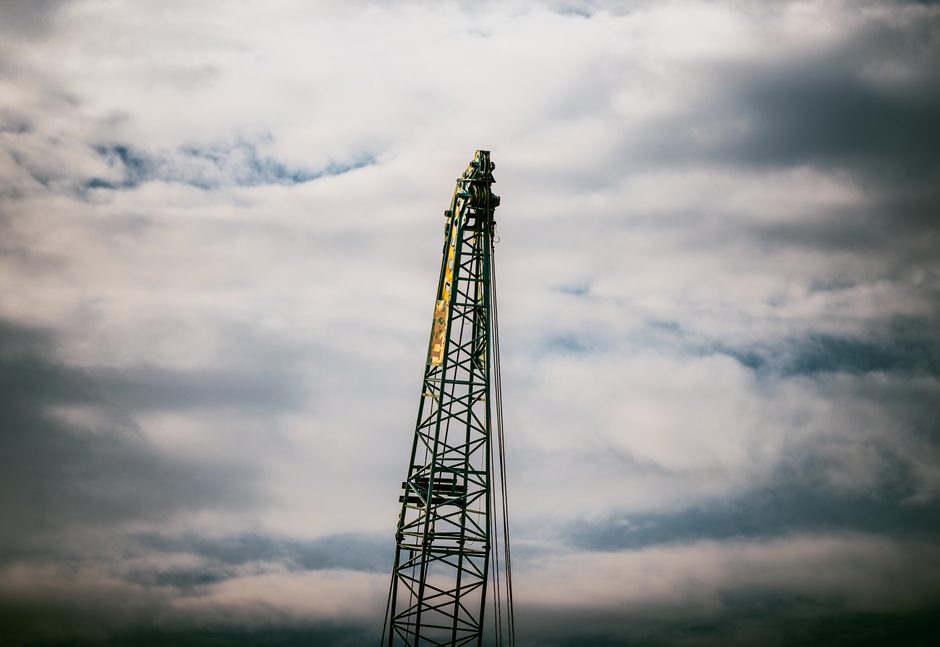
A new 92-tonne 100 m-class hydraulic diaphragm wall grab from a Chinese OEM lists at US$710,000–770,000 FOB on 2026-05-20 made-in-china listings, with working pressure 33 MPa, groove width 350–1,500 mm and rated power 298 kW (399 hp) [S2]. That single SKU brackets where the serious foundation-equipment cost lives in 2026.
Across the whole market the price spread is roughly two orders of magnitude: re-manufactured entry grabs sit at US$1.00–10,000/piece on Chinese B2B portals [S5], mid-tier hydraulic units from Jint, XCMG and Anhui Yingxie cluster around US$10,000–120,000 [S3], and a Casagrande KRC 2HD / B250 XP-2 dedicated diaphragm wall crawler rig weighs 62 t and drills to 35.5 m [S1]. Engineers buying a diaphragm wall grab for a metro, deep-basement or cofferdam job should anchor their budget to the trench depth and power class, not to brand name.
Price Bands by Equipment Class (May–June 2026 FOB China)
Re-manufactured and small rope-suspended grabs from Jiangsu-based Reman list at FOB US$1.00–10,000 per piece with 1-piece MOQ and 100 pieces/year supply [S5]. The Diamond-Supplier tier on made-in-china shows XCMG entry grabs at US$10,000–100,000 per piece (1 MOQ) and the Jint Sg70A hydraulic model at US$120,000 per set [S3]. Above that, the SINOMADA Sg60 100 m-class hydraulic grab posts US$770,000 for 1–9 pieces and US$710,000 at 10+ pieces, with 2460 × 3250 × 1413 mm transport envelope, 33 MPa working pressure and 350–1,500 mm groove width [S2]. The Casagrande KRC 2HD – B250 XP-2, a crawler rotary hydraulic platform purpose-built for diaphragm walls, drills to 35.5 m and weighs 62 t (68.3 short ton) [S1]. The four tiers — entry rope-suspended, mid hydraulic, heavy hydraulic grab, and dedicated crawler rig — are the real price tiers a tender should be broken into.
What Drives the Cost: Five Hard Spec Levers
Trench depth is the single largest cost driver. The 92-tonne SINOMADA Sg60 reaches 100,000 mm (100 m) of groove depth at 298 kW and 33 MPa [S2], whereas the Casagrande KRC 2HD – B250 XP-2 is rated to 35.5 m drilling depth on a 62 t crawler [S1] — a roughly 3× depth step with a proportional jump in steel, winch capacity and hydraulic horsepower. Working pressure of 33 MPa on the SINOMADA Sg60 [S2] is consistent with the high-pressure hydraulic synchronization designs documented for winch-and-hose follow systems on SANY SH400-class hydraulic diaphragm wall grabs [S4]. Groove width 350–1,500 mm on the Sg60 [S2] means the chassis, kelly bar and bite volume scale with the wider figure, not the narrow one. Finally, machine weight — 92 t for the Sg60 [S2] versus 62 t for the Casagrande rig [S1] — directly sets transport, counterweight and crawler-class cost. For matching logic on a related decision, see the four-gate selection method in Diaphragm Wall Grab Selection: 4 Spec Gates That Decide the Build.
Comparison: Entry Rope-Suspended vs Mid Hydraulic vs Heavy Hydraulic vs Crawler Rig
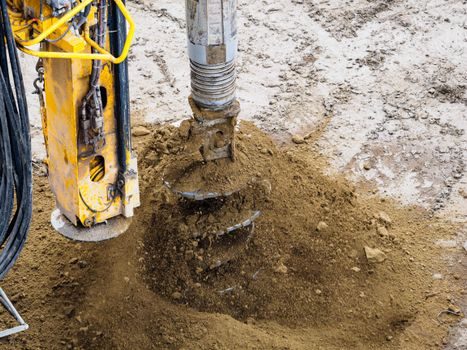
Side-by-side on the four decision criteria a buyer actually weights: [S1]
- **Price (FOB, 2026 listings):** US$1.00–10,000 re-manufactured [S5]; US$10,000–120,000 mid hydraulic (Jint Sg70A US$120,000/set, XCMG US$10k–100k) [S3]; US$710,000–770,000 heavy hydraulic grab (SINOMADA Sg60) [S2]; multi-million-class for Casagrande KRC 2HD – B250 XP-2 crawler rig, 62 t, 35.5 m [S1].
- **Trench depth capability:** shallow-to-medium for rope-suspended; mid for Jint/XCMG; 100 m for Sg60; 35.5 m drilling for the Casagrande crawler platform [S1][S2].
- **Power / hydraulics:** typically diesel-hydraulic at the entry tier; 298 kW / 33 MPa on the Sg60 [S2]; the Casagrande unit uses dedicated rotary-hydraulic drilling architecture for diaphragm wall work [S1].
- **Mobility / site integration:** skid- or crane-suspended at the low end; integrated hydraulic grab on a carrier at mid tier; full self-propelled crawler at the Casagrande tier [S1][S2][S5].
The selection map is straightforward: depth under ~30 m and short programme → entry or mid hydraulic; depth 60–100 m and continuous wall → Sg60-class heavy hydraulic; deep metro stations with strict verticality and integrated slurry handling → Casagrande-class crawler rig. For rig-side context, the Pile Driver vs Rotary Drilling Rig: Spec Cut for Foundation Engineers comparison and the Pile Driver Price and Cost Guide: Static, Hydraulic and Electric Cost Bands frame adjacent foundation-capex curves a DWG buyer usually shares a tender with.
Sourcing Levers, MOQ and Lead-Time Signals
MOQ is 1 piece across nearly all 2026 listings — the entry Reman grab, the XCMG and Jint hydraulic units, and the SINOMADA Sg60 all quote 1-piece MOQ with 10-piece price breaks kicking in around US$60,000 of unit-price drop on the Sg60 (US$770,000 → US$710,000 at 10+ pieces) [S2][S3][S5]. Volume discount therefore exists but is small as a percentage of the heavy-hydraulic-tier price. Payment terms on Reman are L/C and T/T [S5]; SINOMADA packs LCL for the 2460 × 3250 × 1413 mm envelope [S2]; after-sales support is "online support" with 1-year warranty on the Sg60 [S2]. Annual supply is constrained at the remanufactured tier (100 pieces/year) [S5] and effectively build-to-order at the heavy-hydraulic tier — a real schedule risk that should be priced in.
Who It Is For vs Who It Is Not For
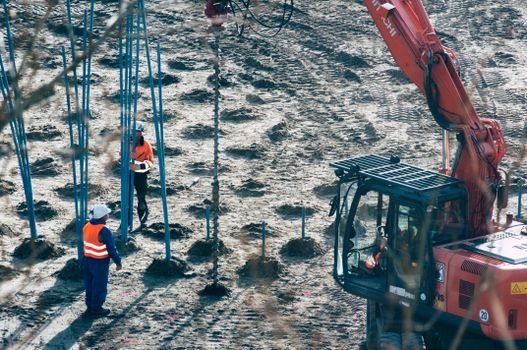
Re-manufactured entry grabs (US$1.00–10,000) suit short-pile, shallow-trench, light-panel diaphragm wall work where a contractor already owns a carrier crane and a slurry plant; they are not for 60 m+ metro walls or jobs with strict verticality tolerance. The Jint Sg70A at US$120,000/set [S3] fits small-to-mid foundation subcontractors running mixed piling-and-wall fleets. The SINOMADA Sg60 at US$710,000–770,000 [S2] is sized for dedicated diaphragm wall contractors on 60–100 m metro or deep cofferdam packages. The Casagrande KRC 2HD – B250 XP-2 at 62 t and 35.5 m [S1] targets integrated wall-plus-pile foundation packages where the rig is also used for rotary bored piles. For an adjacent process reference, the linear guide and crossed-roller guide encyclopedia entries cover the precision-movement hardware that a grab's kelly-bar guidance system is often compared to.
Failure Modes and Engineering Constraints to Budget For
Verticality control on trench-forming grabs is a known constraint — a SANY SH400 hydraulic grab trench verticality study is documented in open engineering literature [S4] — and correction systems on underground continuous-wall hydraulic grabs are typically modelled with bond-graph methods to handle the winch–hose follow dynamics [S4]. High working pressure (33 MPa on the Sg60 [S2]) means hose, winch-drum synchronization and seal replacement drive a meaningful slice of lifetime operating cost, separate from the FOB price. Buyers should also price slurry handling, desander, and solidification units as adjacent capex lines — Reman lists desander, mud solidification unit and slurry mixer alongside its diaphragm wall grab product family [S5].
Standards, Codes and What They Actually Pin
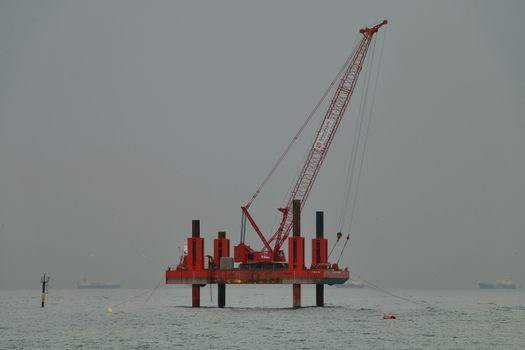
Diaphragm wall construction is generally executed to EN 1538 (execution of diaphragm walls) and to project-specific deep-foundation codes; grab-side design references the steel, welding and hydraulic-system standards appropriate to the jurisdiction. Buyers should confirm the project specification requires EN 1538-class execution, NDT on the joints, and any project-specific verticality tolerance (commonly 1:200 to 1:300 of wall depth) before locking the equipment class. Warranty on the SINOMADA Sg60 is 1 year with online support [S2]; CE certification is held by the entry-tier attachment [S2]; the Casagrande KRC 2HD – B250 XP-2 is a CE-marked construction machine in the DirectIndustry catalogue [S1]. Always pin the exact revision on the purchase order rather than relying on catalogue references.
Two trackable signals for the next buying window: (1) the next Sinomada/Jint/XCMG price refresh on made-in-china (the May 2026 listings already show a clear US$60,000 bulk-break at 10+ pieces on the Sg60 — watch whether that break widens by Q4 2026); (2) any new Casagrande, Bauer or Soilmec crawler-rig catalogue entry sized for >40 m wall depth, which would re-anchor the upper capex tier. Reference also the related procurement logic in the Universal Joint 2026 Price and Cost Guide: Material, Spec and Sourcing Levers, since hydraulic-rotary powertrains on grabs share driveline sourcing patterns with other heavy-construction equipment.