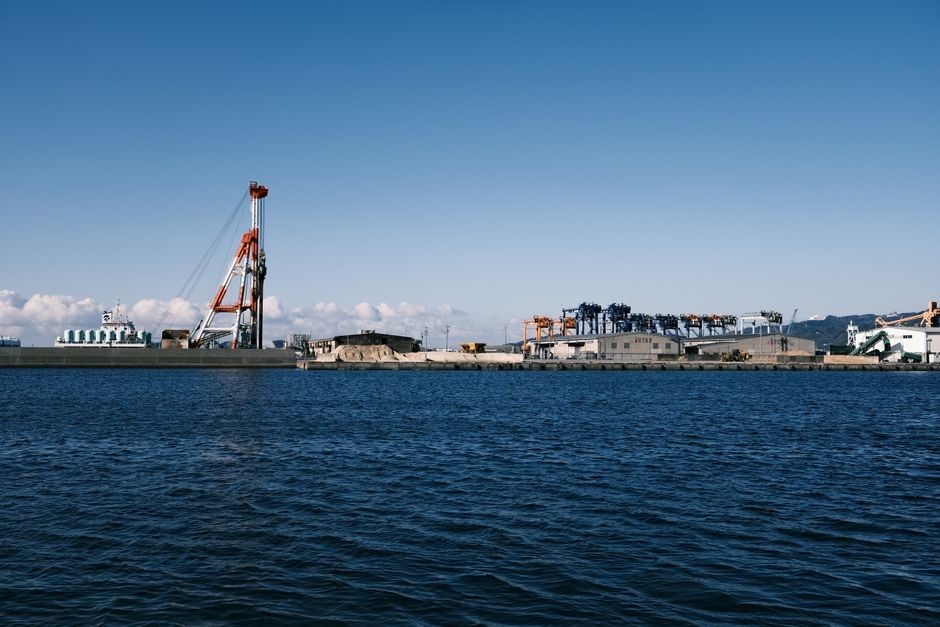
Selection of a diaphragm wall grab in 2026 is decided by four non-negotiable spec gates — groove width (350–1500 mm), maximum groove depth (60–100 m), grab bucket capacity (0.5–1.3 m³) and host carrier class (60–92 t crawler base) — and missing any one of them invalidates the bid, per current manufacturer catalogues [S4][S6].
For engineers sizing a foundation package for cut-off walls, metro stations or deep shaft projects, the grab is the spec, not the crane. The diaphragm wall grab catalogued on DirectIndustry lists 7 active product lines from 2 manufacturers as of June 2026 [S1], and Made-in-China carries at least 4 distinct model families in the US$10,000–800,000 export band [S2][S4].
Gate 1 — Trench Geometry: Width, Depth and Panel Length
Groove width on production diaphragm wall grabs spans 350–1500 mm in discrete sizes, with 600, 800, 1000 and 1200 mm being the most-stocked widths for metro and basement work [S6]. The SINOMADA SG60 covers the full 350–1500 mm range on a single carrier, while the XCMG SG70A and Jint Sg70A sit in the 600–1200 mm band more typical of urban transit lots [S4][S6].
Rated groove depth is the second geometry gate: the Yuchai YCD400 hydraulic reach is 60 m at 60 t machine weight, the XG-series grab pile driver extends to 80 m, and the SINOMADA SG60 is rated 100 m at 92 t operating weight with 298 kW (≈400 hp) input power [S3][S6]. Depth, not width, drives carrier mass and winch capacity, which is why shallow basement packages can be served by 30–40 t carriers while 80–100 m metro cross-passages require 90 t+ crawler bases [S3][S6].
Gate 2 — Grab Bucket Class, Weight and Cycle
Grab bucket capacity on 2026 production units runs 0.5–1.3 m³ per bite, with the Yuchai YCD400 at 1.3 m³ and a typical SG-series grab at 0.8 m³ [S3][S4]. The grab head mass itself is 18–20 t on a 60 t-class machine and scales roughly linearly with depth rating, because heavier chisel tools and Kelly-bar extensions are needed to keep the bite vertical at 80–100 m [S3].
Cycle time is set by the winch system and average ground pressure: the YCD400 uses a double-winch arrangement with 450 kN max traction, 108 kPa average ground pressure, and a hydraulic correction system that keeps the panel within typical verticality tolerances for slurry-wall construction [S3]. Buyers who need deeper panels must trade cycle time for weight, which is why the SG60 at 100 m depth weighs 92 t versus the 60 t YCD400 at 60 m depth [S3][S6]. For a related spec-cut on the host carrier side, see the rotary drilling rig vs shield machine comparison — the same depth-vs-torque trade-off shows up in both equipment classes.
Gate 3 — Power, Hydraulics and Carrier Stability
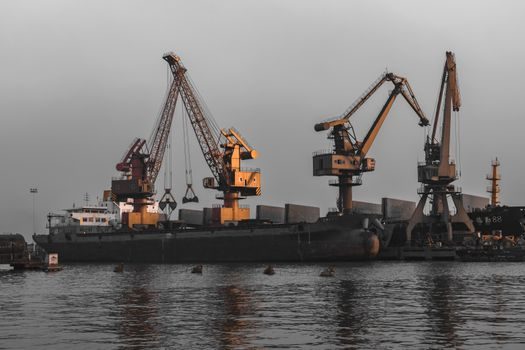
Rated hydraulic working pressure on current models sits at 33 MPa on the SINOMADA SG60, fed by a 298 kW diesel through a load-sensing pump group, while the YCD400 uses a closed-bucket hydraulic cylinder with 450 kN thrust for grab opening and closing [S3][S6]. Hydraulic architecture matters because slurry-wall grabs spend most of their cycle time under sustained load rather than peak load, so cooler-running open-loop systems are typically specified for tropical job-sites and closed-loop for cold-climate metro work [S3].
Carrier stability is set by track length, average ground pressure and counterweight package. The YCD400 platform runs at 108 kPa average ground pressure, 1.5 km/h max travel speed, 40% max grade ability and 3 r/min platform rotation — figures that put it in the soft-ground urban category rather than the rock-class remote-site category [S3]. Machines rated for 100 m grooves such as the SG60 step up to 92 t with a 2460 × 3250 × 1413 mm transport envelope, and that footprint is what lets them sit on the working platform next to a slurry-desilt plant without exceeding typical 150 kPa bearing capacity for temporary works [S6].
Gate 4 — Supplier Class, Certification and Spare-Parts Reach
Export-grade diaphragm wall grabs in 2026 are concentrated in Chinese OEM lines — XCMG, Jint, SINOMADA, Yuchai and the XG-series grab pile driver from Xuzhou Pizhou — and the Made-in-China product feed lists 5 audited Diamond Members actively quoting in this segment [S2][S4]. All of the listed export units carry CE marking and ISO 9001 factory certification, with online-support after-sales and a 1-year warranty as the baseline commercial envelope [S2][S6].
Price band per set is US$10,000–100,000 for light grabs and OEM hydraulic attachments, US$120,000 for a Jint Sg70A hydraulic diaphragm wall grab, and US$500,000–800,000 for a full XG-series grab pile driver with 200-unit-per-year production capacity from a single Xuzhou line [S2][S4]. XCMG E-Commerce and Anhui Yingxie Basic Engineering both run Diamond-Member storefronts on Made-in-China, which matters for buyers who need bonded-warehouse spare-parts reach rather than one-off container shipments [S4]. For sourcing tactics that translate across this kind of heavy-construction equipment, the pile driver selection guide covers the same four-gate discipline for the hammer-drive cousin of this machine class.
Decision Map: Which Grab Class Fits Which Job
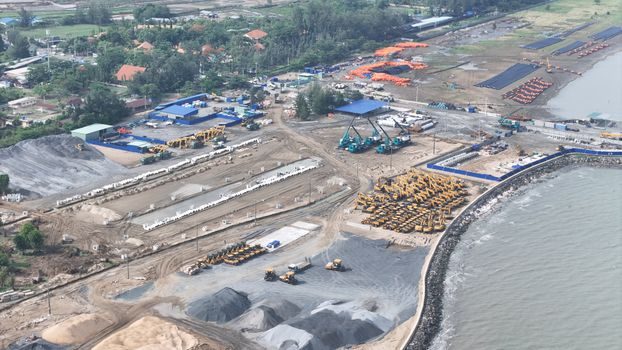
The right grab for a 30 m basement cut-off is a 30–40 t carrier, 600–800 mm width, 0.5 m³ bucket, and a standard double-winch — total budget line US$10,000–120,000 in OEM export pricing [S2][S4]. The right grab for a 60 m metro diaphragm wall is a 60 t YCD400-class machine with 1.3 m³ bucket, 450 kN winch traction, 33 MPa hydraulics and closed-bucket cylinder thrust — typical export price US$120,000–300,000 per set [S3][S4].
Anything deeper — 80 m cross-passages, 100 m deep shaft work — forces the SG60 / XG-series class: 90 t+ carrier, 350–1500 mm adjustable width, 298 kW prime power, 92 t operating weight and 1-year CE warranty, in the US$500,000–800,000 per-set band [S2][S6]. Buyers who try to push a 60 t-class machine past 60 m depth pay for it in panel verticality drift, kelly-bar fatigue and slurry-desilt cycle time, and that penalty is rarely visible at the bid stage — it shows up in the as-built survey [S3][S6].
Limits, Failure Modes and What Spec Does Not Save You
A diaphragm wall grab does not solve ground that is too hard for a chisel bite — for rock-class TBM-adjacent work the spec moves to a hydromill or cutter-soil-mix rig, not a heavier grab [S5]. The Autodesk structural-forum discussion on hydromill-designed diaphragm walls makes the point that once the design intent is "partial demolition of the finished wall" the wall has to be modelled as a hostable element with a void cut, which a generic grab-based construction sequence cannot deliver [S5].
The other failure mode is carrier flotation on soft slurry platforms. A 92 t SG60 exerts roughly 150 kPa on a 2460 × 3250 mm track footprint, so temporary works need a designed load-spreading mat; ignoring this gate is the most common cause of stuck carriers on metro sites [S6]. For buyers weighing a grab against an alternative foundation method, the rotary drilling rig selection guide covers the diameter-and-torque gate that drives a CFA pile alternative, and that comparison is the usual pivot point when a grab spec is being re-bid against a rotary alternative.
Trackable Signals to Watch in the Next Bid Cycle
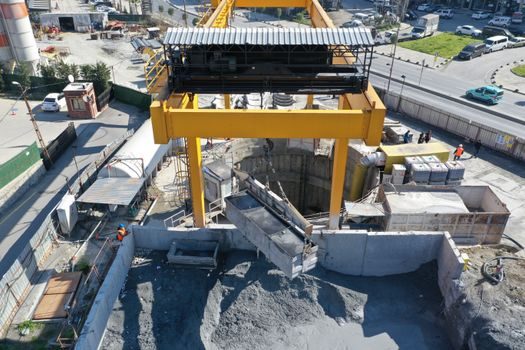
Watch the XCMG E-Commerce and Anhui Yingxie storefronts for new Diamond-Member audit dates on the Sg70A and SG60 model lines — those audit refreshes track which export lines are still actively shipping in 2026 [S4]. The Xuzhou Pizhou XG-series grab pile driver has a stated 200-unit-per-year capacity from a single ISO 9001 line, and any posted price change inside the US$500,000–800,000 band is a usable lead-time signal for the next 60–100 m metro tender [S2].
For component-level specifications, see diaphragm wall grab, diaphragm pump, and diaphragm valve.