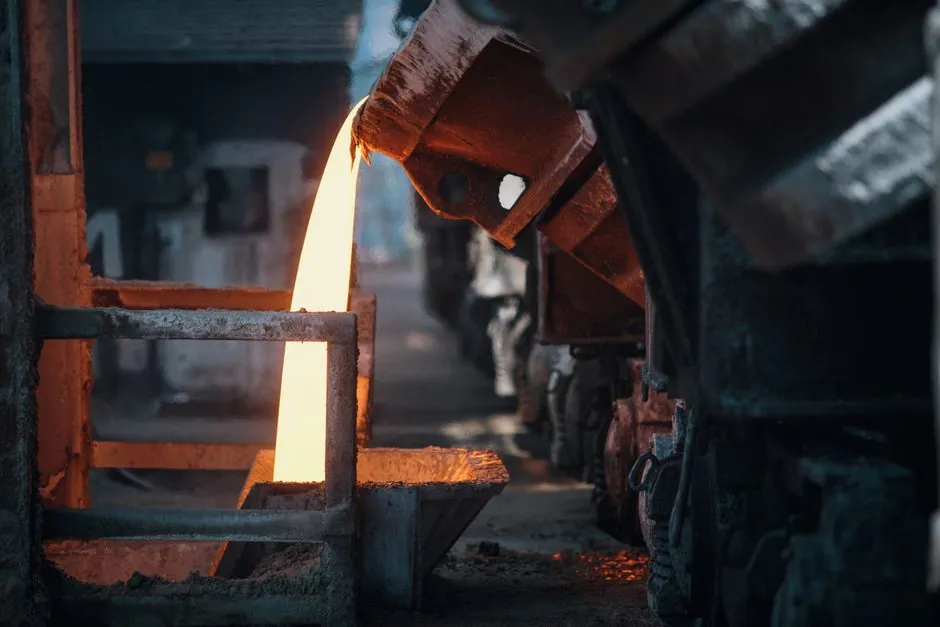
A new die casting die is machined from hardened tool steel and "takes months to produce," according to a 2025-11-18 process comparison [S3]. That single constraint defines the new-program critical path: design release, production tooling, trials, corrections, qualification, capacity ramp, and downstream queues all stack behind steel delivery and EDM hours [S5].
Die casting itself runs on cycles of 2 seconds to roughly 1 minute [S7], so the bottleneck is not the machine but the die casting die sitting in it. For programs targeting medium to high volumes, that upfront steel cost is the price of admission; for low volumes it is a penalty that is never amortised [S1][S4].
What the die is actually made from
Die casting dies are machined from hardened steel and "built for long production life and consistent accuracy," then cleaned, lubricated, and clamped into a die casting machine before production starts [S1]. The dies must withstand high injection pressure and repeated thermal cycles, which is why hardened tool steel is the default rather than a softer, faster-to-machine material [S4].
That material choice shows up on the schedule. Complex part shapes, tight tolerances, and multiple cavities push machining time and skilled-labor hours up, because every cavity, slide, and cooling channel has to be cut into hardened steel [S4]. Industry guidance on die casting design tips consistently points to tool-wear and stress-riser consequences (sharp internal corners cut tool life by roughly 15%) as a downstream effect of geometry decisions made before any steel is ordered [S2].
Why the lead-time clock starts at the steel mill
There is no reliable universal lead time for full-scale die casting production; a new program must clear design release, production tooling, trials, corrections, qualification, capacity ramp, machining, finishing, inspection, and logistics [S5]. Tooling approval may mean design approval, permission to trial, dimensional sample approval, or full production release, and a buyer that confuses those milestones hides risk inside the original date [S5].
Material availability is part of the same clock. "A common grade is not automatically in stock in the quantity and condition needed. Special chemistry, source restrictions, or traceability can lie on the critical path" [S5]. A 2026-03-18 process overview reinforces the same point: hardened steel dies must be machined, and that machining time is what compresses or extends the schedule, not the casting cycle once the die is live [S4].
The new-program critical path, stage by stage
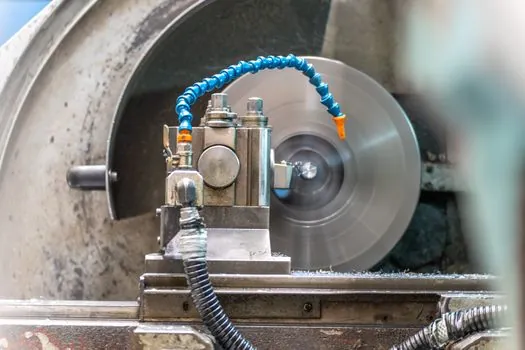
Neway's published critical path lays the sequence out cleanly: DFM and design release feeds tooling and downstream equipment, which feeds tool trials and corrections, which feeds qualification and pilot, which feeds ramp and rate release, and only then delivery [S5]. Each stage cannot start until the prior stage is signed off, and the longest pole is almost always the tool, not the machine.
Buyers regularly conflate three dates: first tool samples, first accepted production parts, and sustained delivery at the required rate. A tool trial can produce samples without completing process qualification, and an accepted first lot can ship before the cell demonstrates the monthly rate [S5]. Mixing those milestones is the most common reason a quoted lead time slips once the program is running.
Geometry choices that move the die-build date
Design changes after die manufacture begins force a re-baseline: identify which steel and downstream equipment remain usable, what tool rework is required, what new trial needs exist, and what material is now obsolete [S5]. Hiding a revision inside the original date produces an unreliable commitment, and that is the practical reason die-cast programs lock the CAD before steel is ordered, not after.
Geometry drives machining hours directly. The 2026 Xometry Pro guide puts the trade-offs in numbers: no or minimal draft adds 25-35% to the reject rate and costs 20-30% of tool life, uneven wall thickness adds 3-5 seconds per cycle from cooling delay, and sharp internal corners cut tool life by about 15% [S2]. A part redesigned with fillets of at least 2 mm and wall uniformity within plus or minus 0.3 mm dropped the reject rate on a Tier-2 automotive ECU housing from 18% to below 4% and doubled tooling maintenance intervals [S2].
Hard choices: when the die-build clock is the wrong tool

Die casting is "most effective when parts will be produced in medium to high volumes" because the setup costs and longer lead times only amortise at scale [S1]. Sand casting uses expendable sand moulds for flexible, low-volume production of complex parts, while die casting injects molten metal under high pressure into reusable steel dies for high-volume production with tighter dimensional control [S3]. Choosing die casting for a low-volume run means the per-part tooling burden never gets spread thin enough to compete [S4].
The break-even logic is reinforced by the process window itself. Die casting holds tight tolerances of plus or minus 0.005 inches and low draft angles of 0.5 to 2 degrees, which is exactly the geometry range that pushes tool steel machining hours up [S6]. A drawing that demands those tolerances on a 200-part annual run is asking hardened tool steel to do a job a sand mould could finish in days.
Repeat orders: a shorter path, but only if the steel is still good
A repeat-order date should be built from current facts, not the original launch lead time: confirm tool location and condition, open maintenance, available spare components, latest accepted revision, remaining inventory, material coverage, machine booking, fixture and gauge status, outside-process capacity, and packaging [S5]. A repeat order after a recent stable run may follow a short path; a dormant program may require a verification trial before cells can run again.
For repeat releases, the question is whether the tool, trim, fixtures, programs, gauges, finish specification, packaging, and material remain approved. "A long gap, repair, transfer, alloy change, or drawing revision may require more than normal replenishment" [S5]. Material choice matters here too: standard aluminum die casting machine alloys are common, but magnesium and zinc programs, or restricted-chemistry aluminium such as AlMg5Si2Mn, can land the material procurement step back on the critical path, which is why a 2026 structural-alloy comparison breaks the selection out separately for non-heat-treated aluminium die castings [S1][S5].
Decision rules for placing a die-build order
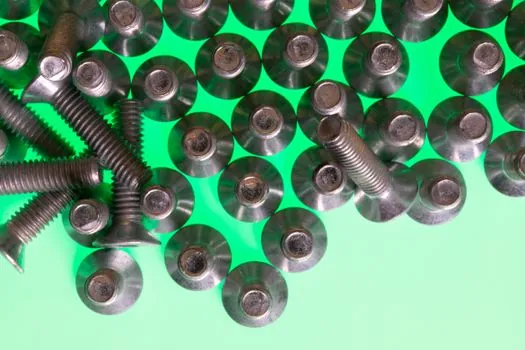
Lock the CAD and the revision before steel is cut, because every change after the die starts being machined triggers a documented re-baseline rather than a quiet slip [S5]. Specify the tool-approval milestone in the quote (design approval, trial permission, dimensional sample, or full production release) so the schedule clock starts at the right gate [S5].
Match the process to the volume band: sand casting for low volumes and complex one-offs, gravity die casting machine cells for medium runs, and pressure die casting for sustained high volume where tight tolerances and short cycles pay back the steel cost [S3][S6]. Plan tooling cost amortisation against the production volume, not the prototype quantity, because a die that "takes months to produce" is only a smart buy when the part count runs into the tens of thousands [S1][S3][S4].
Trackable signals to watch: quoted first-sample dates versus quoted first-accepted-part dates on new programs, tool-approval milestone language in supplier quotes, and any post-PO engineering change that has not been written into a re-baselined schedule [S5].
For related coverage, see AlMg5Si2Mn vs AlSi10MnMg: Non-Heat-Treated Structural Die Casting Choice.