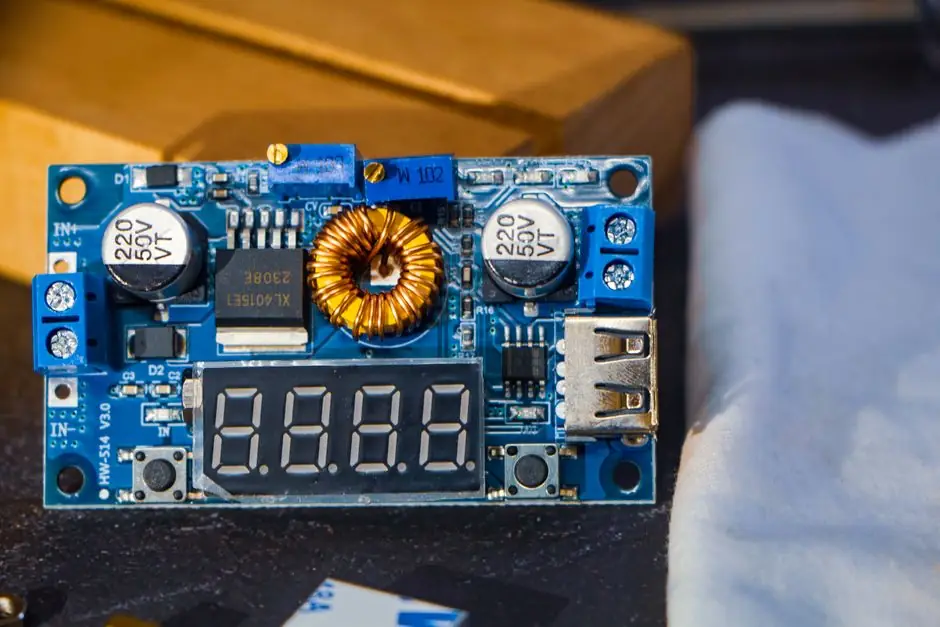
Efficient Power Conversion (EPC) publicly disclosed at APEC 2026 (March 2026) a 6 kW DC-DC converter that steps 800 V down to 12 V inside an 8 mm thick module, targeting the data-center 48 V/800 V intermediate bus and EV 800 V architectures [S2].
The module marks a step-change in power density (roughly 750 W per mm of thickness for a 6 kW rating, or about 1 kW per cubic centimetre when surface footprint is included) and signals where gallium-nitride (GaN) based DC-DC converter suppliers are heading in 2026. TDK-Lambda and Microchip continue to anchor the broader catalog with industrial-grade brick, point-of-load, and isolated modules [S1][S3].
Density Benchmark: 6 kW in 8 mm
EPC's APEC 2026 demonstration unit delivers 6 kW of output at 12 V from an 800 V input bus in a module only 8 mm thick, an unusually aggressive aspect ratio for an isolated 800 V-to-12 V stage [S2]. The company frames the design around GaN FETs operating at high switching frequency, which shrinks the magnetics and output filter volume that traditionally dominate a brick converter's z-height.
For reference, a conventional industry-standard eighth-brick is typically 12.7 mm tall and rated between 300 W and 500 W at 48 V output. EPC's 6 kW, 8 mm design therefore represents roughly a 12x to 20x improvement in volumetric power density at the 12 V load point compared with a legacy eighth-brick, although at a very different input voltage and power class [S2].
Vendor Catalog Coverage in 2026
TDK-Lambda lists DC-DC converter products as a sub-family of its switching power supply portfolio, grouping them by input bus voltage, output voltage, and isolation class for industrial, test, and rail customers [S1]. The catalog ranges from low-wattage PCB-mount modules up to multi-kilowatt chassis-mount units, with parametric filters for input range, output voltage, and mechanical format on the TDK product page [S1].
Microchip markets its lineup as "DC-DC Switching Converters, Controllers and Modules," with separate sub-trees for analog controllers (buck, boost, SEPIC, flyback), digital-point-of-load controllers, and integrated modules under its power supply tree [S3]. Both vendors serve overlapping industrial, telecom, and automotive 12 V/24 V/48 V rails, while EPC focuses tightly on GaN-based high-density stages for 48 V, 400 V, and 800 V buses [S2][S3].
Selection Criteria: Topology, Isolation, and Bus Voltage
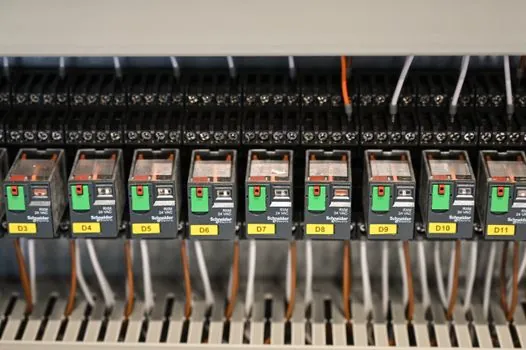
Engineers selecting a module in 2026 typically start with three filters: input bus voltage (12 V, 24 V, 48 V, 400 V, or 800 V), isolation requirement (functional vs reinforced isolation per IEC 62368-1 for ICT and IEC 60601-1 for medical), and thermal interface (baseplate-cooled, open-frame, or surface-mount). Microchip's portfolio exposes all three as parametric filters on its DC-DC converter product page [S3].
TDK-Lambda's selector tool groups by input range and output power, with separate "category" pages for high-voltage input (200 V to 425 V, 400 V to 800 V, and 500 V to 1000 V) DC-DC modules aimed at solar, EV, and industrial-DC bus applications [S1]. For 800 V input specifically, the EPC APEC 2026 reference is currently one of the only public 6 kW-class 8 mm thin designs, while most catalog 800 V input modules from broadline vendors sit in the 1 kW to 3 kW range at 12.7 mm to 17 mm height [S1][S2].
Comparison of Main Module Categories
Across the 2026 catalog, four module categories dominate purchase decisions: (1) low-voltage POL modules at 3 A to 30 A from a 3.3 V to 12 V bus, (2) 48 V-to-POL intermediate bus converters at 300 W to 1500 W, (3) 400 V/800 V high-voltage input isolated bricks at 1 kW to 6 kW, and (4) GaN-based ultra-thin planar modules for height-constrained assemblies [S1][S2][S3].
TDK-Lambda and Microchip compete across categories 1, 2, and 3, while EPC's APEC 2026 demo defines the upper edge of category 4 [S1][S2][S3].
Who the 2026 Modules Are For (and Not For)
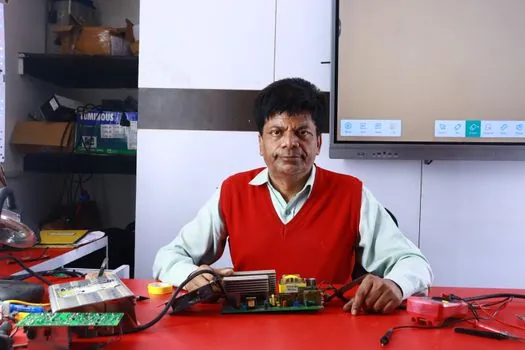
Ultra-thin 6 kW 800 V-to-12 V modules are designed for 1U and 0.5U server shelves, 800 V EV traction-to-auxiliary stages, and aerospace power-distribution units where z-height is at a premium [S2]. They are not a fit for cost-sensitive 24 V industrial PLC backplanes, for legacy 12 V-only systems, or for designs that need a 19-inch rack AC-input supply rather than a DC intermediate stage [S1][S2].
Broadline 48 V and 24 V bricks from TDK-Lambda and Microchip remain the default for industrial cabinets, factory automation, telecom base stations, and railway onboard auxiliaries, where the 1U or 2U chassis depth is available and the input bus never exceeds 110 V DC [S1][S3]. For motor-drive and VFD auxiliaries, see the VFD reference for the wider 24 V/48 V control-rail context.
Limitations, Constraints, and Sourcing Signals
High-density GaN modules in 2026 carry three practical constraints: limited second-source availability, gate-drive sensitivity that complicates paralleling, and thermal management limited to cold-plate or top-side conduction cooling rather than forced-air at the highest power levels [S2]. EPC's 8 mm design depends on bottom-side cooling to a cold plate, which constrains PCB layout versus an open-frame 12.7 mm brick.
For procurement, the signal to track is APEC and PCIM demo board availability, since EPC typically releases reference designs and evaluation hardware within one to two quarters of an APEC debut, and at APEC 2026 the 6 kW 8 mm design entered that pipeline [S2]. Parallel signals to watch are the 800 V intermediate-bus adoption rate in hyperscale data centers, and the release of additional 1U-compatible 12 V and 48 V modules from broadline suppliers such as TDK-Lambda and Microchip in their next catalog refresh [S1][S3].
As of October 2026, GaN-based 800 V-to-12 V thin modules are still a demo-to-early-sampling category rather than a catalog mainstay, so volume orders will require a longer-term forecast commitment than a standard 48 V-to-POL brick from the broadline vendors [S1][S2][S3].
Related analysis: Vibrating Screed vs Surface Vibrator Plate: Slab Finishing Decision Guide.