DDR5 RDIMM supply in October 2026 is defined by contract allocation rather than spot availability, with Fusion market data showing open-market 64GB RDIMM pricing rising from the mid-$300 range in September 2025 into a much higher band as hyperscalers and AI programs absorb available wafer output [S1]. TrendForce's tracked contract reset for server DRAM completed roughly 95% of its Q1 2026 move in the first quarter alone, making 64GB RDIMM the workhorse SKU for general-purpose and AI-adjacent server builds [S5].
Three DRAM manufacturers, Samsung, SK Hynix, and Micron, are running 1alpha/1beta-class fabs at full utilization, but the marginal wafer is going to HBM3E and HBM4 stacks for AI accelerators, not registered DIMMs [S3]. Buyers who previously treated RDIMM as a default server configuration option now face multi-week allocation gaps and the prospect of independent, non-OEM memory sourcing for new deployments [S1].
What Is Driving the 2026 DDR5 RDIMM Shortage
AI accelerator demand is the primary allocator of advanced-node DRAM capacity in 2026, with HBM3E remaining the lead high-bandwidth product and HBM4 beginning to scale into next-generation AI platforms [S1]. The shift pulls advanced packaging, TSV, and 1c/1y DRAM die output away from conventional RDIMM lines, tightening the registered DIMM supply pool even though aggregate wafer starts have not contracted [S3].
Hyperscale cloud providers are locking multi-quarter supply under long-term agreements, which reduces the channel volume available to traditional enterprise buyers and OEMs [S1]. AI inference workloads compound the effect: inference on CPU-based and general-purpose servers now pulls additional conventional DRAM per socket, broadening the demand base beyond GPU-heavy training racks [S1]. The combined effect is that the memory market is being restructured around AI-driven platforms rather than around the accelerators alone [S1].
Contract Pricing Trajectory Through 2026
Contract DDR5 prices were projected to surge 55% to 60% in Q1 2026, with the curve extending into the first half of the year before any moderation [S2][S4]. TrendForce's Q2 2026 contract reset captured roughly 95% of the full Q1 move in a single quarter, a pace that turned DDR5 64GB RDIMM into a re-quoted line item on most enterprise RFQs [S5].
At the consumer-adjacent end of the DDR5 spectrum, Tom's Hardware's RAM price index recorded 32GB DDR5-6000 kits at $429 and DDR5-5600 kits at $409 in early October 2026, against an all-time low near $72 for the same capacity, with year-over-year increases ranging from 372% to 485% depending on speed grade [S3]. The 2x32GB DDR5-5600 kit moved from approximately $191 in August 2025 to roughly $1,118 by October 2026, the steepest single configuration in the index [S3]. High-end 128GB DDR5 kits have been listed at $3,399, which Tom's Hardware describes as up to 10x the lowest tracked price for that capacity [S3].
Which Buyer Profiles Are Most Exposed

Hyperscale cloud operators and AI infrastructure programs hold first-call position on advanced DRAM output, with HBM, high-capacity DDR5 RDIMM, enterprise SSDs, automotive-grade NOR, and qualified UFS/eMMC all classified as strategic allocation items through 2026 [S7]. Their multi-quarter LTAs displace the historical buffer that filtered down to enterprise channels [S1].
Traditional enterprise server buyers, integrators, and PC OEMs face the inverse exposure: standard OEM and channel lead times no longer guarantee fully populated systems at ship date [S1]. Buyers who run general-purpose server refreshes, CPU-based AI inference clusters, or storage-heavy configurations sit in the demand band that is now contested, not automatic [S1]. Sectors and site profiles that need predictable rack-scale power and thermal budgets, such as those covered in Control Cabinet Cooling: Heat Load Calculation and Sizing Rules, also have to revisit deployment assumptions when RDIMM lead times slip.
Comparison of Procurement Options for 2026 RDIMM
Procurement paths diverge sharply on lead time, cost, and validation risk, and the table below reflects the dimensions a sourcing manager weighs against contract allocation realities. [S1]
<strong>OEM-configured server with bundled RDIMM:</strong> lowest integration risk and a single warranty envelope, but constrained to whatever allocation the OEM has secured and the slowest to respond to capacity changes at the memory vendor [S1].
<strong>Channel distributor (open market):</strong> faster incremental orders, but exposed to spot pricing that mirrors the contract curve and to validation gaps when modules are not on the server vendor's QVL [S1][S3].
<strong>Independent memory specialist sourcing:</strong> access to allocation tiers OEMs do not advertise, with the trade-off that the buyer owns qualification, firmware compatibility, and RMA handling rather than the server vendor [S1].
<strong>Long-term contract or LTA direct with a DRAM maker:</strong> the most allocation-secure path, but typically gated to multi-quarter commit volumes that are realistic only for hyperscale-tier buyers [S1][S7].
Strategic Sourcing and Engineering Constraints
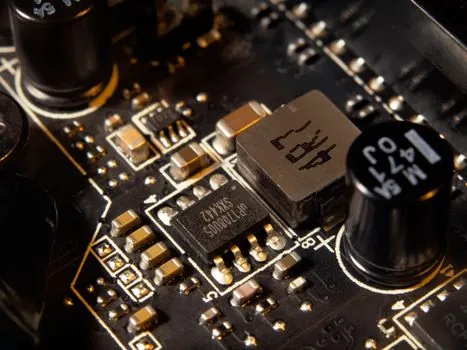
Micron has announced a 512GB DDR5 RDIMM aimed at AI servers, a signal that manufacturers are continuing to prioritize dense, high-margin modules over the consumer-class densities that have absorbed the largest price moves [S3]. For capacity planning, this means a 64GB RDIMM with ECC remains the realistic workhorse for general-purpose racks, while 96GB and 128GB parts see softer spot demand even as their absolute price stays elevated [S1].
Engineering teams running reliability-sensitive workloads, including industrial UPS-buffered control rooms where rack-level uptime is part of the spec rather than a nice-to-have, should treat RDIMM lead time as a deployment-critical variable on the same planning axis as power and thermal headroom. The intersection of memory and power is concrete: a server that ships without populated DIMMs cannot be commissioned, and the industrial UPS sizing that protects a partially populated rack is a different calculation than the one sized for the final configuration. Procurement and electrical planning need to converge before the server PO, not after.
Buyers who can defer non-urgent refreshes into Q3 2026 or later should monitor two trackable signals: the TrendForce Q3 2026 contract forecast, which most trackers expect to extend the upward curve before any moderation, and any HBM4 ramp announcement from the three DRAM makers, since a faster HBM4 transition would either relieve or extend pressure on RDIMM lines depending on how aggressively 1c/1y wafers are reallocated [S3][S4]. Server procurement teams comparing these signals against the 2026 capex calendar should also cross-check the rack-level electrical design rules captured in DC-DC Module Supply 2026: 6 kW/mm³ Class Density Hits Catalog, since any density-driven shift in server PSUs changes the per-rack memory budget that an allocation-aware buyer can defend.
For the relevant spec sheets and selection criteria, see power supply, and dc power supply.