
Industrial parts washers are classified into four functional families — cabinet/batch, high-pressure spray, ultrasonic, and conveyorized pass-through systems — each matched to a different combination of part size, soil load, throughput, and cleanliness target [S2][S3]. Aqueous (water-based) chemistries have displaced solvent-based degreasing as the default in most North American shops because they eliminate VOC emissions, simplify RCRA waste handling, and cut long-term consumable cost [S2].
Two reference OEMs bracket the market: Clean Products has shipped aqueous-based custom washers for more than 30 years across medical, aerospace, energy, automotive, and recreation segments [S2]; Niagara Systems (founded 1934) builds cabinet, tunnel, and carousel washers for castings, cylinders, totes, and ordinance components, with installations sold and serviced worldwide [S3]. Both vendors make equipment in the USA and engineer custom turnkey systems when standard platforms miss on footprint, throughput, or cleanliness spec.
Cabinet and Batch Washers: Small Parts, Low-to-Medium Volume
Cabinet washers are the entry tier for batch production washing, sized for oil sample bottles, labware, animal cages, and multiport castings where part envelope fits inside a front- or top-load door [S3]. Clean Products offers aqueous cabinet units in both top- and front-load configurations, using heated water-based solution to remove dirt, oil, and grease from transmissions, auto components, and maintenance hardware [S2].
Selection hinges on three gates: internal chamber volume (must clear the largest part plus fixture), heated wash reservoir size (typically 30–100 gal for benchtop, 200+ gal for floor units), and whether a heated rinse + forced-air dry stage is integrated or separate. For laboratories and field service trucks, the compact aqueous cabinet replaces solvent baths and removes the OSHA hazardous-communication burden tied to mineral spirits and chlorinated solvents.
High-Pressure Spray Washers: Moderate to High Production, Heavier Soil
High-pressure wash, cleaning cabinets, and booths from Clean Products run as self-contained units with automatic wash-solution recycle, available as desktop or pass-through machines with front or top loading, single or multi-person operation, variable-speed conveyors, and manual or automatic work handling [S2]. Conveyorized high-pressure pass-through washers push work to and from operators on a timed cycle, cutting chemical cost and eliminating the per-shift rental fees common with outsourced solvent degreasing [S2].
For deep internal passages — the specialty Niagara cites for castings, bottles, totes, and cylinders — high-pressure jet spray is paired with rotating nozzle manifolds and, often, a 0.5–3% aqueous detergent concentration held at 140–180 °F [S3]. Operators should verify pump pressure (commonly 500–3000 psi at the manifold), nozzle material (stainless or hardened tool steel for abrasive swarf), and whether the unit carries a NEMA 4 control enclosure for washdown environments.
Ultrasonic and Workcell Washers: Precision Cleaning, Just-in-Time Lines
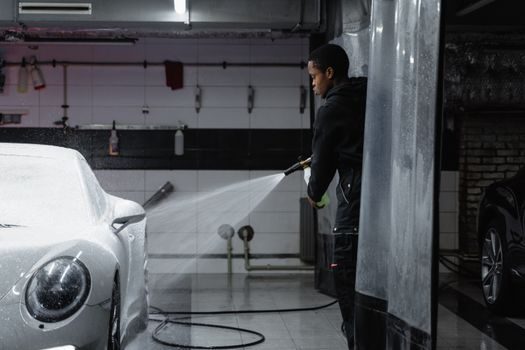
Niagara Systems markets a dedicated ultrasonic platform under the SonixClean brand, targeting applications where spray action cannot reach blind features or where residual film specification is below what mechanical impingement can deliver [S3]. Typical frequencies fall in the 25–40 kHz or 68–132 kHz (sweep) band, paired with aqueous chemistries tuned to the soil — alkaline for oils, neutral surfactants for medical or aerospace alloys [S3].
Workcell washers from Clean Products combine machining and cleaning in one station, removing chips and coolants from just-machined parts so oily work never passes from one operation to the next — a lean-manufacturing pattern used in just-in-time lines and PC mud pump coating cells [S2]. These units are self-contained, all-electric, and portable, which matters on shop floors where moving a part to a remote wash bay breaks takt time. When ultrasonic is overkill, an agitated immersion stage with heated detergent often delivers 80–90% of the cleanliness at a fraction of the capital cost.
Conveyorized and Continuous Systems: Tunnel, Carousel, and Pass-Through Jet
Niagara splits continuous cleaning into tunnel washers (medium-high volume, inline integration for gaskets, aluminum cylinders, castings, bottles) and carousel washers (high-volume conveyor with reduced footprint, used for pistons, crankshafts, bottles, and ordinance), with self-diagnostics and remote-service capability built into the carousel platform [S3]. Clean Products complements this with conveyorized pass-through jet spray washers aimed at small parts and electric submersible pumps, offering replaceable nozzles, low-water safety switches, and an emergency stop button as standard options [S2].
Selection logic for continuous lines is throughput-driven: tunnel systems win when part envelope is consistent and line balance tolerates a single long machine; carousel systems win when batch size is large and floor space is constrained. Both architectures pair naturally with a downstream evaporative wastewater reduction stage, which Clean Products rates at a 95% waste-stream reduction by feeding the spent aqueous solution back through a reservoir and evaporating the water fraction [S2].
Solvent vs Aqueous: Compliance, Cost, and Soil-Match Trade-offs
Aqueous systems dominate new installs in the US because they sidestep EPA NESHAP and RCRA solvent handling, eliminate flammables from the shop floor, and let operators ship spent detergent through standard industrial wastewater pre-treatment instead of hazardous-waste haulers [S2]. Solvent-based degreasing (mineral spirits, acetone, perc, nPB) is still specified where water-sensitive parts, tight drying windows, or legacy qualified processes make a switch uneconomical — but the trend line is clear, and aqueous OEMs cite faster cycle times and cleaner (non-oily) part exit as the operational win [S2].
Decision matrix for typical soils: heavy petroleum grease and machining swarf → high-pressure aqueous with detergent at 150–180 °F; burnt-on carbon or paint → heated immersion with alkaline detergent, possibly with ultrasonic assist; blind-hole debris in medical or aerospace alloy → ultrasonic aqueous at 25–40 kHz; high-volume automotive stampings → conveyorized spray or tunnel with multi-stage rinse [S2][S3]. In every case, match the cleanliness spec (often expressed in mg/cm² of residual hydrocarbon or particles per part) to the wash stage count, not the brand.
Standards, Sourcing, and Custom-Build Gates
Industrial washers are not governed by a single design standard; instead, they sit inside a stack of electrical (NFPA 79 for industrial machinery, NEMA 4/IP65 for washdown enclosures), wastewater (local POTW discharge limits, 40 CFR 437 for metal-finishing subcategory), and, where present, explosion-proof requirements for flammable solvents (NEC Class I Div 1/2). Buyers should require CE / UL 508A panel certification on the control cabinet and a documented P&ID for the wash, rinse, and dry stages before signing a custom PO [S2][S3].
For custom-engineered work, both Niagara and Clean Products gate quoting behind a written cleaning evaluation — part drawings, soil description, target cleanliness, hourly throughput, and available floor space — and Niagara adds turnkey integration for automotive, food-processing, and heavy-duty cleaning cells [S3]. For buyers comparing capital lines, an industrial valve bank on a cleaning skid, a flow meter on the rinse loop, and a pressure transmitter on the wash pump header are the instrumentation core to specify up front. Plants running lean conveyor lines should also review the Mesh Belt Conveyor Types and Classifications reference, since the conveyor architecture feeding or leaving the washer dictates takt time.
Trackable signals over the next buying cycle: (1) demand for ultrasonic-assisted aqueous stages in medical-device and aerospace suppliers, driven by tighter ISO 16232 / IEST RP-CC124 particulate specs; (2) adoption of carousel systems with remote-service telemetry, replacing periodic on-site service contracts; (3) wastewater evaporators specified at the same time as the washer to lock in 90%+ waste-stream reduction at the front end of a greenfield install.