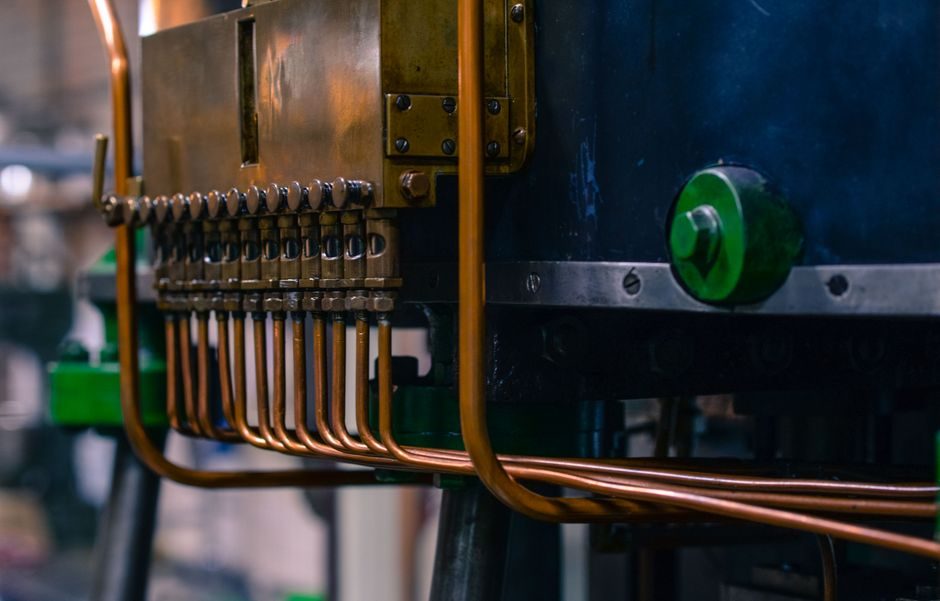
Four functional families dominate the 2026 industrial deburring equipment market: abrasive-belt (dry and wet), rotary-brush, hammerhead/belt-mounted impact, and CNC-style planetary cutter-head machines, with 10 manufacturers and 58 products indexed on the DirectIndustry sanding-deburring category as of 2026-05-28 [S1].
The selection question is not "which brand" but "which process family matches the part geometry, stock thickness and edge-rounding target" — 0.7 mm aluminium sheets with 3 mm chamfer requirements, 6–8 mm laser-cut mild steel, and 12,220 m² plant-scale production each pull toward different machine classes [S2][S3].
Abrasive-Belt Deburring Machines: Working-Width Range and Stock Range
Abrasive-belt sanding-deburring machines are offered in working widths from 300 mm (Weber NLCA, GECAM GE30) up to 1,600 mm (Weber PT, NLC), with the mid-range 800–1,300 mm band (SGP800, SGP1000, SGP1300) dominating turret-punch and laser-line downstream cells [S1].
The WEBER PT builds a single line with up to 5 sanding stations to combine descaling, deburring, edge rounding and surface grinding in one pass, and the WEBER NLC adds wet grinding for oily sheet and heat-sensitive alloys where dry-belt temperature rise would distort the part [S1]. HANGZHOU XIANGSHENG's SGP1300 targets parts exiting turret-punch press and laser cutting lines, integrating wide-belt stations with closed-loop dust extraction that captures metal fines rather than dispersing them into ambient air [S1].
Continuous wide-belt machines are the throughput workhorse for blanked parts from 0.5 mm up to roughly 6–8 mm mild steel, with abrasive grit progression (typically 60–80–120–180) doing both the burr removal and a controlled edge radius in one pass; the constraint is that round or deep-drawn parts cannot ride a flat belt, which is where rotary-brush cells take over.
Rotary-Brush Deburring Machines: Edge-Rounding and Surface Finishing
Rotary-brush units sit downstream of — or in combination with — abrasive belts to set the final edge radius, and the ADV 508-RW and 508-HRW from Anhui advanced grinding tools combine wide-belt and rotary-brush stations into one frame specifically for that purpose [S4].
ADV machinery's M300-Pro is positioned as a manual-load machine for deburring, edge-rounding and grinding of small parts, while their mirror-finish 6K/8K polishing line lists a price band of US$5,000–6,000 per unit on made-in-china.com, which is the current reference for entry-level manual cells [S4][S6]. Wide-belt + rotary-brush combinations like the 508-RR (wide-belt + wide-belt) and 508-HRW (hammerhead + wide-belt + rotary-brush) cover the "deslag → deburr → radius → finish" sequence in one pass for laser-cut and plasma-cut parts.
Brush filaments range from non-woven abrasive (for stainless steel 2B-to-No.4 finish) to nylon / Tampico / wire (for deslagging and heavy oxide on hot-rolled mild steel), and brush rotation is independently controllable from conveyor speed so that edge radius can be dialled without re-grinding the face.
Hammerhead / Belt-Mounted Impact Deburring Machines
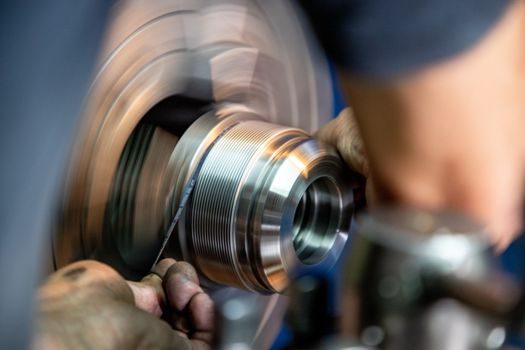
DirectIndustry's "belt-mounted hammer" sub-tag lists 17 of the 58 indexed products, making impact-hammer deburring the second-largest functional family behind the 50 abrasive units, and the technology is specifically aimed at heavy laser-cut or plasma-cut scale that brushes alone cannot break off [S1].
Hammerhead stations throw a controlled bead-peening impact against the cut edge, fracturing the brittle oxide and HAZ scale before a downstream brush or belt cleans and rounds the edge, and the configuration pairs naturally with a wide-belt head in a 2- or 3-station machine. Qingdao Xinkaide Machinery, founded in 2001, lists wide-belt sander, metal polishing, brushing and abrasive machines as their primary line — a typical configuration mix for this segment [S7].
The trade-off versus pure abrasive-belt is throughput: hammer stations are slower but they reach into the cut-edge micro-geometry that a 120-grit belt misses, which is why CNC laser shops running 8–25 mm mild steel plate specify the hammer + brush combination rather than a wider belt.
Planetary Cutter-Head and Chamfering Machines: Precision Edge Geometry
All Solution Products (UK) sells the Facette Star EF and Shallberger EF brushless-motor deburring machines, which are planetary cutter-head units targeting flat parts with complex 2D shapes where hand filing or CNC milling is the alternative [S3].
Quoted capability: aluminium from 0.7 mm thickness with up to 3 mm radius or 3 mm at 45° chamfer, stainless steel processed with coated carbide cutters for longer tool life on both radius and 45° quality finish, plus carbon-fibre edge processing for aerospace, medical and Formula 1 motorsport applications [S3]. ASP's verified customer feedback (Patrick Keely, PW Deburring Services): "The Facette Star EF is so good I felt an obligation to let others know ... it doesn't cover all types of product but when it does there is nothing to beat it" [S3].
This family replaces hand filing or a separate CNC deburring cycle for flat laser-cut blanks, but it is geometrically limited to flat (or mildly formed) sheet — deep draws, tubes and 3D features still need brush or belt machines. For shops that already run a cut-off machine installation upstream, a planetary head downstream closes the cut → deburr cell without adding a CNC step.
Wet Deburring, Double-Sided and Honour-Series Cells
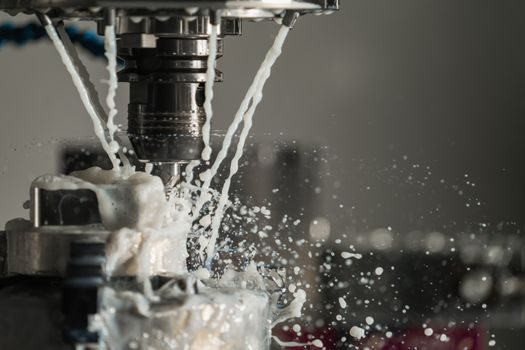
Lanuss Intelligent Equipment (Hubei) breaks its catalogue into deburring-and-chamfering (66 series, 44 series, 41 series, 33 series), wet deburring and chamfering (31, 28 series), double-sided deburring and deslagging (86, 78, 77, 68 series), and "honour series" (msg, msp) machines, on a 12,220 m² plant with ISO 9001:2015 certification and a 9-person foreign-trading team [S2].
Wet deburring addresses three specific pain points: heat-sensitive alloys (aluminium, copper, thin stainless) that would warp under dry belt, materials that produce flammable or explosive dust (magnesium, titanium), and applications where the part must leave the cell clean and coolant-free for downstream painting or welding. Double-sided machines deburr both faces of a blank in one pass — useful for thin laser-cut parts that would otherwise need flipping and re-feeding.
The main markets Lanuss lists are Europe, Southeast Asia/Middle East, Africa, East Asia (Japan/South Korea), Australia and domestic China, with an average response time of ≤15 h, indicating the dual-sided and wet cells are specified most often by export-oriented fab shops handling mixed short-run batches.
Application Fit by Part Geometry and Industry
Material thickness 0.5–3 mm aluminium or stainless, decorative finish required → rotary-brush non-woven abrasive line; 3–8 mm mild or stainless laser-cut blanks, 0.5–2 mm edge radius required → wide-belt + brush combination (SGP / 508-RW class); 8–25 mm plate with heavy oxide → hammerhead + brush; flat precision parts requiring ±0.1 mm chamfer control → planetary cutter-head (Facette Star EF) [S1][S3][S4].
Carbon-fibre, aerospace and medical edge work is a separate vertical where dust extraction, tool wear and damage to the substrate drive selection toward dedicated planetary heads rather than generic wide-belt lines. Jotun Polishing's 2025-01-16 news item records a robot-deburring cell training for an Italian customer — signalling that 6-axis robot integration for deburring is now part of the standard OEM delivery scope, not a custom-engineering extra [S5].
Jotun's published maintenance guidance (2024-11-22) and "Understanding Sheet Metal Deburring Machines" piece (2024-10-22) are the kind of vendor-supplied reference documents a buyer should request during sourcing to verify spare-parts availability and abrasive-change intervals before specifying a machine for a 2-shift production cell [S5].
Limitations, Failure Modes and Sourcing Gates
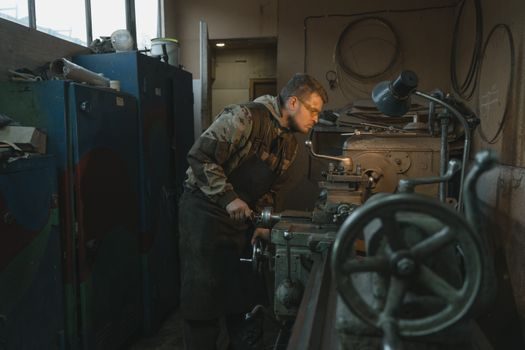
Abrasive-belt machines will not produce a uniform radius on parts with deep draws or tubes; rotary-brush units will not remove heavy laser slag without a prior hammerhead or heavy-grit pass; planetary cutter-heads cannot process 3D features, and wet systems add a dryer and coolant-handling subsystem that the buyer must price into the cell. [S1]
Before purchase, confirm: working-width versus largest blank size (with 50–100 mm margin for fixture tolerance), abrasive-change cycle hours, dust-extraction duct diameter and static pressure requirement, brush-replacement cost per shift, and — for wet systems — coolant compatibility with the workpiece material (aluminium debris in steel-grade coolant is a galvanic-corrosion risk). Abrasive-belt dust extraction should be specified to capture metal fines rather than vent them; the SGP1300 and SGP1000 OEM text explicitly states metal-dust is "efficiently extracted from the machine" [S1].
Standards to check: CE machinery directive conformity for the EU market, ISO 9001:2015 quality management at the supplier (Lanuss holds this), and any industry-specific dust or noise regulation (OSHA PEL for metal dust, EU Directive 2017/164 indicative occupational exposure limit values). A buyer evaluating a vibratory feeder upstream of a deburr cell should match vibratory throughput to deburring line speed before specifying either.
Trackable signals for the next sourcing cycle: whether brushless-motor planetary heads (Shallberger EF class) reach a 0.5 mm lower thickness limit on stainless, and whether hammerhead-belt combination cells break the 10 m/min feed barrier currently seen on GECAM GE30-class single-station units [S1][S3].
For component-level specifications, see coding machine, core machine, and cutting machine.