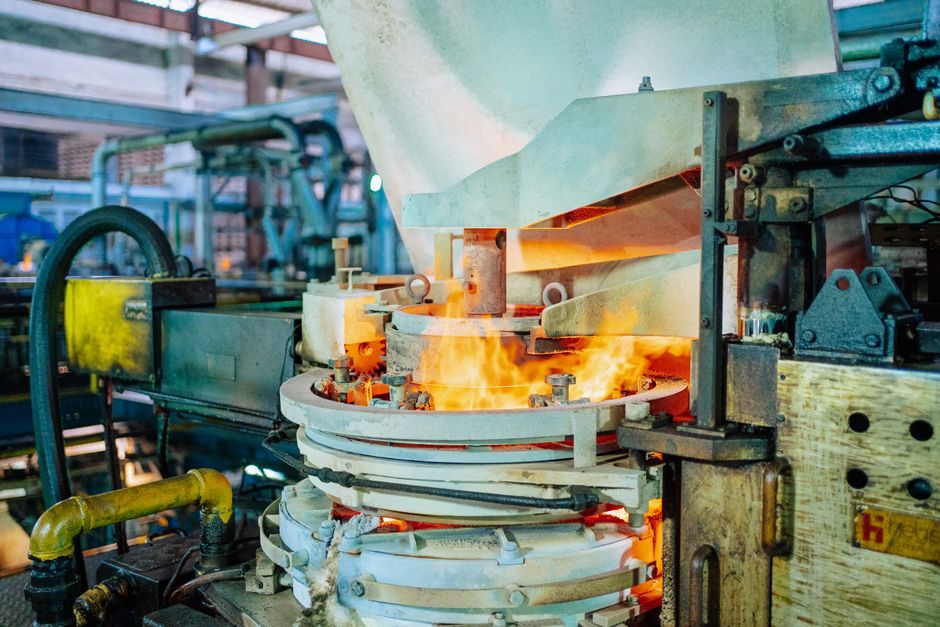
Die casting machines split first by chamber architecture — hot chamber versus cold chamber — and then by clamping tonnage, driven alloy, and automation level, with Ningbo Dongfang offering hot-chamber units from 16T to 180T and cold-chamber units from 25T to 280T on its 2026-07-14 product catalogue [S1].
The same split is echoed by Italpresse, founded in 1969 and owned by SIL Industrie Saleri Italo (founded 1942), whose current build range covers high-pressure hydraulic cold-chamber and hot-chamber machines from 200 ton up to 4,500 ton for non-ferrous alloys [S2]. The practical decision tree for any process engineer therefore starts with alloy → melting point → chamber type → tonnage → cycle integration.
Hot chamber vs cold chamber: where the line falls
Hot-chamber die casting machines — often called gooseneck machines — keep the molten metal inside an integral furnace and shot sleeve, which is why they are restricted to low-melting alloys that do not aggressively attack the cast iron gooseneck and plunger: zinc, Zamak, lead, and tin-based alloys, with magnesium handled in dedicated hot-chamber variants [S2]. Source catalogue evidence on 2026-07-14 lists a 16T-180T hot-chamber range and shows zinc-alloy models such as the J212 at $10,000-$11,000 (MOQ 2 sets) and 38-40T lead/zinc units at $17,500-$20,000 (MOQ 1 set) [S1].
Cold-chamber machines draw each shot into the shot sleeve from a separate furnace, decoupling the melt from the hydraulic circuit and allowing the higher process temperatures of aluminum (≈660 °C liquidus), magnesium (≈650 °C), and brass/copper alloys — Italpresse's published machine scope explicitly covers aluminum, brass, magnesium, zinc, Zamak, and lead die casting [S2]. Cold-chamber tonnage on the 2026-07-14 Ningbo Dongfang catalogue runs 25T-280T, with a 900 kN / 80T aluminum cold-chamber unit listed at $17,000-$22,000 and a 1300 kN horizontal aluminum injection machine at $20,000-$23,000 [S1]. For a primer on the chamber architecture itself, see the hot chamber die casting machine overview and the cold-chamber reference at aluminum die casting machine.
Alloy-driven selection: Zn, Al, Mg, Cu/Brass, Pb
Alloy choice dictates chamber, plunger materials, and shot sleeve life. Zinc and Zamak run hot-chamber at 380-420 °C, with cycle times under 30 s on small hardware; this is the working envelope for the J212 zinc hot-chamber and 25-30T mini aluminum-tonnage machines priced $10,000-$11,000 on the same 2026-07-14 listing [S1]. Aluminum needs the cold-chamber route: the 80T aluminum injection machine is quoted $17,500-$20,000, the 180T high-pressure aluminum unit $28,000-$32,000, and the 280T aluminum machine (40-year manufacturing line) $43,500-$50,000 — a near-linear cost step with tonnage [S1].
Brass and copper alloys sit at the high end of the alloy range because they attack ferrous components; the same catalogue lists a 90T brass/copper/zinc pressure die casting machine at $18,000-$20,000 (MOQ 1 set), confirming that brass is reached in the cold-chamber mid-tonnage class [S1]. Italpresse's 200-4,500 ton range fills the upper cold-chamber bracket and is shipped into the same non-ferrous envelope — aluminum, brass, magnesium, zinc, Zamak, lead [S2]. For magnesium-specific duty — typically requiring SF6/CO2 cover gas and dedicated steel sets — the magnesium die casting machine reference captures the design constraints.
Tonnage classes and what they buy you
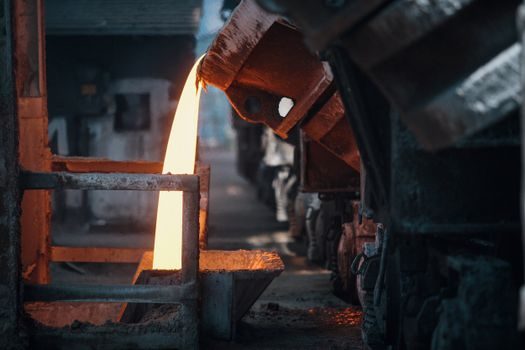
Tonnage (clamping force) is the second axis of classification, and the 2026-07-14 source data gives a clean read across three bands. Entry/micro-tonnage: 16-40T hot-chamber and 25-30T mini cold-chamber, $10,000-$13,000, aimed at zinc hardware, small aluminium inserts, and prototype runs [S1]. Mid-tonnage: 80-180T cold-chamber for aluminium, $17,000-$32,000, the most common automotive/3C bracket [S1].
Heavy-tonnage: 250-280T cold-chamber for structural aluminium and large housings, $43,500-$50,000 on the same catalogue, sitting at the lower end of the global heavy-machine bracket [S1]. Italpresse, by contrast, lists high-pressure hydraulic machines from 200 to 4,500 ton, used units of which are actively traded into India, China, Taiwan, Korea, Mexico, Brazil, and Singapore by brokers such as Die Cast Machinery LLC (operations noted in [S2]). The combined picture is that Chinese OEM new-build pricing dominates the 16-280T range, while European and Japanese builds dominate the 800-4,500T structural-aluminium and transmission-housing bracket. Compare machine families on the gravity die casting machine page if low-pressure or gravity-fed routes are also on the table.
Process variants beyond the hot/cold split
Beyond the hot/cold chamber split, the next classification layer is the pressure-and-vacuum family. Vacuum die casting pulls the die cavity below atmospheric pressure before injection, reducing gas porosity in safety-critical structural aluminium and high-integrity zinc components; the vacuum die casting machine entry covers the gate and seal design. Squeeze casting and low-pressure die casting (LPDC) sit at the edge of the pressure-die-casting envelope and are usually sourced as dedicated process cells, not standard machine variants. [S1]
Automation level is a parallel axis: Ningbo Dongfang explicitly markets auto ladle and auto extractor options alongside its hot- and cold-chamber base units, and Lanson-group catalogues its plastic injection moulding and die-casting lines together with the GT5-LS200S plastic-injection series on a 2026-07-13 update, signalling that the modern die-casting cell is sold as a moulding-machine-plus-peripherals package [S1][S4]. Shenghe Machinery (SUMHONG) likewise frames its offering as die-casting machines plus consumables, automation support, and after-sales service, targeting automotive and tier-1 die-casting enterprises per its 2026-07-13 corporate page.
Manufacturer landscape: China OEM, European/Japanese tier, used market
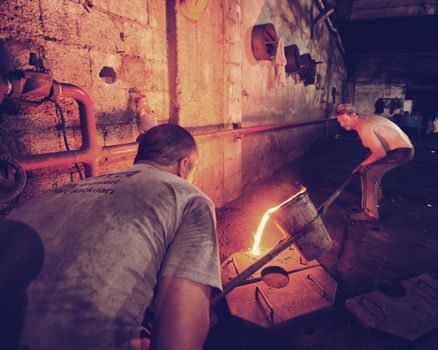
The 2026-07-14 source set shows a clear three-tier supplier map. Chinese OEM builders — Ningbo Dongfang (15-year Alibaba storefront, 40+ year manufacturing history, 40,000 m² plant, 50-100 employees, 300-500 sets/year capacity) [S1], Bengbu Long Hua Die Casting Machine Co. in Anhui (FOB/CIF, LC/T/T/D/P, peak-season lead time one month, off-season 15 working days) [S5], and Lanson-group (Foshan, +86-757-29965888) [S4] — cover the 16-280T new-build band with the lowest FOB prices.
European/Japanese tier — Italpresse (since 1969, ISO 9001:2000 across the group, 200-4,500 ton hydraulic range, parent SIL Industrie Saleri Italo since 1942) [S2] — owns the high-tonnage and structural-aluminium bracket. Trade-portal CENS lists die casting machinery, automatic extractors, and automatic control systems as a Taiwan-export category [S3]. Zinc-specific sourcing — common in the 16-80T bracket — is covered at the zinc die casting machine reference.
Selection gates for the engineer: alloy, tonnage, automation, lead time
For an OEM's typical spec sheet, this translates to: zinc hardware → 25-80T hot chamber, $10k-$20k new, 2-4 week delivery; aluminium structural or housing → 130-280T cold chamber, $20k-$50k new, 4-6 week delivery from a Chinese OEM or 8-12 week from a European builder via used-stock broker; brass fittings → 90T cold chamber at $18k-$20k, MOQ 1 set as quoted [S1][S5]. Related supplier-mapping context for the broader industrial-equipment buyer can be found in this Vibratory Feeder Suppliers sourcing-tier note, and braking-energy sizing for the cell's auxiliaries is covered in the Brake Resistor price band guide.
Limitations, failure modes, and sourcing risks
Hot-chamber machines are not suitable for aluminium, magnesium, or any alloy whose liquidus exceeds the survivable limit of the cast-iron gooseneck and plunger (~420 °C in standard builds) — pumping aluminium through a hot-chamber gooseneck destroys the plunger in days, which is why every aluminium-capable source on 2026-07-14 lists cold-chamber only [S1][S2]. Cold-chamber shot sleeves suffer soldering and thermal fatigue on zinc and lead, so going cold-chamber for a low-melt job is over-engineered and loses cycle time.
MOQ policy on Chinese OEM channels is non-trivial — multiple product lines on the 2026-07-14 Ningbo Dongfang page carry MOQ 1 set, but the zinc/lead 25-30T line is MOQ 2 sets, and the 1300 kN aluminium line is MOQ 1 set, so fleet rollout planning has to be sized to MOQ multiples [S1]. Vacuum, semi-solid, and squeeze-casting variants are not interchangeable with the standard hot/cold chamber envelope — see vacuum die casting machine for the gate-design and evacuation-spec deltas.
Track the next two data points: 2026-Q3 used-machine price revisions from Die Cast Machinery LLC's inventory feed across the 800-4,500T cold-chamber band, and 2026-Q3 lead-time updates from Bengbu Long Hua and Ningbo Dongfang against the 15-working-day off-season benchmark published on their 2026-07-14 storefronts [S1][S2][S5].