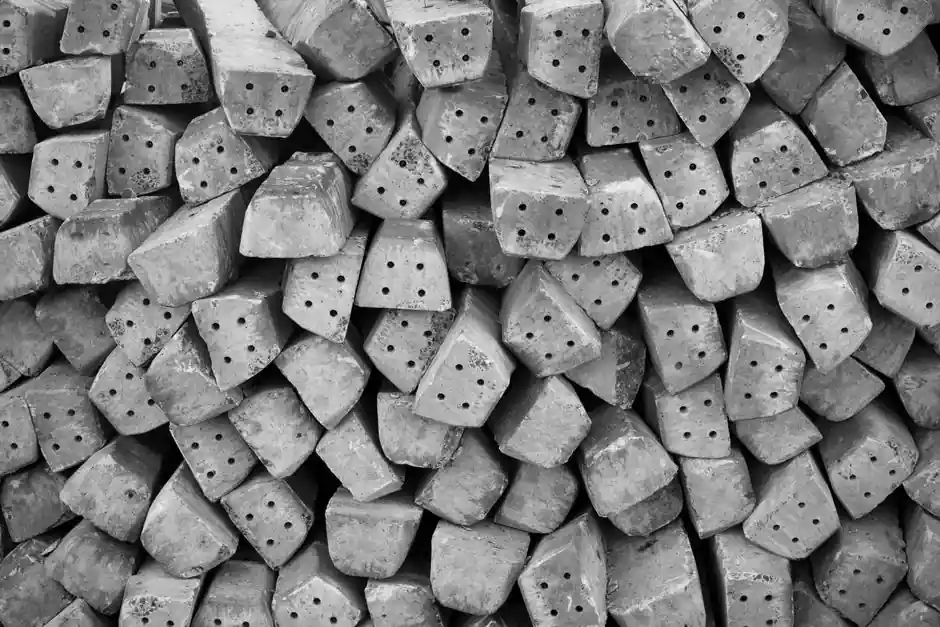
Die casting mold cost is driven by mold construction, not by part size alone, with cavity count, slide count, and tool steel grade ranking as the three biggest line items on a tooling quote [S1].
For aluminum programs, large die sets typically run 80,000 to 250,000 USD, while zinc dies sit lower because of smaller shot size and lower tonnage, and pilot single-cavity molds in low-cost regions can start near 2,000 USD and exceed 300,000 USD at the high-complexity end [S3][S5]. The widely quoted rule of thumb is that each major cost driver (steel grade, complexity, cavity count, durability, supplier practice) can shift the price by 10 to 50 percent, which is why two RFQs on the same drawing often diverge by a factor of three [S5].
Tool Steel Grade: H13/DIN 1.2344 and Where the Budget Goes
Die steel grade is the single most cited material cost driver, with H13 (DIN 1.2344) named as the standard die block steel for aluminum die sets in multiple sourcing guides, alongside P20+Ni for lower-temperature applications and S136 for corrosion-resistant, high-polish zinc or plastic work [S3][S5].
Hardened, heat-treated, polished, and nitrided or PVD-coated steel commands a premium, and the quote should always state die block and insert material, steel supplier or standard, heat-treatment spec, final hardness, surface treatment, and the replaceable-insert strategy so buyers can compare like-for-like [S3][S4]. A higher-grade die block extends tool life into the 200,000 to 1,000,000 cycle band, while a lower-grade 20,000-cycle block can be quoted at roughly one-third the price from the same shop, a delta that often surprises buyers who only compare headline tooling cost [S5].
For buyers evaluating casting mold programs alongside sand casting mold alternatives, this steel-grade delta is exactly where the permanent-mold premium over sand tooling shows up: a permanent casting mold typically runs 10,000 to 90,000 USD versus a much lower sand-mold baseline [S10].
Cavity Count: When Multi-Cavity Pays and When It Does Not
Adding cavities multiplies machining, balancing, and cooling-channel work, so each additional cavity lifts the tooling line item faster than it lifts the shot-rate ceiling, and the right cavity count is set by annual demand, part size, machine capacity, cycle time, runner yield, and cavity-to-cavity variation risk rather than by unit-price wishful thinking [S4].
For moderate volumes in the 10,000 to 50,000 part range, single- or dual-cavity dies are usually the cost-effective choice; multi-cavity and automated cells become economic when production volume is sustained and stable enough to amortise the higher die price [S3]. A complex multi-cavity metal die for an injection-moulded analogue can exceed 100,000 USD, against as little as 100 USD for a 3D-printed low-volume plastic trial mould, illustrating the same cavity-count multiplier rule in a different process [S9].
Buyers should always compare both the tooling investment and the projected unit cost, because the lowest-cost die often fails to provide the capacity the program needs, leaving the part on a bottleneck machine while the budget is already spent [S4].
Slides, Side Cores, and Undercuts: The Hidden Geometry Multiplier
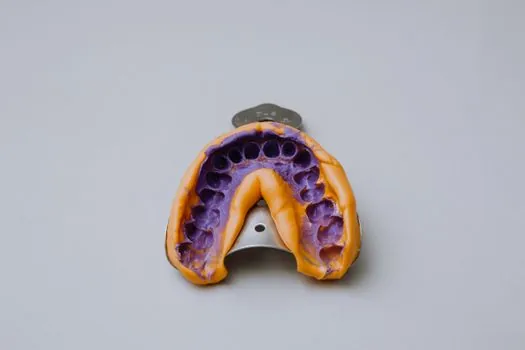
Slides and movable cores add cost every time the part has side holes, internal undercuts, deep bosses, or features that cannot be formed by the main opening direction, and each additional side action typically requires its own machining, fit, and hydraulic or mechanical actuation hardware [S1][S4].
The cost escalators that pair with slide count are external or internal undercuts, deep ribs and pockets, complex parting surfaces, multiple slides or core pulls, long or fragile cores, tight access for cooling channels, hard-to-eject features, and cast-in inserts, all of which add EDM time and assembly work to the tool [S4]. A die that needs more than a simple open-and-close cycle will, in practice, command a tooling premium that compounds with the steel-grade and cavity-count multipliers, and a DFM pass that eliminates one undercut, repositions a shutoff, or moves a feature into the draw direction can save more money than any steel downgrade [S1][S4].
For an engineer sizing an aluminum HPDC cell equipment list, the slide count on the die directly drives the size of the hydraulic and slide-lubrication stack on the cell, which is why a die that looks cheap on paper can force a more expensive machine than expected.
Comparison of the Main Cost Drivers
The three primary tooling cost multipliers line up against four decision criteria in the table below; values reflect the directional behaviour confirmed across the sourcing guides, not a fabricated rate card. [S1]
Cavity count moves tooling cost roughly in line with the number of impressions once the die exceeds 2 cavities, while its effect on per-part cost is inverse and only positive above the break-even volume band of 10,000 to 50,000 parts; slide count scales tooling cost with a near 1:1 ratio on complex dies, has a moderate effect on per-part cost through longer cycle time, and is largely fixed once the part geometry is signed off [S3][S4]. Steel grade (H13/1.2344 vs P20+Ni vs S136) can move tooling cost by tens of percent, has a strong effect on tool life and therefore on amortised per-part cost, and is partly adjustable within a fixed part geometry, making it the lever with the widest controllable spread on a locked design [S3][S4][S5].
Tool life target is the silent fourth driver: doubling the cycle-life spec can raise die cost by 30 percent or more, but it shrinks per-part amortisation at any sustained volume, and the right setting depends on whether the program is a short run, a multi-year platform, or an automotive tier-1 ramp [S5].
Alloy, Volume, and Process Choices That Sit Next to the Die
Alloy choice does not change the die cost line item directly, but it changes the steel grade, cooling layout, gate and runner design, and expected maintenance, because aluminum carries a higher thermal load than zinc, and magnesium demands protective melt handling that adds to the cell scope even when the die itself is unchanged [S4].
Higher production volume spreads the fixed tooling cost over more units, so per-part cost drops, and stable demand justifies hardened, long-life tooling while intermittent demand does not, which is one reason some suppliers default to a high-durability mold and quote a higher upfront price [S3][S5]. Advanced die features such as conformal cooling and vacuum assist reduce porosity and scrap, but raise upfront tooling cost, and they only pay back when the finished-part quality requirement (leak-tightness, pressure-tightness, cosmetic class) is high enough to value the lower scrap rate [S3].
For a deeper read on how a complete die cell is assembled, including furnace, press, and auxiliary stack sizing, the Aluminum HPDC cell equipment list reference walks through the matching press and die envelope.
Hidden Line Items Buyers Often Miss on the Quote
A complete tooling package can include far more than the main die: DFM and casting simulation, main die design and build, core and cavity inserts, slides, core pulls and hydraulic components, vacuum valves, a separate trim die, machining fixtures, checking fixtures and gauges, leak-test fixtures, initial trials and samples, dimensional and material reports, spare inserts and wear components, plus export packaging and shipping [S4].
Two quotes that look comparable on a USD headline can differ by a factor of two once the un-included items are added back, and the safe move is a line-by-line inclusion check before price comparison, not after [S1][S4]. Maintenance is a second hidden line: scheduled refresh cycles, surface treatment (nitriding, PVD), and cooling-layout choices cut downtime and scrap rates, and they are usually cheaper than reactive fixes on a worn die [S3].
Standards, Documentation, and the Sourcing Checklist
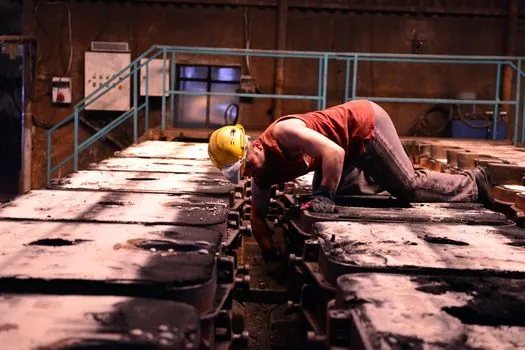
The cost-driver lists in the major 2026 sourcing guides all converge on the same engineering documentation set: alloy grade and material standard, 3D model, estimated part weight, cavity layout, runner and overflow strategy, critical zones, leak and pressure requirements, cosmetic standard, and the agreed inspection method [S1].
Hardness, heat-treatment, and surface-treatment spec should be on the tooling PO, not in the supplier's head, because a quotation that does not name die block and insert material, steel supplier or standard, final hardness, and surface treatment cannot be benchmarked against the next shop [S4]. For buyers working across borders, the same documentation set is what makes a Vietnam, China, or Mexico quote comparable once the lifetime target (20,000 vs 200,000 vs 1,000,000 cycles) is normalised, since the headline price gap is largely a life-class gap, not a labour-cost gap [S5].
A practical next step is to lock the part geometry and lifetime target first, then request a like-for-like quote that names steel grade, cavity count, slide count, and the inclusion list, because the part-drawing sign-off is the single action that prevents the cavity, slide, and steel multipliers from stacking on top of each other across RFQ revisions. Watch for suppliers who decline to break out steel grade and slide count separately, since that opacity is the most common reason tooling RFQs differ by a factor of three on the same drawing [S1][S5].
Component reference pages worth checking: mold base.