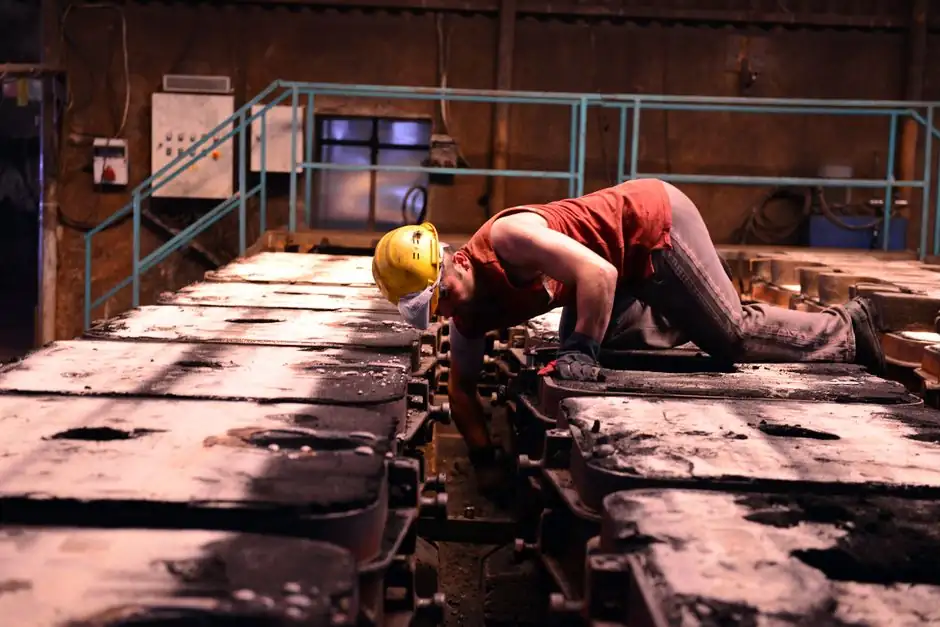
The slide gate plate is the most service-life-critical refractory in continuous casting, throttling molten steel between casting ladle and tundish, with modern FF-series two-plate linear gates using identical fixed and sliding plates rated for ladles from 20 tons to over 350 tons [S1][S5].
Common plate materials span five refractory families: alumina-carbon, alumina, alumina-zirconia-carbon, magnesia-carbon, and zirconia, with selection driven by steel grade, cleanness target, and casting sequence length [S2]. A typical plate assembly also includes a one-piece well block, a one-piece upper nozzle, and a steel-encased collector nozzle that mounts to the bottom of the lower plate [S5].
Slide Gate Plate Materials: Composition and Selection Logic
Alumina-carbon plates combine a high-alumina aggregate with a carbon binder, giving a balanced mix of thermal-shock resistance and steel-wetting resistance for general carbon and low-alloy sequences [S2]. Alumina-zirconia-carbon grades add zirconia to suppress grain growth and crack initiation, and are commonly chosen where longer sequence lengths or higher Mn-content steels increase plate erosion [S2]. Magnesia-carbon plates rely on a periclase-carbon bond that resists basic slag attack and is favored on ladles handling high-Mn, high-CaO slag chemistries [S2]. Zirconia plates, with the highest density and corrosion resistance in the family, are specified for the most demanding cleanness and long-sequence casting duties [S2]. Pure alumina plates sit between the carbon-bonded and zirconia grades, with higher oxidation resistance but lower thermal-shock margin than carbon-bonded versions [S2].
Material selection cannot be decoupled from mechanism type: the FF gate runs identical fixed and sliding plates of the same shape and size, while the legacy 6300 Flocon design uses two-piece well blocks, two-piece nozzles, and asymmetric top/bottom plates [S5]. This geometry change is what allows FF plates to be hot-banded with a hot steel band replacing the standard steel can, distributing clamping force across four corners instead of the stroke area, which virtually eliminates longitudinal cracks [S5].
Mechanism Architecture: Two-Plate Linear vs Flocon
The slide gate system is installed at the bottom of the ladle and is built from a refractory plate assembly, a steel frame, and a hydraulic cylinder that drives the sliding plate in a linear stroke to open, throttle, or close the nozzle bore [S3]. Compared with older stopper-rod or tipping-ladle methods, the linear slide gate allows remote, fine-grained flow modulation and removes the operator from the pour zone [S3].
The FF two-plate linear, hydraulically driven configuration is sized for small, medium, and large capacity ladles, with listed feature gains over conventional Flocon: higher stroke length, automatic face-pressure loading, outboard spring design, plate crack control, higher face pressure, lower nitrogen pick-up, and increased plate life [S5]. Because the FF fixed and sliding plates share geometry, inventories and change-out part numbers collapse to one SKU per size, simplifying ladle-yard logistics [S5]. The 3D stress modelling and finite element analysis behind the octagonal plate shape, plus hot banding and plate clamping, redirects the internal stress field so that all observed cracks are oblique and the stroke area is free from longitudinal cracks [S5].
A 2025-09 technical review notes that this redesign is what unlocks longer sequence life: plate service life is the limiting factor for slide gate performance, and life is governed jointly by refractory material, plant operating conditions, steel grade, and mechanism type, not by any single variable [S5]. A related 2025-03 process note frames the same problem in operational terms, with controlled slide-gate flow cutting molten-steel yield loss, lowering ladle-lining thermal stress, and stabilizing downstream tundish and mould operation [S3].
Operating Loads and Failure Modes in the Field
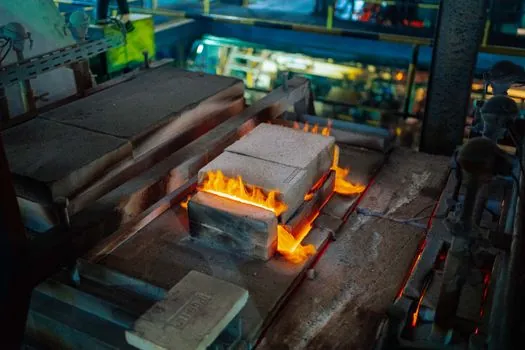
A slide gate plate in service absorbs a combined load of molten-steel static head, thermal shock on ladle arrival and pre-heat, mechanical clamping force from the slide frame, and chemical attack from entrained slag; failure modes observed in steel plant practice are crack initiation at the stroke area, alumina grain pull-out from steel flow, and burn-in from oxidation of the carbon bond [S2][S5]. The FF design attacks the first mode directly: the four-corner force distribution, octagonal shape, and hot-banded steel can redirect stress so that no longitudinal cracks form in the stroke direction, which is the failure pattern most detrimental to slide-gate life [S5].
Thermal-shock margin is governed by the carbon-bond content: higher residual carbon improves thermal conductivity and crack resistance but raises nitrogen pick-up into the steel, which is why FF specifies lower nitrogen pick-up as a design target rather than a side effect [S5]. Slag attack is governed by the aggregate phase: magnesia-carbon plates resist basic CaO-MgO slags far better than alumina plates, while zirconia plates resist acidic MnO-SiO2 slag carry-over, so plate grade and ladle metallurgy have to be specified together [S2]. Sequence length is the third axis: long-sequence slab casters typically out-live alumina plates, while short-sequence billet casters can run alumina-carbon plates to economic end-of-life without changing grade [S2][S5].
Comparison of Plate Grades on Four Decision Criteria
On a four-criterion comparison, alumina-carbon is the baseline lowest-cost grade with moderate thermal-shock margin, moderate slag resistance, and short-to-medium sequence suitability [S2]. Alumina-zirconia-carbon adds zirconia for higher thermal-shock margin and better crack resistance at higher cost, with medium-to-long sequence suitability [S2]. Magnesia-carbon swaps alumina for periclase, which gives the best basic-slag resistance in the family, but lower thermal-shock margin than the zirconia-bearing grades and medium sequence suitability [S2]. Zirconia plates lead on density, corrosion resistance, and cleanness, but cost the most and are typically reserved for the longest sequences and most demanding steel grades [S2]. Across all four, FF two-plate linear mechanism support is what extends the realized service life into a higher tier than the same material in a legacy Flocon assembly [S5].
Sourcing, Standards, and 2026 Field Data
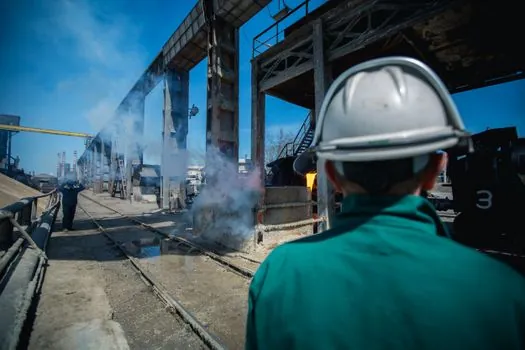
Continuous-casting slide gate systems are now sold as engineered packages, with Vesuvius offering ladle gates and refractory sized from 20 to 350+ tons, tied to casting process requirement and steel grade cleanness targets [S1]. Chinese refractory vendors LMM Group, Xintai, and Hyrefr all list slide gate plates, well blocks, and purging plugs as a single steelmaking refractory series, with the slide gate plate described as a critical component in the continuous casting process used to control the flow of molten steel from the ladle or tundish [S4]. Hyrefr's 2025-09 release frames the new-generation FF system explicitly as a productivity play, because plate life is the binding constraint on ladle-to-tundish flow control [S5].
Operators pairing FF plates with a clean steel sequence should treat the plate, well block, upper nozzle, and collector nozzle as a single replacement kit, since the one-piece well block and one-piece upper nozzle are part of the FF refractory stack and are not interchangeable with two-piece Flocon parts [S5]. For broader steelmaking refractory context including rebar, mould, and rolling-mill consumables, see ASTM A996 rail and axle steel rebar spec scope, grades, and selection, and for adjacent flow-control hardware, the knife gate valve and gate valve reference pages cover lower-temperature isolation duty. Track 2026 plate-life data from FF retrofits and any further octagonal hot-banded plate variants as the next signal for whether the four-corner force model is being adopted beyond Hyrefr's original customer base.