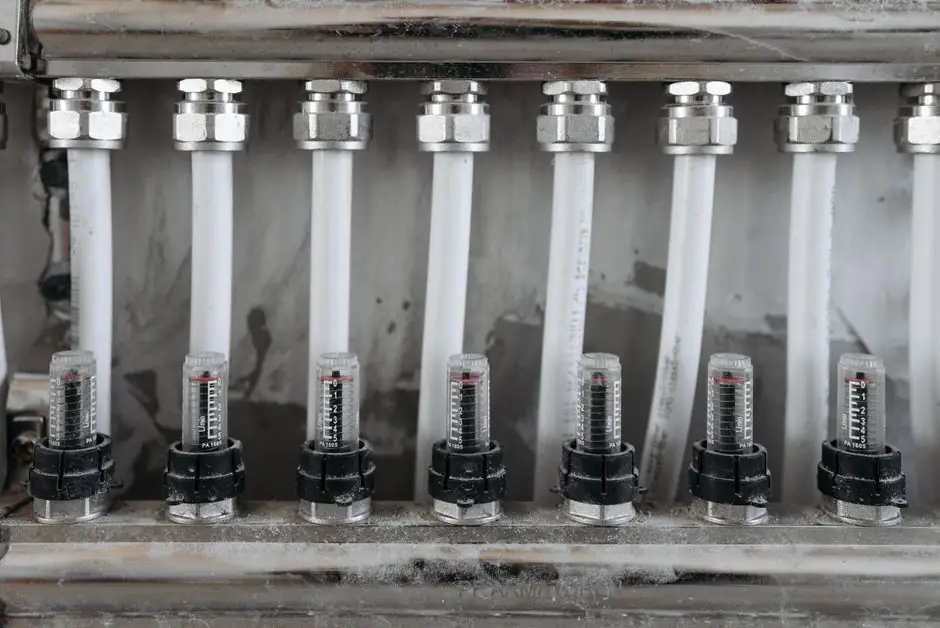
A differential pressure transmitter (DP) measures the difference between two process pressures and converts it to a 4-20 mA, HART, FOUNDATION Fieldbus, or PROFIBUS PA signal for level, flow, and filter monitoring [S2]. Process engineers in oil and gas, chemical, HVAC, and cleanroom applications continue to specify DP cells in the 10 mbar to 250 bar range, with wetted materials including 316L stainless, Alloy C, Tantalum, Monel, and gold-coated options for corrosive service [S1][S9].
Selection errors almost always come from under-specifying static pressure, span, or wetted material, which is why a 2026 spec-driven comparison across sensor class, range, accuracy, and protocol is more useful than brand-by-brand marketing copy.
Core spec envelope: range, static pressure, and accuracy bands
Endress+Hauser Deltabar PMD75B covers 10 mbar to 250 bar (0.15 to 3750 psi) with a maximum process pressure of 420 bar (6300 psi) and process temperatures from -40 to +110 °C, with 316L, Alloy C, Tantalum, Monel, and gold wetted materials [S1]. That envelope places PMD75B in the heavy-industrial tier intended for high-static differential applications such as separator level and orifice flow on hydrocarbon duty.
Yokogawa's EJA-E and EJX-A families split the high-performance tier more finely: the EJA-E series reaches ±0.075% accuracy with ±0.1% URL stability over 10 years, and the EJX-A series reaches ±0.025% with ±0.1% URL stability over 15 years and 90 ms response time, with SIL 2 certification to IEC 61508 [S2]. For draft-range and very low differential work, Yokogawa's EJA120E and EJX120A target the mbar-level spans typically seen in furnace draft and cleanroom pressure control.
Lower-tier industrial units such as the BAISSDE DPI10C are specced to 0.075% accuracy over 0-1 kPa spans with 316L diaphragm and 4-20 mA plus HART output, suiting general-purpose chemical, petroleum, and refining service [S9]. Spec-ing a draft-range cell where a high-static cell is required, or vice versa, is the most common selection failure.
Wetted materials and process compatibility
Wetted material must match the process fluid and temperature, not just the differential span. Endress+Hauser offers 316L for general aqueous and mild chemical service, Alloy C (a nickel-chromium-molybdenum alloy) for oxidizing and chloride-containing media, Tantalum for hot sulfuric and hydrochloric acid, Monel for hydrofluoric acid and seawater, and gold for diaphragm protection in corrosive vapour [S1]. Specifying 316L against wet HCl, wet H2S, or strong oxidizers typically leads to pitting or stress corrosion cracking within months.
Vaisala's PDT101 occupies the cleanroom and HVAC end of the material map, where wetted surfaces must avoid outgassing and particle shedding, and the focus is on low-differential accuracy rather than chemical resistance [S5]. Process engineers mapping HVAC, pharmaceutical, or semiconductor cleanroom DP work to a heavy-industrial Alloy C cell usually overspend without gaining usable accuracy at the millibar level.
Output protocols: HART, 4-20 mA, and digital fieldbus

The 4-20 mA analog loop with overlaid HART remains the dominant process-industry protocol for DP transmitters, supporting both wiring simplicity and two-way digital communication for configuration, trim, and diagnostic data [S7]. HART runs as FSK signalling superimposed on the 4-20 mA loop, distinct from fully-digital FOUNDATION Fieldbus and PROFIBUS PA segments that share a single wire pair but do not carry HART.
For new greenfield projects where the DCS or PLC supports digital fieldbus natively, FOUNDATION Fieldbus or PROFIBUS PA can reduce marshalling cost, but brownfield retrofits in legacy 4-20 mA plants typically stay on HART to reuse existing I/O cards. Selecting a fieldbus-only DP transmitter for a 4-20 mA plant forces an extra gateway and adds a single point of failure.
Selection criteria and who should (and should not) pick a heavy-duty DP
Compare the main options on four criteria: static working pressure, turndown ratio, wetted material availability, and hazardous-area certification. [S1]
Heavy-industrial DP cells (Endress+Hauser Deltabar PMD75B, Yokogawa EJX110A, BAISSDE DPI10C high-static variants) are the right pick when static line pressure exceeds 100 bar, when wetted Alloy C or Tantalum is required, and when SIL 2 or ATEX/IECEx certification is mandatory [S1][S2][S9]. Mid-range industrial cells (Yokogawa EJA110E, ProSense low-DP series) fit general process level and filter monitoring in the 1-100 bar static range with 316L wetted parts.
Low-DP and draft-range cells (Vaisala PDT101, ProSense, EJA120E/EJX120A) are the correct pick for cleanroom pressure, air filter Δp, and furnace draft where spans sit in the inches-of-water-column or millibar band and wetted material is air or non-corrosive gas [S2][S5][S8]. They are the wrong pick for high-static hydrocarbon duty, where a thin diaphragm and low static rating will fail under line pressure.
Do not pick a heavy-industrial DP for HVAC: the millibar resolution you pay for is wasted, and the bulk and weight complicate duct mounting. Do not pick a cleanroom low-DP cell for separator level on a 200 bar crude unit: the static pressure rating will be exceeded at first-line-pressure upset.
Standards and hazardous-area compliance
Functional safety on safety-instrumented DP loops is governed by IEC 61508 and the derived IEC 61511 for the process sector, with Yokogawa EJX-A and EJA-E series published at SIL 2 with FMEDA reports available [S2]. Hazardous-area certification in European Union plants typically uses ATEX 2014/34/EU, with international projects accepting IECEx, while North American sites fall under NEC Class/Division or the newer Class/Zone scheme.
For sour-service hydrocarbon duty, NACE MR0175/ISO 15156 limits wetted materials and hardness on components exposed to H2S; specifying a non-NACE-eligible Monel or standard 316L in that service risks sulphide stress cracking. A practical check before purchase: confirm the model code explicitly lists NACE MR0175 compliance, not just generic "sour service" marketing language.
Common failure modes and specification traps
Three failure patterns dominate field returns on DP transmitters. First, one-sided overpressure: a blocked impulse line on the high side drives full line pressure across the diaphragm; the cell must be rated for that static, not just the working differential. PMD75B's 420 bar max process pressure is the relevant figure when sizing [S1]. Second, temperature-induced zero shift: process-side temperatures outside the cell's compensated range, or a missed remote-diaphragm seal, show up as drift during heat-up.
Third, material mis-selection on chemically aggressive or sour service, discussed above. A related trap is using a low-static cell (rated to, for instance, 70 bar static) on a separator with 150 bar operating pressure: the diaphragm survives normal duty but a pressure surge or blocked drain can exceed the static rating in a single event. For applications that cross into a differential pressure transmitter spec, working-pressure headroom of at least 1.5x the maximum line pressure is a defensible rule of thumb, and a pressure transmitter datasheet that does not state static pressure separately from differential range should be flagged for clarification.
Spec checklist before issuing the purchase order

Lock in five items before signing the PO. First, the differential span with the normal operating point at roughly 50% of URL for best accuracy and turndown headroom. Second, the maximum static line pressure and proof-pressure rating, with a documented overpressure event scenario. Third, the wetted material list keyed to the process fluid composition and temperature window, verified against NACE MR0175 for sour service [S1][S2].
Fourth, the protocol and output: 4-20 mA plus HART for legacy plant integration, FOUNDATION Fieldbus or PROFIBUS PA only when the host system is fieldbus-native. Fifth, hazardous-area certification (ATEX 2014/34/EU category, IECEx zone, or NEC class/division) matched to the classified area drawing, not the broader plant default. Where the application calls for hydrostatic tank gauging or sealed-tank level with capillary seals, cross-check against a level transmitter spec to confirm the DP cell plus remote seal combination covers the full hydrostatic head, including the lowest expected level.
For monitoring absolute or near-absolute pressure, do not try to reuse a DP cell by venting the low side; specify a dedicated absolute pressure transmitter with a true vacuum-referenced sensor. Treating a DP as a universal pressure instrument is the fastest way to buy the wrong unit, and an application such as semiconductor or HVAC control that does not match a heavy-industrial DP cell will be better served by a purpose-built low-DP sensor. Closing reference points: confirm the FMEDA or SIL certificate is for the exact model-code ordered, not a related family member; request a documented NACE MR0175 certificate when sour service is in scope; and verify the impulse-line and manifold static rating matches the cell.
Background reading: Titanium Alloy Selection for Mold and Die Tooling: Grades, EDM Routes, and Wear Gates.