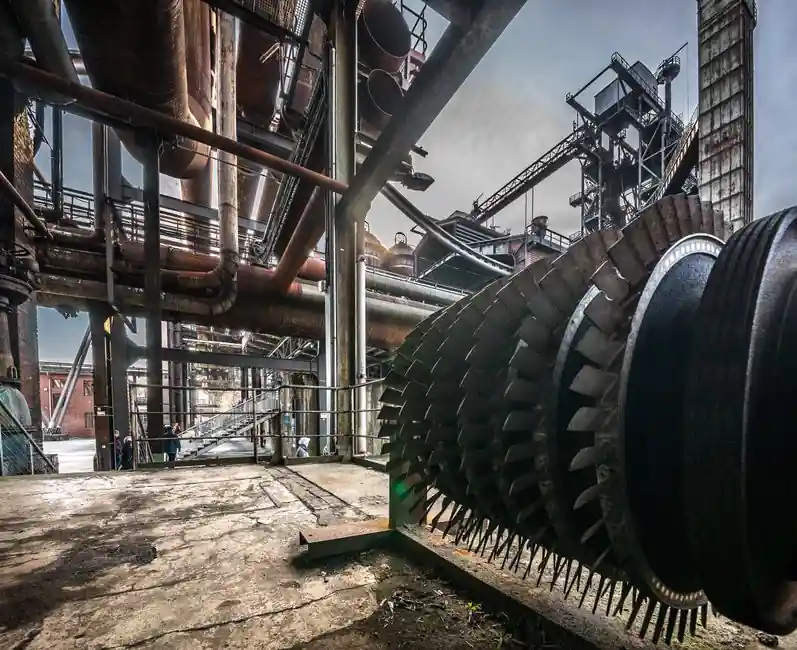
In a primary metals plant, the disc coupling choice sits between API-671 double-flex spacers on coiler/ decoiler and runout-table gearboxes, and ATEX-certified close-coupled designs in ladle turret or caster drive rooms; selection is driven by torque per shaft, ambient heat, alignment stability, and the maintenance cost of any planned grease interval.
Modern industrial disc packs use 0.4 to 1.0 mm thick stainless steel laminations, usually 4 to 12 discs deep, bolted alternately to the driver and driven hubs at two bolt circles, with no sliding contact, no lubrication, and zero backlash [S2]. AISI-301 stainless is the dominant disc-pack material in published product lines, balancing fatigue life with corrosion resistance for hot-mill atmospheres [S3].
Why a disc coupling, not a gear coupling, on a steel mill shaft
Disc couplings transmit torque through elastic flexing of the disc pack rather than through sliding gear teeth, so they need no lubricant, exhibit zero backlash, and are routinely specified where the cost of an oil leak into a hot strip or pickling line is unacceptable [S5]. Gear couplings, by contrast, can carry higher nameplate torque per diameter and tolerate larger parallel offsets, but require regular greasing, generate wear debris, and need oil-seal attention that a disc pack avoids entirely [S4][S5]. For cold strip mills, material transport drives, and screwdown auxiliaries where the mill floor sees scale, coolant, and oil mist, the disc pack's no-lube, all-metal design is the safer economic pick [S1][S3].
Single-flex vs double-flex: what a steel mill needs
Most industrial disc couplings use a double-flex design (two disc packs separated by a spacer) to accommodate parallel misalignment, while a single disc pack primarily handles angular offset and axial travel; SU-type single-flex units are typically built into floating-shaft arrangements when a long, hollow distance between hubs is required [S3][S5]. On a runout-table roll, where the driven shaft sits 200 to 600 mm from the motor and the baseplate can settle after a campaign, an SX-type double-flex spacer is the default; on a screwdown pinion where shaft separation is short, an SXC close-coupled unit is common and saves space [S3]. DI-type "drop-in" spacers add piloted hubs and an anti-flail spacer, which is the configuration called out when API-610 balance and anti-flail are part of the pump train specification [S3].
Torque sizing, service factor, and disc-pack geometry

Public design references note that a thinner disc stack lowers restoring force, a thicker stack raises torque capacity and fatigue margin but stiffens the coupling against misalignment, and 4, 6, and 8-bolt disc-pack patterns set the upper torque and misalignment limit per hub size [S3][S9]. The 8-bolt pattern transmits more torque than a 6 or 4-bolt pattern of the same diameter but cannot accept as much angular misalignment, so the choice between 4/6/8 bolts is essentially a torque-versus-flexibility trade [S3]. For a steel mill main drive, a service factor of 1.5 to 2.0 over the motor nameplate torque is typical, and disc packs are usually oversized one frame so a peak tonnage transient on the stand does not push the laminations past their endurance limit. Disc packs from major lines accept roughly 0.5° to 1.5° of angular misalignment per flex plane, with the higher figure on lighter, more flexible 4-bolt packs and the lower figure on 8-bolt high-torque packs [S3].
Materials, balance grades, and hazardous-area certification
Stainless steel AISI-301 is the standard disc-pack material in published product ranges because of its high fatigue strength and corrosion resistance in humid or mildly corrosive mill atmospheres [S3]. For pumps in the cooling-water or de-scaling pump house, API-610 balance plus piloted anti-flail hubs are typically mandated; Lovejoy states its disc couplings support API-610 up to 3,800 rpm, with unitized disc packs for the balance and piloting repeatability API-610 requires [S3]. On drives in or near ladle, caster, or fume-hood rooms where a flammable atmosphere is credible, ATEX certification on SU, SX, DI, SXC, SXCS, SXCST, DIR, DILR, DIRA, and DIRLA product lines is the published hazardous-area route [S3]. The disc element itself is fully metallic, so it is unaffected by the elastomer ageing that pushes elastomeric jaw coupling designs out of service in hot, oily steel-mill environments [S4].
Comparison: disc vs gear vs jaw coupling on a steel mill drive
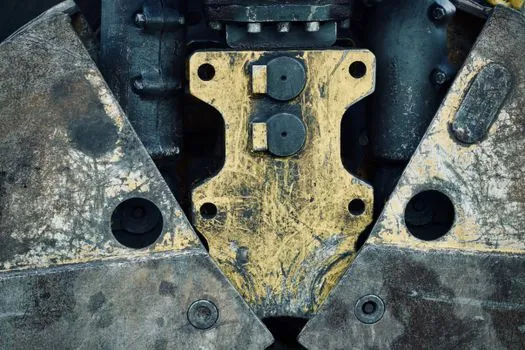
Lining the three main options against four steel-mill decision criteria gives a clean read: torque capacity is highest in gear couplings and adequate in disc couplings, lowest in jaw couplings; lubrication requirement is "mandatory" for gear couplings, "none" for disc couplings, and "none but replace the spider" for jaw couplings; misalignment tolerance is best in disc and gear designs, modest in jaw; and high-speed ceiling is highest on disc couplings because there are no sliding contact surfaces to heat up or wear [S3][S4][S5]. On a hot strip mill coiler where peak torque, zero backlash, and minimum maintenance dominate, the disc coupling is the right pick; on a roughing stand gearbox where the torque is in the highest band and a grease system already exists, a gear coupling remains competitive [S4]. For low-power auxiliaries such as small fans or hydraulic pump skids, a jaw coupling is the cheapest correct answer [S4].
Installation, alignment, and failure modes in a mill
Public guidance states that disc couplings accommodate misalignment only within their rated angular and parallel limits, and exceeding those limits, or operating with a thermal-growth offset that drives the disc pack into end float, cuts fatigue life sharply [S5]. The disc pack itself can be inspected through a strobe light while the machine is running, without disassembly, which is a real maintenance advantage in a 24/7 mill where shutdown windows are short [S3]. Typical failure modes in a steel plant are: bolt loosening from vibration on poorly torqued disc packs, fatigue cracking of the disc pack from chronic over-angular misalignment, and hub-to-shaft fretting when the bore-to-shaft fit is loose or the key is undersized. The corrective levers are laser alignment on installation, a documented alignment re-check after every major mill overhaul, and matching the spacer length to the actual shaft separation so the disc packs run at their design angular sweet spot [S3][S5].
When NOT to specify a disc coupling in a steel mill
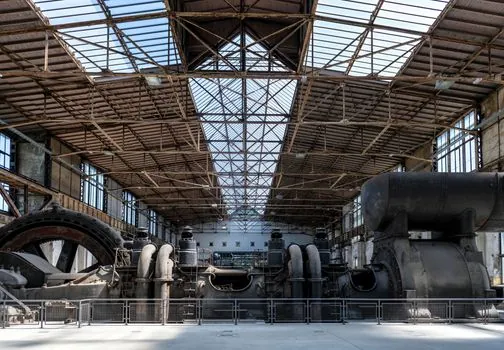
Disc couplings are the wrong call where peak torque exceeds the disc-pack frame rating, where very large parallel offset between shafts is unavoidable, or where the drive environment includes heavy abrasive dust that would attack the elastomeric spider in a jaw coupling but also contaminate any close-running guard or seal around a disc pack. For ultra-high-torque roughing-mill pinion stands, a gear coupling remains the workhorse because it transmits more torque per coupling diameter than a disc pack of the same size and tolerates greater parallel misalignment, with the trade-off that it needs a lubrication system and scheduled wear inspection [S3][S4]. For servo-driven screwdown or strip-position actuators where the duty is low-torque, high-cyclic, and zero-backlash, a disc coupling is ideal, but a shaft coupling family member such as a metal bellows unit is often substituted when misalignment is small and torsional stiffness must be even higher than a disc pack delivers. Selection should be cross-checked against the driven equipment standard: API-610 for pumps, API-671 for turbomachinery, and the relevant ATEX zone for hazardous areas, with a confirmed service factor and alignment plan on the datasheet before purchase.
Two trackable signals for buyers in 2026: watch whether disc-coupling OEMs continue to publish API-610 balance and ATEX certification on the same product line, since that combination is the most-cited reason steel-mill spec sheets default to disc on coiler, runout-table, and pump drives [S3]; and follow whether disc-pack bolt patterns (4, 6, 8-bolt) become more widely stocked in metric bores for European rolling-mill rebuilds, since the long-tail metric-bore availability is a recurring procurement friction point in published product pages [S1][S3]. For related process-spec context across heavy industry, the Disc Coupling Selection for Cement Plant Drives spec map and the Disc Coupling Selection for Mining: when to use, when to walk away articles work through the same logic for kilns and conveyors.