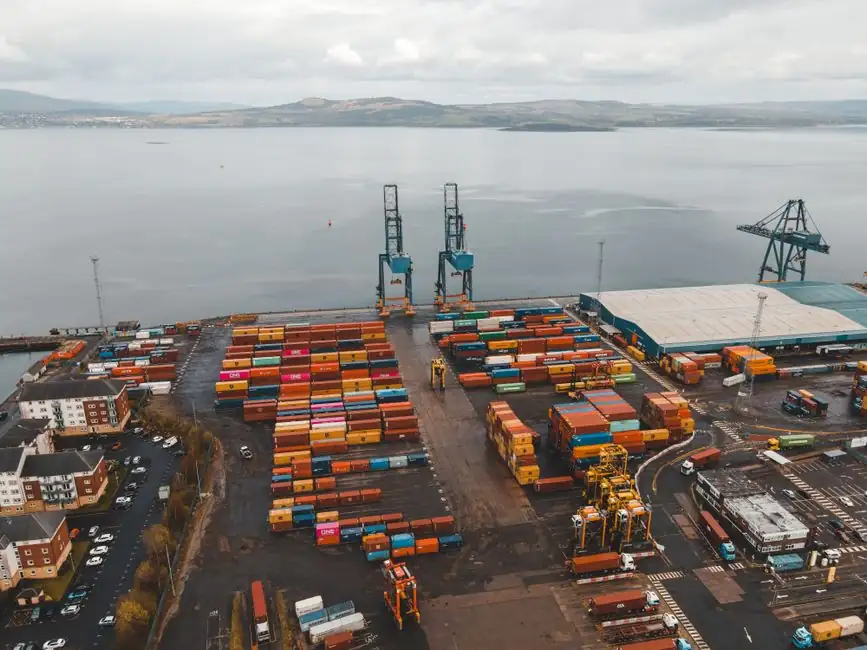
Port-side warehouses should default to a hydraulic dock leveler rated 8 to 10 tonnes WLL, with 6 to 12 tonnes as the common UAE/port capacity window and 12 to 25 tonnes reserved for steel, container, and heavy-forklift operations [S2][S4].
Selection turns on three numbers: working load limit, platform size, and travel range (+300 mm / -250 mm in the common Aven Automation spec), plus the duty cycle, ambient temperature, and the height variance of the trailer fleet served [S4].
Four Dock Leveler Types and Where Each Fits at a Port
Hydraulic, mechanical (spring-assisted), air-powered, and edge-of-dock levelers split the port-logistics market by duty cycle and budget, with capacities ranging 4 to 25 tonnes across the four designs [S2]. Hydraulic dominates high-frequency port operations, mechanical serves low-frequency light bays, air-powered suits cold-storage and pharma, and edge-of-dock handles consistent dock-height trailers at lower cost.
A typical Aven Automation hydraulic unit runs a 2000 x 2500 mm platform on a fully welded heavy-duty steel frame, with 6 mm anti-skid chequered plate, 825 kg net weight, and a 1.1 kW motor drawing 4.7 A / 2.7 A on a 400V AC three-phase 50 Hz supply [S4]. The lip is 2000 x 400 mm (500 mm optional), powered by a single hydraulic cylinder, with a maximum dock slope of 7 degrees and a maximum point load of 6 tonnes [S4].
Working Load Limit and Duty Cycle: The First Decision
Specify a minimum 6 tonnes WLL for general port cross-dock, and step up to 8 to 10 tonnes for heavy industrial ports using 3 to 5 tonne forklifts with loaded pallets, per the May 2026 Aspects Solutions guide [S2]. The 12-tonne stationary fixed loading platform is now a stock SKU at Chinese manufacturers serving export logistics, with CE certification listed as a baseline procurement requirement [S3].
Air-powered levelers complete their lift in under 10 seconds, which matters in cold-storage ports where door-open time and temperature loss dominate operating cost [S2]. Edge-of-dock levelers cap out at 4 to 6 tonnes and are mounted on the dock face, not recessed, which makes them a retrofit choice for older port warehouses with consistent trailer heights [S2].
Port Environment: Heat, Dust, and Civil Defence
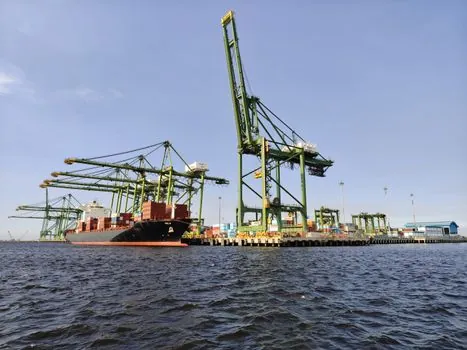
Port-adjacent warehouses in the Gulf routinely see loading-area air temperatures above 45 degrees C, which forces high-temperature hydraulic fluid rather than the default ISO VG 32 or VG 46 oil [S2]. Salt-laden marine air and desert dust dictate sealed hydraulic cylinders and IP54 control panels (IP44 standard, IP54 optional on the Aven unit) [S4].
UAE Civil Defence approval is mandatory for industrial port facilities, alongside a reinforced concrete pit with drainage, pit dimensions typically 2000 x 2000 mm, three-phase 400V 50Hz power, and compressed air for pneumatic models [S2]. Annual hydraulic system service plus quarterly fluid, seal, hinge, safety-leg, and control-panel checks are the published maintenance baseline [S2].
Smart Loading Dock Integration at Ports
IoT sensors on lifting levelers now feed real-time platform health, cycle count, and predictive-maintenance alerts into the warehouse management system, with Dunton Logistics positioning the integration as part of Industry 4.0 port procurement [S3]. Buyers increasingly rate CE certification, 8 to 12 tonne load capacity, and custom pit dimensions ahead of unit price when scoring port-tender bids [S3].
For apparel-port and automotive-port cross-docks, the same hydraulic platform is reused with different lip widths and finish specs; the apparel dock leveler spec map walks through capacity and lip tradeoffs, while the automotive dock leveler spec map covers heavier point-load and part-handling requirements.
Comparison Table: Hydraulic vs Mechanical vs Air-Powered vs Edge-of-Dock
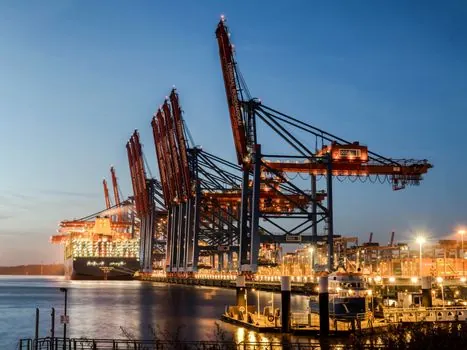
Across the four port-logistics duty profiles, hydraulic wins on cycle count and load (6 to 25 tonnes, 9 t standard), mechanical on capex (6 to 8 tonnes, lower cost, more operator effort), air-powered on cycle time (under 10 s, 6 to 10 tonnes, cold-store friendly), and edge-of-dock on retrofit simplicity (4 to 6 tonnes, face-mounted, consistent-height trailers only) [S2][S4].
Safety hardware is consistent across types: integrated hydraulic safety valves set to 170 Bar, mechanical maintenance supports, rubber bumpers, wheel chocks, vehicle guides, vehicle restraints, fixed bollards, traffic lights, and flashing warning lamps are listed as standard accessories on the Aven Automation hydraulic SKU [S4].
Failure Points, Common Problems, and Maintenance Triggers
The six most common dock leveler failure points flagged by Eastern Lift Truck's March 2026 service article are the platform hinge, lip cylinder, hydraulic seals, safety legs, control panel, and vehicle restraint interlock, all of which surface as stuck-down platforms, slow cycling, or lip not extending [S1].
For port buyers writing tender language, require a 7-litre hydraulic oil tank, 3 m hydraulic hose, 2.5 to 20 LPM pump flow, 170 Bar safety valve, and a documented quarterly + annual maintenance schedule, then link the equipment spec into the logistics packaging and broader dock-and-door spare-parts workflow to keep MTTR inside a single shift.
Track three signals over the next quarter: Civil Defence approval timelines for new UAE port-bay builds, 12-tonne fixed hydraulic platform pricing from Chinese exporters, and IP54 control-panel retrofit demand on existing Gulf port hydraulic levelers installed before 2024.
For component-level specifications, see dock leveler, and pressure transmitter.