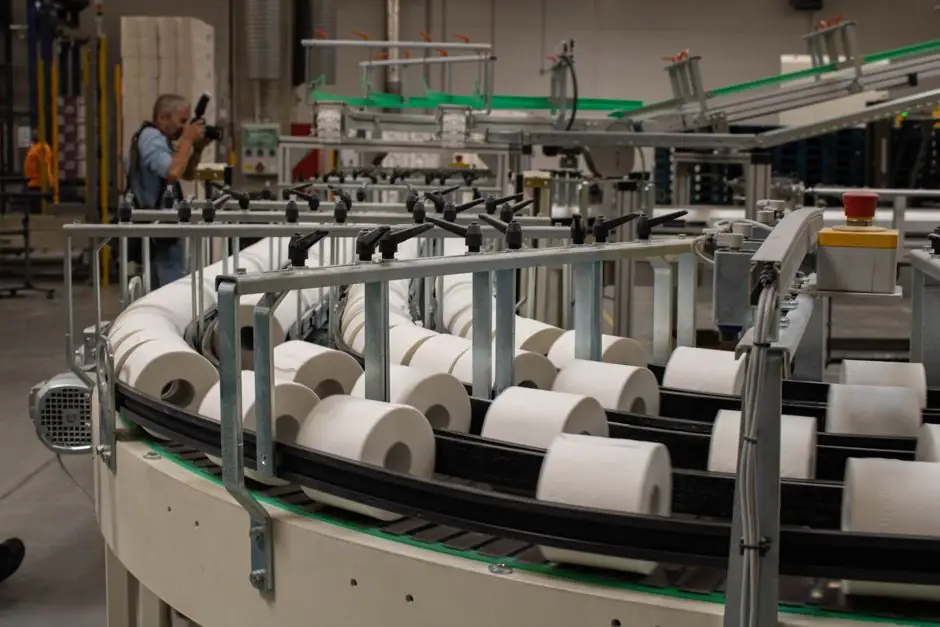
Packaging line gearboxes are not interchangeable across stations: a worm reducer on a 0.37 kW conveyor infeed, a helical-bevel unit on a 1.5 kW carton sealer, and a sub-3 arc-minute backlash planetary or harmonic stage on a servo-driven pick-and-place axis are three different selection problems even when they sit on the same line [S1][S2].
The selection discipline starts with four numbers, output torque in Nm, input speed in rpm, service factor for the duty cycle, and the radial/axial load on the output shaft, then layers in backlash in arc-minutes, efficiency, mounting footprint, and the food-grade or washdown rating of the housing [S1][S2].
Decision criteria: torque density, backlash, efficiency, and washdown rating
Output torque is the first filter: worm gear reducers typically deliver single-stage ratios of 5:1 to 100:1 with efficiency in the 30 to 90 percent band depending on ratio and starting versus running condition, and they tolerate high shock loads at low speed, which is why they remain common on conveyors, labellers, and slow indexers [S2].
Backlash is the second filter, and it is the one that splits standard packaging drives from precision packaging drives: a helical-bevel or standard planetary gearbox with 6 to 15 arc-minutes of backlash is acceptable for conveyors, carton erectors, and flow wrappers, while pick-and-place, delta robot, and robotic palletizer axes typically need single-digit or sub-arc-minute repeatability supplied by precision planetary or harmonic-drive stages [S3].
Efficiency maps against ratio: helical-bevel reducers commonly run 85 to 95 percent per stage, planetary reducers 90 to 97 percent per stage, and worm reducers drop sharply as ratio climbs, which matters for continuous-duty drives where motor heat and energy cost are real constraints [S1][S2].
Housing and sealing are the fourth filter: stainless or coated housings with IP65 or higher ratings, food-grade lubricants, and smooth external finishes are specified for any gearbox mounted in a washdown zone around fillers, cappers, or wet-product conveyors, and this rule usually forces the housing material before it forces the gear geometry [S1].
Type-by-station comparison: where each gearbox family fits
Worm gearboxes fit low-speed, high-torque, intermittent stations: conveyor drives, label applicators, simple indexing tables, and any axis where the motor is mounted away from the product zone. They are cheap, quiet, and self-locking at ratios above about 30:1, but they lose efficiency fast and run hot, so they are dropped from continuous high-speed applications [S2].
Helical-bevel and right-angle gearboxes are the workhorses of mid-range packaging: carton erectors, flow wrappers, vertical form-fill-seal (VFFS) film feeds, case packers, and most conveyor transfer sections run on them because the right-angle form factor saves frame space and efficiency stays in the 85 to 95 percent band [S1][S3].
Precision planetary and harmonic-drive gearboxes are specified only where the process demands it: pick-and-place heads, delta robots, synchronized dosing pumps, label registration axes, and robotic palletizer joints. SKGR-style precision planetary and harmonic-drive units are described as delivering low backlash, high torque density, and accurate start-stop control for these dynamic axes, where consistent speed and accurate positioning directly affect dosing volume and label placement [S3].
For a structured comparison, lining the three families against the four decision criteria gives the following picture, all values drawn from the referenced supplier literature: worm units are lowest cost and simplest to mount but highest in heat loss and lowest in efficiency at high ratio; helical-bevel units are mid-cost, high efficiency, and right-angle friendly but only moderate in torque density; precision planetary and harmonic units are highest in torque density and lowest in backlash but also highest in unit cost and most sensitive to misalignment [S1][S2][S3].
Station-by-station specification map on a typical line
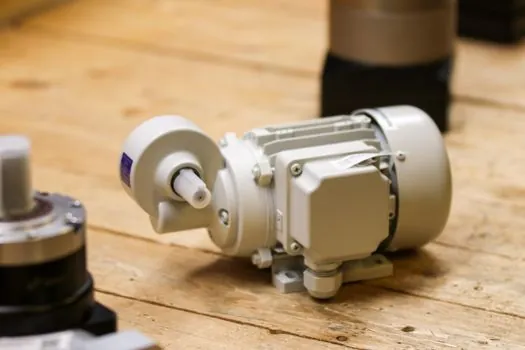
Infeed and outfeed conveyors below 0.75 kW with low starting torque are usually paired with worm or helical-bevel units at ratios of 10:1 to 40:1, and the service factor is commonly raised by 1.25 to 1.5 over the calculated value to absorb start-stop transients and product jams [S1][S2].
Carton erectors, case packers, and flow wrappers in the 0.75 to 4.0 kW band typically use helical-bevel or standard planetary reducers at 10:1 to 60:1 ratios, with the input matched to a servo or VFD-driven motor when synchronization with a film feed or flight conveyor is required, a configuration commonly supported by precision planetary stage suppliers for the packaging machinery market [S3].
Pick-and-place heads, delta robots, and servo-driven label axes need sub-3 arc-minute backlash stages; harmonic-drive units are commonly called out for zero-backlash, high-acceleration motion, while precision planetary units cover the high-torque end of the same application set where the joint load exceeds what a harmonic cup can deliver [S3].
Robotic palletizer axes and end-of-line handling cells combine high radial load, continuous duty, and precise stacking, so the gearbox spec shifts back toward high-rigidity precision planetary stages with high efficiency and low noise, rather than the lighter servo-planetary ratios used in pick-and-place [S3].
Integration with motors, controls, and timing components
Most precision packaging gearboxes are designed to be flange-mounted directly to a servo or stepper motor, with the input bore sized to the motor frame and a clamp or shrink-disk coupling for the input shaft; mismatched input stiffness is one of the most common causes of premature bearing wear on these stages [S3].
Timing pulleys and belts handle the lower-precision, lower-cost stations on the same line: carton sealing and taping heads, paper void-fill and crumpling units, and indexing conveyors are typical timing-belt applications where tooth-profile accuracy, dimensional tolerance, and material selection, not backlash, are the controlling variables, as detailed in the Torque Transmission packaging automation reference [S4].
For high-cycle packaging systems running frequent start-stop duty, the gearbox must hold its backlash specification over many thermal cycles; this is where precision planetary and harmonic units are differentiated from general-purpose helical-bevel units, and why they are specified on dosing, labelling, and registration axes even when their cost per Nm is two to three times higher [S3][S4].
Failure modes, limits, and common spec errors

Undersized service factor is the single most common failure mode on packaging drives, because engineers size for continuous running torque and forget the jam-up transient, the cold-start viscosity peak, or the high-cycle indexing load; a 1.25 to 1.5 service factor bump over the calculated value is the standard mitigation cited for low-speed packaging conveyor drives [S1][S2].
Mounting a precision planetary or harmonic stage in a washdown zone without an IP65 or higher rated housing is the second most common spec error; the gear geometry can be correct, but lubricant washout and shaft-seal failure will end the gearbox long before the bearings reach their calculated life [S1].
Pairing a high-backlash helical-bevel unit with a servo loop expecting sub-arc-minute repeatability is a third typical error: the servo compensates mechanically only within the gearbox backlash band, so registration accuracy on film feeds and label heads collapses, and the symptom shows up as drift in cut position or label skew rather than as an alarm [S3].
Sourcing and standards to anchor the spec
For packaging lines, gearbox suppliers publish selection guidance built around output torque, input speed, efficiency ratings, service factor, backlash class, and washdown rating, and a sensible procurement spec writes those four numbers down before any brand or model code is named [S1][S2].
Washdown and food-zone gearboxes are typically referenced against IP65 or higher ingress ratings, with stainless or coated housings and food-grade lubricants, and the same housing-grade rule covers conveyor, filler, and capper stations on a dairy, beverage, or ready-meal line [S1].
For a wider view of how gearbox selection sits inside a full motion-and-structure package, the slewing bearing selection for automotive production lines guide covers the structural-rotational end of the same engineering problem, while the dock leveler selection for e-commerce fulfillment reference covers the loading-bay end where packaged goods leave the line. For the packaging-side encyclopedia, the gearbox, packaging machine, and packaging material reference pages collect the broader terminology used in the selection maps above.
Trackable next signals for specifiers in this segment: any new supplier datasheet publishing backlash in arc-minutes rather than just ratio, the next round of IP66K or IP69K-rated packaging gearboxes from major servo-gearbox brands, and the first wave of integrated servo-gearbox-motor modules priced for mid-range VFFS and case-packer OEMs rather than only for high-end palletizer builders.