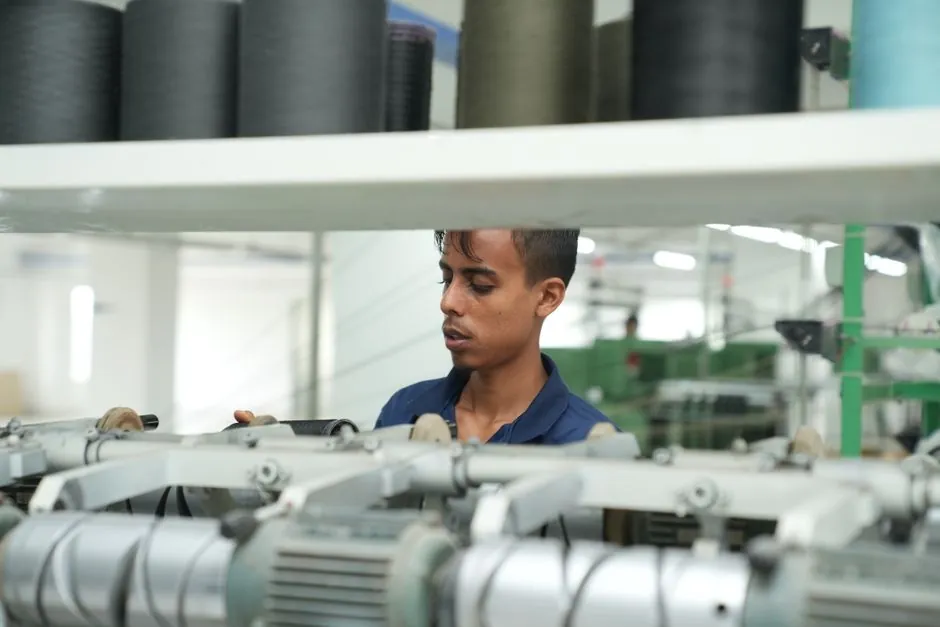
Available equipment includes an RT50 thread-rolling machine, a handheld threading machine, and an integrated head combining rib stripping and threading.
What a Double-Head Rebar Threading Machine Does
Correctly threaded rebar depends on reducing or milling the bar end to the proper diameter and shape before forming the thread [S2].
In a cold-forged system, the bar end is enlarged at room temperature and precision threads are cut on the expanded end so two bars can be linked by a mechanical coupler [S1].
A compact comparison is straightforward. A cold-forging and threading machine first enlarges the rebar end and then cuts precision threads at the expanded end.
Threading Method, Capacity, and Production Selection
Thread rolling and thread cutting are distinct processing methods, and the available machine class determines which one can be specified. The RT50 is identified as a rebar thread-rolling machine.
The cited handheld threading machine operates on 220 V at 50 Hz, consumes 1,700 W, and covers reinforcing bar from 16 mm to 50 mm. A 1.6-inch automatic round-bar machine uses an integrated head that combines rib stripping and threading in one compact assembly [S5].
These figures give buyers a practical selection frame. A 220 V, 50 Hz site supply and a 1,700 W power envelope fit the cited handheld configuration [S4]. Production planning should also check whether rib removal, threading, and optional cold forging must occur in one pass or across separate equipment.
Bar Preparation Determines Joint Quality
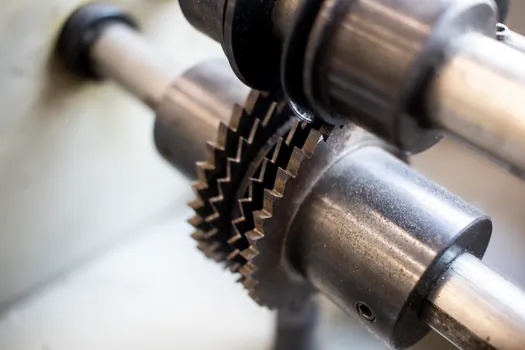
Threading cannot correct an undersized or misshapen bar end, because the correct approach is to turn down or mill the rod end to the proper size and shape before threading [S2]. Proper bar-end preparation before threading is important.
On cold-forged joints, forging increases the core diameter at the expanded bar end, and the thread is then cut to receive a mechanical coupler [S1]. Cold-forged mechanical joints replace traditional lapping and provide a space-saving joint solution.
Available capacity cannot substitute for correct preparation: the cited machines cover different ranges, with 16–50 mm for the handheld unit [S4] and 12–50 mm for the RT50 roller [S3].
Single-Head, Double-Head, and Cold-Forged Configurations
In a cold-forged system, the rebar end is enlarged before precision threads are cut.
The RT50 is identified as a rebar thread-rolling machine. Cold-forged systems add an expanded core diameter before threading [S1].
Cost cannot be ranked reliably from the available specifications because no comparable purchase price or throughput data were provided. Buyers should instead compare required bar diameter, thread length, thread system, power supply, available floor space, and whether cold forging is part of the specified joint.
Applications in Reinforced Concrete Fabrication
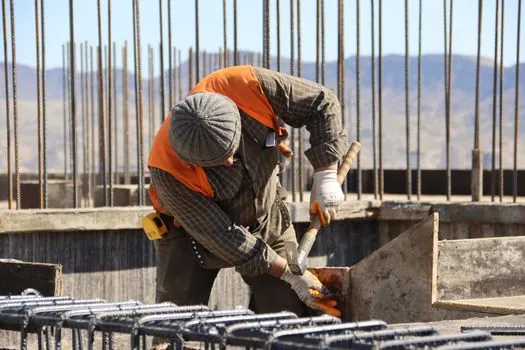
The equipment is most useful where matched ends arrive at a coupler assembly or installation point as a pair.
Construction supply chains can also integrate the operation with a rebar threading machine or a rebar bender. Order of operations matters: cutting and straightening establish the physical bar length, bending completes geometry that may interfere with threading, and threading prepares the specific ends that will receive a rebar coupler.
Cold-forged mechanical joints replace traditional lapping and provide a space-saving joint solution. Double-head equipment does not remove the need for design approval, but it can make preparation of both splice ends repeatable within the fabrication sequence.
Power, Site Integration, and Operator Controls
The 1,700 W handheld threading machine requires a 220 V, 50 Hz electrical supply and accepts 16–50 mm reinforcing bar [S4]. The automatic 1.6-inch unit combines rib stripping and threading in one integrated head described as compact and wear resistant [S5]. These data point to two different deployment models: a portable site tool and a dedicated automatic production machine.
Double-head equipment should be assessed for bar alignment, chuck or clamping repeatability, thread tooling changeover, chip control, guard access, and the movement path between the two heads. If the machine is fed by a rebar straightener, straightness must be stable enough for both ends to enter their tooling accurately. If offcuts are generated during preparation, a rebar cutter can be positioned before the threading line.
Controls should confirm cycle completion for each head, not merely total machine motion. On a double-end job, a missed operation on one side creates an unmatched thread and delays coupler assembly, even if the second end is correct.
Sourcing, Coupler Compatibility, and Acceptance Checks

Thread size alone does not establish coupling compatibility. The machine specification must be matched to the coupler system, including nominal diameter, thread form, effective thread length, and whether the joint uses rolled, cut, tapered, or upset geometry [S1][S3].
The available technical evidence identifies the RT50 as a thread-rolling machine, gives the handheld unit a 220 V, 50 Hz power supply, 1,700 W consumption, and a 16–50 mm reinforcing-bar range, and describes end expansion before precision thread cutting in the cold-forging sequence. A purchaser should request sample joints and inspect each finished end against the coupler manufacturer’s dimensional requirements.
Site acceptance should include a power-on check at the specified 220 V, 50 Hz supply where the handheld model is used [S4], a test piece at the smallest and largest approved diameters, and a coupler fit check on both processed ends. Procurement files should retain thread gauges, dimensional records, machine serial data, and the coupler compatibility statement, since generic equipment claims alone do not establish an approved structural joint.
A practical commissioning sequence is to confirm bar diameter and grade, prepare one representative two-end assembly, measure both threads, assemble the coupler, and verify that no correction is required for bar alignment or tooling before production batches begin.