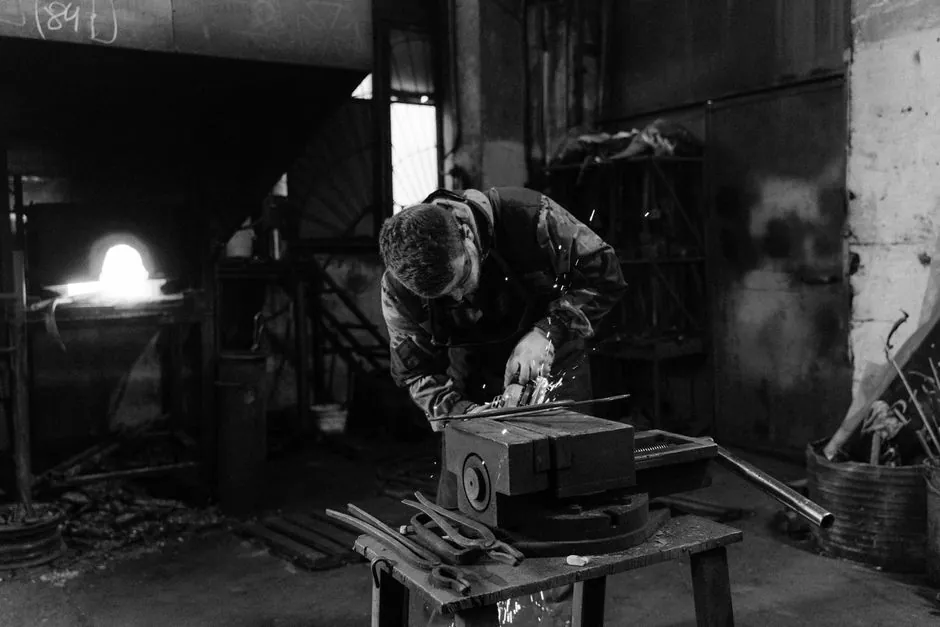
For ordinary hand tools, drop-forged chrome vanadium steel typically provides a practical balance of hardness, wear resistance, and toughness, with common tool hardness around HRC 38–44 [S2].
Chrome molybdenum is the stronger choice for sockets and other tools exposed to repeated impact loading, because molybdenum improves high-strength toughness and permits higher tempering temperatures [S2][S3].
Material Selection by Service Load
Chromium-molybdenum and chromium-vanadium are steel-alloy families that are chemically almost identical when properly manufactured and heat treated, and they perform similarly [S1].
These figures place it in a moderate-carbon, low-alloy steel range suitable for heat treatment and general-purpose hand tools [S2].
Drop forging is a separate manufacturing requirement from alloy choice. Forging refines and aligns the steel structure before machining, while the alloy and heat treatment determine the finished hardness, toughness, and wear behavior [S1]. A forged chrome vanadium wrench is therefore not automatically superior to a correctly made chrome molybdenum tool.
Cr-V Versus Cr-Mo: Decision Criteria
For repeated impact, chrome molybdenum wins because molybdenum raises toughness at high strength and supports higher tempering temperatures while retaining strength [S2][S3]. The practical result is better resistance to fracture under sudden loading, not necessarily higher static hardness.
Finish is not proof of metallurgy. Chrome vanadium tools are commonly associated with bright electroplated chrome, while quality impact tools are commonly associated with matte black manganese phosphate, but color alone cannot establish alloy content, forging quality, or heat treatment [S2].
Heat Treatment Determines the Finished Tool
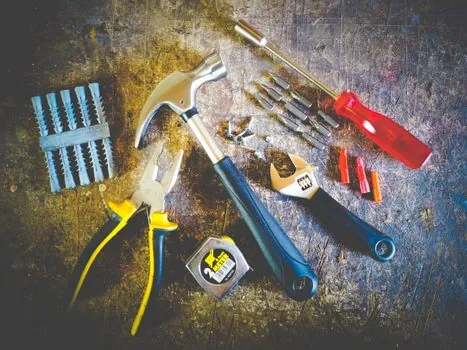
Heat treatment changes steel grain size and crystal arrangement through controlled heating, quenching, and tempering, so the same alloy can produce different hardness, strength, toughness, and ductility depending on its processing history [S1].
Hardness and toughness remain a compromise. Increasing hardness improves resistance to wear and deformation but can reduce the ability to absorb energy without cracking, while an excessively tough steel can deform and round more readily [S1][S2]. For impact service, selecting the nominal alloy alone does not guarantee safe performance.
Inspection of the heat-treatment record, hardness specification, alloy certificate, and applied standard is more meaningful than a polished finish or a broad label such as “drop forged” [S1][S2]. Chrome vanadium and chrome molybdenum should be compared as finished products, not as isolated elemental labels.
Where Cr-V Fits Best
Chrome vanadium is suited to hand sockets, combination wrenches, ratchets, hex keys, screwdrivers, and pliers because these applications emphasize resistance to wear, deformation, and corrosion during manual service [S2].
Cr-V is not the preferred material for a socket repeatedly struck by an impact wrench, nor is it the automatic choice for cutting tools that need a different edge-hardness or toughness profile. It is intended for controlled manual loading rather than sustained impact or shock [S2][S3].
Where Cr-Mo Earns Its Cost
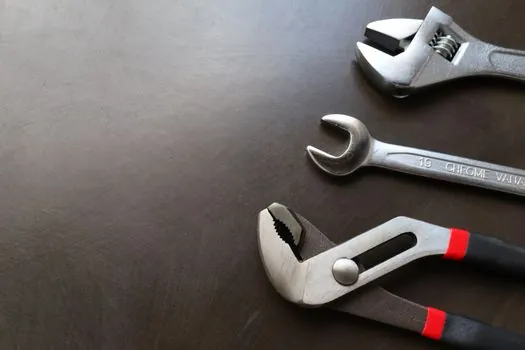
Chrome molybdenum is the better engineering choice when a tool will absorb repeated shock, such as an impact socket driven by an air impact wrench, because its high-strength toughness is the controlling property [S2][S3].
Molybdenum supports strength, hardenability, and toughness, while chromium contributes hardness and wear resistance [S1][S2].
For impact applications, do not substitute an ordinary chrome socket for an impact-rated one. The distinction is not merely the alloy name: socket geometry, heat treatment, hardness, manufacturing quality, and the manufacturer’s impact rating must all match the drive and service conditions. Additional application guidance is available in Impact vs Chrome Sockets: Spec Rules for Air Impact Wrench Use.
Drop Forging, Branding, and Failure Checks
A failed chrome vanadium wrench does not establish that chrome vanadium is an inferior alloy family. The reported breakage involved one 3/4-inch wrench and another drop-forged tool, but no controlled comparison of alloy chemistry, hardness, heat treatment, or defect condition was presented [S4].
For procurement, request the nominal material designation, manufacturer, standard, heat-treatment condition, hardness range, and test evidence. For field failure analysis, retain the broken component, record the exact loading event, and distinguish overload, impact, fatigue, corrosion, surface damage, and pre-existing forging defects.
“Drop forged” describes a forming process, not a complete material specification. The combination of forging, machining, heat treatment, alloy chemistry, finish, geometry, and service load determines whether the finished tool is suitable, so these factors must be reviewed together rather than ranked from the label alone.
For non-impact hand tools, specify drop-forged chrome vanadium with a documented hardness range near HRC 38–44; for impact-loaded tools, specify a documented chrome molybdenum system with an impact rating, then verify the tool markings and manufacturer test data before service.