A dozer-mounted machine control laser receiver is a 360° photodetector array, a mast, and a cab display that together read a rotating laser transmitter and resolve the blade's cutting edge against finished grade with stated accuracies of about 1/4 in. (6.35 mm) in automatic mode [S5].
The same hardware serves three different jobs on a dozer: indicate-only (LED + tone for the operator), single-receiver automatic lift control, and dual-receiver automatic lift plus slope, which is the configuration that most 2D dozer kits are sold as today [S6].
System Architecture: Transmitter, Mast, Receiver, Cab Unit
A complete working setup is four parts: a self-leveling rotating laser transmitter on a tripod (most have slope capability in one or both axes), a clamp or magnetic-mount mast fixed to the dozer blade, the receiver head at the top of the mast, and either an in-cab display or a hydraulic valve that drives the blade lift ram [S3][S5].
The Spectra Precision LR30W-DM package ships with a bulldozer mast and an RD20 remote display, and the receiver is specified for dozers, graders, scrapers, and box blades, with up to eight channel selections to ignore stray reflections on busy sites [S1]. The Leica LMR 360 from Quinn Equipment follows the same architecture and is listed as compatible with all Leica Rugby rotary lasers via clamp or magnetic mount [S7]. For a primer on how the rotating laser plane itself is generated and read, the laser level entry covers the transmitter side of that link.
Indicate-Only vs Automatic: Where the Money Goes
Indicate-only is the cheap end: a mountable 360° detector on a magnet bar plus a remote readout near the operator, with constant manual correction through the tractor's SCV; users on TractorByNet describe running a Topcon RL-4HC laser with a Trimble Spectra CR 600 magnetic receiver on an excavator, FEL, and box blade with good results for rough grading [S3].
Automatic lift control is what moves the price from roughly $500 (a basic magnetic-mount detector and a $500-class rotary laser) into the $10K to $25K band that automatic hydraulic kits for box blades historically occupy [S3]. On a dozer specifically, adding a second receiver is the step that unleps slope control: a single receiver watches only blade lift, while two receivers let the system solve both elevation and cross-slope from the same laser plane [S6].
Receiver Selection Criteria: Channels, Pickup Window, Mount, Output
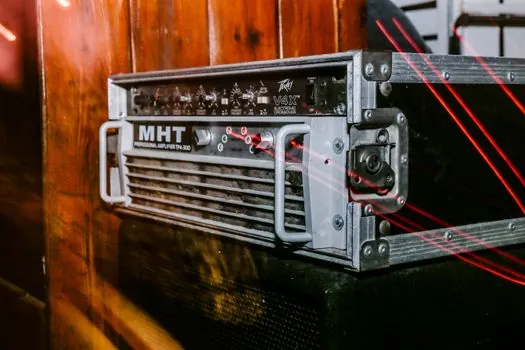
Five specs separate a useful machine receiver from a frustration: number of reception channels, total reception height (how long the photodiode array stays in the beam as the blade bounces), mounting interface, output type (display only, or relay/valve driver), and compatibility with the existing transmitter [S1][S2][S7].
The LR30W-DM lists up to eight channels and an extended reception height, both aimed at keeping the head in the beam longer so the operator gets continuous on-grade information across blade oscillation [S1]. The LMR 360 is sold specifically as clamp-or-magnet mount, which matters because dozer blades are often painted mild steel (magnet works) while grader moldboards and some after-market dozer masts are non-ferrous (clamp only) [S7]. For an explainer on how the receiver head resolves position inside the beam, the laser receiver page covers the underlying photodiode and windowing logic. As one TractorByNet user put it, "the hydraulic adjust option isn't that much money, maybe about 500 or so, what -sometimes- does cost some money is a detector with relay control out lines," which is why the output-stage spec dominates the price jump from indicate to automatic [S3].
Blade Mounting: Mast Height, Magnet vs Clamp, Vibration
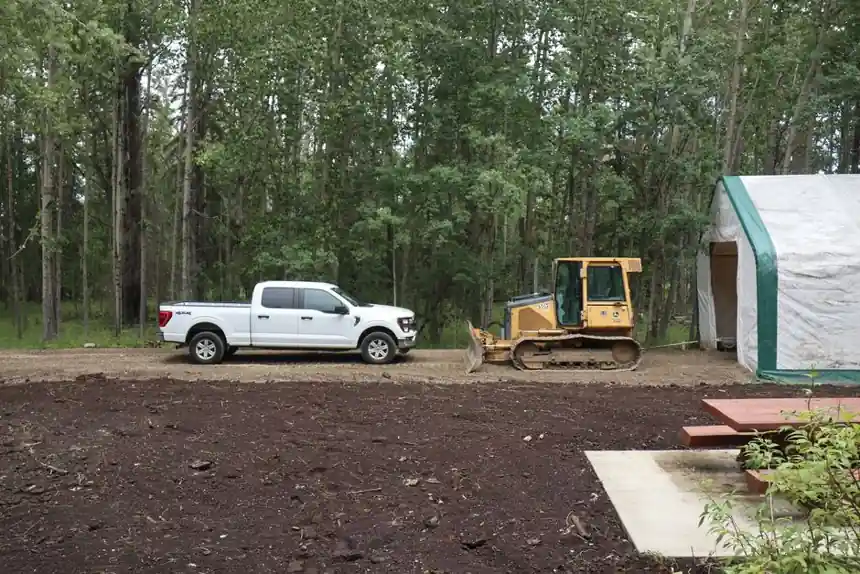
On a dozer the receiver mast is normally bolted or magnetically clamped to a bracket welded to the blade back, with the receiver head set high enough that rough-finished material flying off the cutting edge does not strike it; a tall mast also keeps the head above the dust cloud thrown by the track in soft cut [S5].
Trimble's 2D dozer documentation treats a single receiver as a lift-only configuration and a dual receiver as lift plus cross-slope, with both receivers referenced to the same laser plane so the control box can compute slope without a second slope sensor [S6]. In practice, contractors running indicate-only setups report mounting the detector on a pogo stick or square tube attached to the blade, accepting operator discomfort ("a few hours of driving twisted around in your seat facing backwards") in exchange for the $500-class price point [S3][S4].
Accuracy, Productivity, and Where It Falls Short

Automatic laser control on a box blade and grading tractor is documented at accuracy to within 1/4 in. of the preset elevation, with one manufacturer claiming about 40% less time to finish grade an infield compared with non-laser methods [S5]. Those numbers are for finish grading on a prepared sub-grade with a hydraulic valve modulating the 3-point lift; on a dozer pushing raw cut, the same hardware delivers sub-grade to a specified elevation lift-by-lift rather than a single tight tolerance [S5].
Limitations are physical, not electronic: a box blade has no down pressure, so its ability to make cuts is marginal, and a 3-point rig is "good for rough grading" but will not produce a soccer-field finish [S3]. Wind, dust, and airborne refracted heat over long laser throws can knock the receiver out of the beam, which is why multi-channel receivers with selectable band widths are specified for site work rather than indoor rotary lasers [S1][S2]. Dual-receiver 2D systems also assume the dozer is working on a single plane defined by the rotating laser; for compound slope or 3D design surfaces, the receiver-only architecture gives way to total-station or GNSS machine control, which is a different product class [S6].
Compatibility and Sourcing Notes
Receiver-to-transmitter compatibility is brand-loyal: the Leica LMR 360 is listed for all Leica Rugby lasers [S7], the Trimble/Spectra CR600 pairs with the Topcon RL-4HC in field use [S3], and the LR30W-DM is sold into the Spectra Precision rotary laser ecosystem including the LL300N, LL300S, LL500, and HV302 families [S1]. Benchmark Supply and Quinn Equipment both stock cross-brand machine control receiver lines, which is useful when a fleet runs mixed transmitters and the contractor wants one detector that works across machines [S2][S7].
For a side-by-side of how a laser-derived plane compares with an angle instrument for layout work, the laser level vs theodolite write-up walks through the angular and range trade-offs. Trackable signals to watch over the next quarters: vendor releases adding more than eight reception channels for higher-amplitude blade oscillation, and 2D dozer kits that integrate the GNSS fallback needed when a rotating laser cannot be set on a busy site.
Spec-level background on the components involved: laser marker.