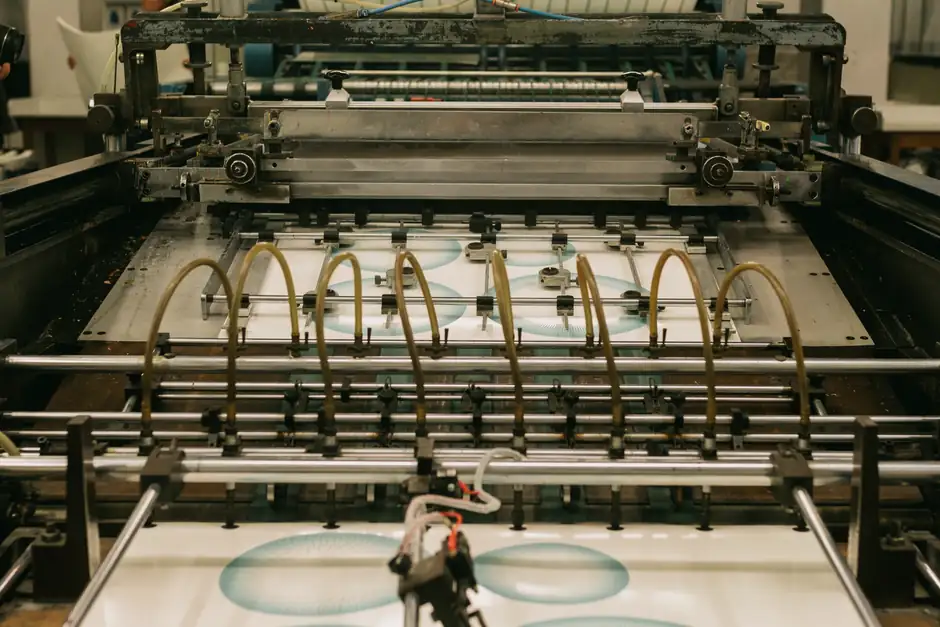
A length stop is a reference surface the workpiece butts against, set at a fixed distance from the cut-off blade, so every part fed in gets cut to the same length without remeasuring [S1][S2].
On a manual cut-off saw, three archetypes dominate: a clamp-and-block on the saw base, a stop fence on a crosscut sled or miter-saw table, and an engineered rail-and-flipper system with optional digital readout [S3][S4].
Wooden block on the saw base: the field-expedient stop
A scrap-wood stop uses two pieces of 2x material plus a 3/4 in. spacer to build a base level with the cutoff saw's table, then a set-up board is nicked at the length mark to register the 3/4 in. stop board's end [S4]. The build needs no machined parts and is the standard approach on a farm or jobsite where the same board length is needed in batches of 10 to 50 pieces [S4]. Repeatability is set by the kerf-nick in the set-up board and is typically held by the operator's eye, so dimensional drift over a long run depends on how solidly the 2x scraps are fastened to the worktable [S4]. This style is the right pick for short production bursts where the cut-off saw is not mounted to a dedicated fixtured table, and it is not the answer when the shop needs to switch lengths faster than a clamp-and-screw cycle allows.
Stop block on a crosscut sled or miter-saw table
For cabinet and built-in work, a 3/4 in. plywood extension arm is screwed to a crosscut sled and a machined stop block slides along it, locked with a C-clamp at the dimension needed for shelves or shelf nosing [S2]. The sled itself gives a zero-clearance reference to the blade, which reduces tear-out, while the stop block controls length, so the two together address both cut quality and dimensional control in the same fixture [S2]. This combination is the workhorse for finish carpentry and casework because one sled can be reconfigured for a new part in under a minute, and the stop-block approach scales to cut dozens of identical parts without remeasuring between cuts [S2][S1]. Where it falls short is on heavy production runs of picture-frame moulding or dovetail key stock, where the C-clamp cycle becomes the bottleneck.
Engineered length-stop packages: GlideStop and Quicksilver
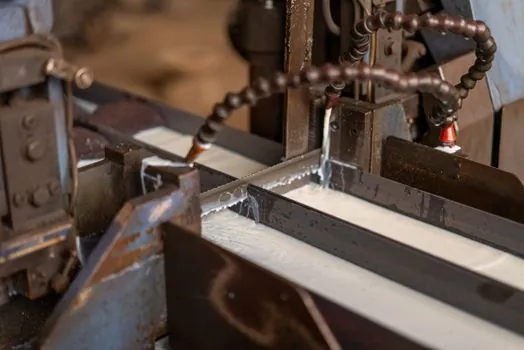
For higher-volume work, dedicated length-stop systems such as the Hoffmann GlideStop and the Quicksilver line offer rail-mounted flipper stops that swing out of the way for through-cuts and swing back to register the next workpiece, with packages built for existing miter-saw tables, bench-mount tables with rollers or solid tops, and freestanding tables with rollers or solid tops [S3]. Digital readout upgrade packages are sold as a separate line item for GlideStop systems, letting the operator set length to 0.01 in. resolution rather than reading off a tape [S3]. Accessories for these stops are catalogued as their own SKU family, so a shop can add a second measuring scale, an infeed-side fence rail, or a flipper without replacing the whole station [S3]. For picture framers, the J.A. Dawley Length Stop Systems sit in the same catalog family and share the rail-and-flipper logic [S3]. This is the right tier for a shop cutting hundreds of identical mouldings or frame members a day; it is overkill for a remodeler who changes length twice a week.
Comparison: three stop architectures against four shop criteria
Lining the three approaches up against the criteria that drive a buy decision: setup time, length-change time, tolerance hold, and cost. The scrap-wood stop wins on cost and on portability, but loses on length-change time (a screw-and-clamp cycle) and on tolerance (operator-dependent, generally 1 to 2 mm drift over a long run) [S4]. The crosscut-sled stop block splits the field: moderate cost, fast length change, and 0.5 mm or better tolerance when the C-clamp is torqued consistently [S2]. The engineered GlideStop or Quicksilver package is the most expensive option, but it pushes length-change time down to a single flipper motion, holds 0.1 to 0.5 mm tolerance with the digital readout upgrade, and is the only one of the three that survives a multi-shift production environment without the stop walking under repeated impacts [S3]. A shop cutting fewer than 20 identical parts per run is usually best served by the sled-mounted stop block; above 100 parts per run, the engineered rail system pays back the incremental cost in clamp-cycle labor alone [S2][S3].
Selection criteria and common failure modes
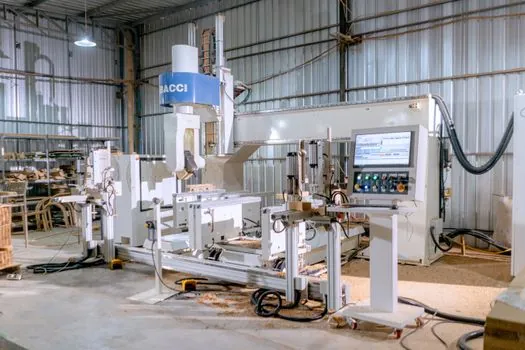
Three questions lock in the right architecture before a shop buys anything. First, what is the run length per setup: under 20 parts favors a clamp-on block, 20 to 100 favors a sled-mounted stop, over 100 favors an engineered rail [S1][S2][S3]. Second, how often does the cut length change: a flipper stop or a digital-readout rail reduces changeover to seconds, while a screw-fastened stop adds a full clamp cycle for every new length [S3][S4]. Third, does the cut-off saw move or stay put: a portable cutoff saw on a jobsite needs a stop that registers on the saw's own base, while a stationary miter saw can mount a longer rail because the workpiece, not the saw, is fed into the blade [S4]. The dominant failure mode on wooden stops is the stop block migrating under repeated impact, which is why scrap-wood designs specify fastening the 2x scraps to the worktable, not the 3/4 in. spacer, and leaving the spacer loose until the set-up board is nicked [S4]. On engineered systems, the failure mode shifts to the flipper stop pivot wearing, which is why Hoffmann catalogs replacement stops and digital scales as standalone service parts rather than built into the base unit [S3].
Standards and sourcing notes
Length-stop hardware for woodworking is not governed by a single international standard; tolerance claims are manufacturer-stated and verified by the shop with a calibrated tape or pin gauge at first article [S3]. For shops cutting to a print, the practical rule is to verify cut length on the first part, again every 10 to 20 parts, and after any flipper-stop or clamp adjustment [S2][S3]. Hoffmann publishes its length-stop catalog with explicit SKU splits between GlideStop packages for existing tables, bench-mount tables with rollers, bench-mount tables with solid tops, freestanding tables with rollers, freestanding tables with solid tops, and digital upgrade packages, so a buyer can match the package to the saw station rather than improvising brackets in the shop [S3]. Watch for a vendor's tolerance statement phrased as "repeatability" versus "accuracy": repeatability is the spread across cuts and is what a stop system actually controls, while accuracy is the offset against an absolute reference and is set by how the saw is initially calibrated to a tape or scale [S3].
Trackable next signals: any new digital-readout package that pushes GlideStop resolution below 0.01 in., and any third-party flipper-stop retrofit that fits OMGA production miter saws outside the Hoffmann catalog family. For shops also weighing a water-level hose against a laser level when laying out long runs, the setup tolerance a length stop can hold is set by the same kind of fixed reference logic that drives a laser line over a moving hose.
The underlying component specifications are covered under emergency stop, emergency stop button, and machine vision system.