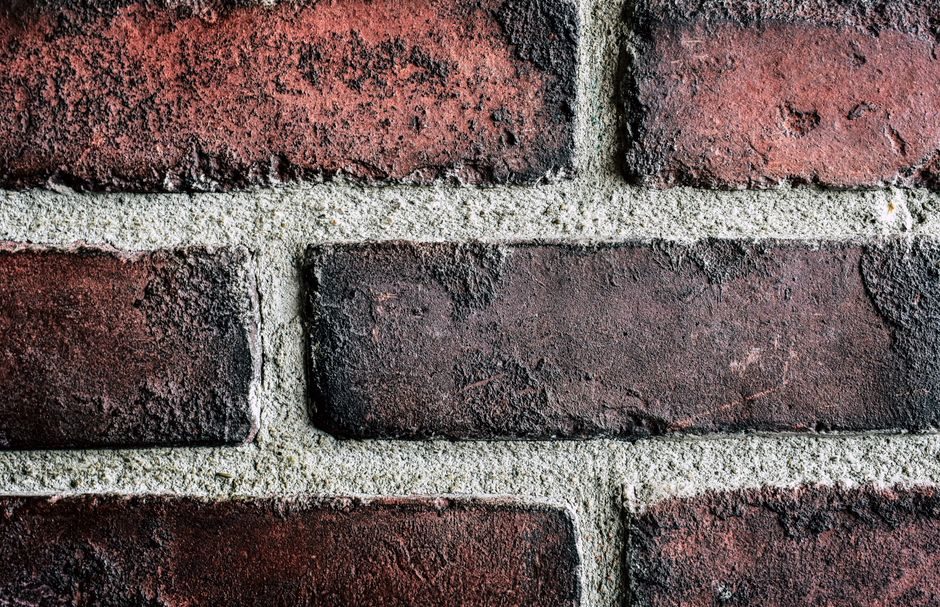
Dry-mix mortar is a factory-blended, dry-state mixture of cement, sand, mineral additives, and re-dispersible polymer powder, dosed under controlled conditions and wetted only at the point of use; a 2026 industry product line for it spans GSW500, GSW1000, and GSW2000 tower models with theoretical outputs of 10, 20, and 40 t/h, mixer powers of 120, 150, and 200 kW, and floor areas of 200, 300, and 400 m² [S3].
The format is well established in ready-mix parallel industries, and process engineers familiar with ready-mix concrete batching will recognise the same weigh-batching, screw-conveying, and PLC-controlled mixing logic, except that the binder is shipped dry and hydrated on demand.
Where dry-mix wins on the jobsite
Factory pre-blending removes the most variable part of site mortar — the sand-to-binder ratio that a manual mixer operator can drift on — and the closed silo-and-pump delivery models now on the market in 2026 (e.g. Maxi-Mix) supply mortars and grouts at the push of a button, marketed explicitly as "consistent, high-quality, convenient" against bag-mixing [S5].
The format also opens the door to formulations that site mixing cannot reliably reproduce, because redispersible polymer powders (RDP) such as the VINNAPAS range have to be dosed at low percentages and broken up uniformly; Wacker Chemie runs dedicated two-day instructor-led seminars on these mortar systems in 2026, which is itself a signal of how formulation-sensitive the product has become [S4].
Environmental and labour figures are the third lever: lower cement losses, no on-site cement dust during mixing, and the ability to pipe paste several stories up reduce both manpower and material waste on large facades.
Where dry-mix loses, and the cost it carries
The unit price of dry-mix mortar runs higher than bagged cement-plus-sand site mixes because the factory has to dose, blend, convey, and sometimes silo-store material that the site would otherwise measure by shovel; for low-rise or small-batch jobs the payback simply does not exist, and a standard bagged mix is the rational answer. [S1]
Logistics are the second cost: a dry-mix plant must either deliver bagged product within a tight radius or install a customer-side silo with compressed-air unloading, which adds fixed cost and a maintenance contract. The same silo model that delivers the convenience also forces the buyer into a recurring supply relationship with a single producer [S5].
Process sensitivity is the third penalty: dry-mix formulations are tuned to a particular sand grading, moisture, and additive package, so a change of sand source — or a batch of damp sand — can swing water demand and open time visibly. Operators who switch between ready-mix and dry-mix, or who run both plants, will see the same dry mortar production line behave differently on the same chemistry if the raw material envelope slips.
Decision criteria: when to specify, when to skip
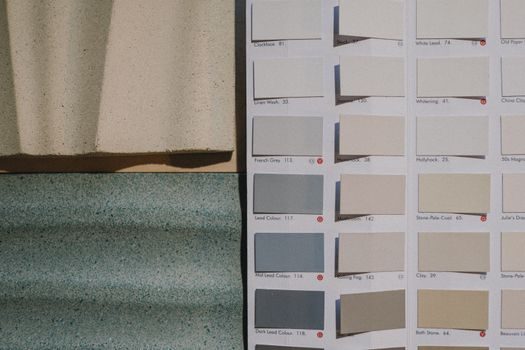
Specify dry-mix when the project has a high repetition rate of a single mortar type (tile adhesive, plaster, masonry grout), when the jobsite cannot tolerate a cement silo, when polymer-modified performance is specified, or when a general contractor is paying for facade warranty and wants batch records. Skip it when the volume per mix is small, the site has no compressed-air or silo access, or the labour force already operates efficient on-site mixers at a competitive wage. [S2]
For buyers evaluating equipment, three numbers carry most of the decision: theoretical productivity (10, 20, or 40 t/h on the 2026 GSW/DW range), installed power (120–200 kW), and footprint (200–400 m²) [S3]. Lower numbers mean lower capex but also lower throughput per shift, so a 10 t/h line is right for a regional bagging plant, while a 40 t/h tower sits at a commercial ready-mix or a green-building-materials hub.
Comparison of dry-mix against the realistic alternatives
On four decision criteria — quality consistency, on-site waste, unit cost, and required infrastructure — dry-mix beats site-mixed mortar on the first two, ties on the third (slightly worse on small jobs, slightly better on large or warranty-bound jobs), and loses on the fourth. Bagged dry-mix at retail is the middle ground: it carries the same quality control in the bag without the silo cost, at the price of manual handling. [S3]
Ready-mixed wet mortar (paste delivered to site) wins on logistics at the point of placement, but forces a 2–3 hour return-trip window before the load sets; the trade-off is well documented in producer case studies such as the 2023 Chongqing Kaizhou Concrete and Yunnan Luyu deployments that pair a dry-mix mortar production line with a wet ready-mix dispatch operation, and explicitly frame it as a low-carbon, high-quality green-building-materials strategy [S2].
Against on-site pan mixing, dry-mix wins consistency and dust, loses on capex per ton placed, and is roughly even on labour once the silo is in place. The 2026 China-manufacturer catalogue has effectively no single-source turnkey "dry-mix plant" listing on the metallic-processing category page, which itself is a signal that the equipment is sold in matched sets (mixer, silo, bucket elevator, screener) rather than as one catalogued product [S1].
What the buyer should ask a supplier
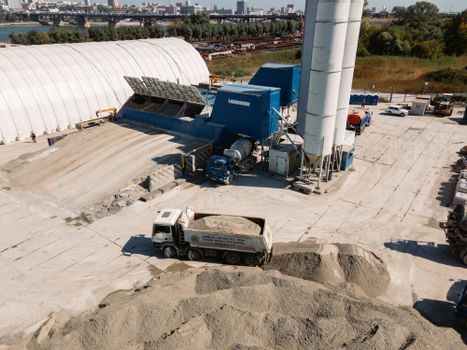
Before accepting a 2026 dry-mix plant quotation, the engineering buyer should pin four things: the maximum and minimum throughput in t/h, the actual installed power and the air requirement for the silo system, the sand moisture tolerance the recipe is qualified for, and the local spare-parts lead time for the mixer gearbox, the screener mesh, and the bagging spout. [S4]
Sample reference inquiries from 2026 include a Qingdao-port-loading, TT/LC-payment, 1-set MOQ dry-mix line quoted at 50 set/month supply capability, which is the order of magnitude a small regional producer should expect [S3]. Any quote that comes in well below that envelope usually means a non-tower, workshop-type line with the lower 10 t/h GSW500 throughput and a 200 m² floor plate, not the 40 t/h GSW2000 tower.
For any plant handling re-dispersible polymer powder, the operator training question is non-negotiable; Wacker's 2026 academy calendar treats this as a two-day course, not a one-hour induction [S4].
Limits and failure modes to engineer for
The most common dry-mix failure on a new line is sand grading drift, which shows up as water-demand creep in the mixer and slump loss at the spray nozzle; the fix is a tighter sieve-stack discipline upstream, not a chemistry change. The second most common failure is silo bridging, usually after a humid batch or a weekend stop, and the fix is a properly sized vibrator and a man-door at the cone, not a louder alarm. [S5]
The third failure mode is a formulation that was qualified on a polymer powder from one supplier and then re-quoted against a cheaper RDP — flexural and adhesion numbers can move enough to fail a façade test. Locking the RDP grade into the contract, the way a dry mortar production line contract locks the screw geometry, is the only durable defence.
Trackable signals to watch over the next two quarters: new plant installations in inland China tied to green-building-materials policy, the next academy-session calendar from RDP suppliers such as Wacker, and any update to the 2026 GSW/DW model range that bumps output above the current 40 t/h ceiling [S2][S3][S4].
For component-level specifications, see dry type transformer.
For related coverage, see Concrete Pump Truck Selection: Reach, Output, Chassis and Wear-Life Gates.