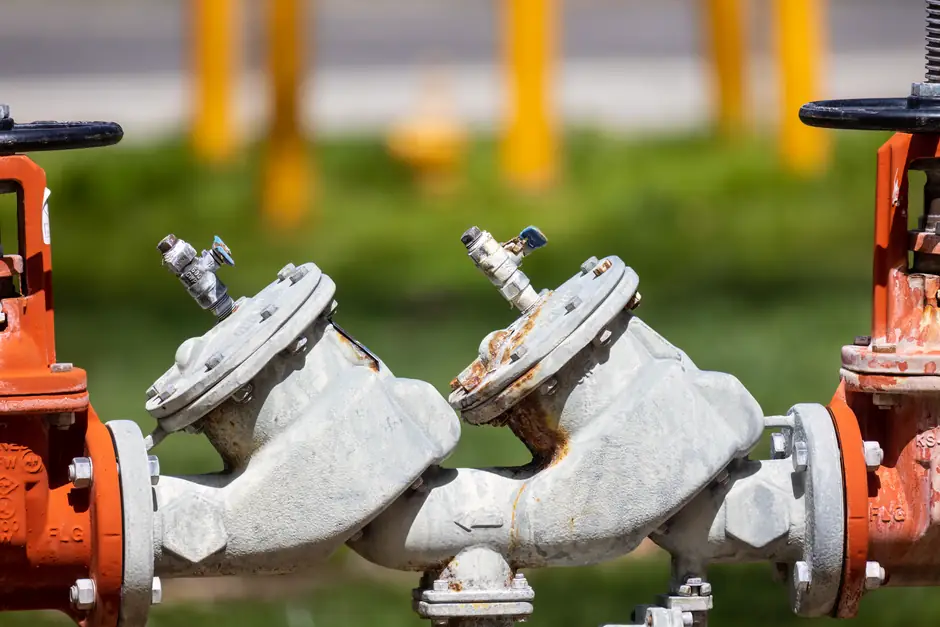
Ductile iron to ASTM A536 grade 65-45-12, unplasticized PVC, and CF8M stainless steel to ASTM A351 are the three body materials most commonly shortlisted for new diaphragm valve builds, with each one solving a distinct pressure/temperature/corrosion problem set [S1][S3].
Selection is driven by four criteria in this order: allowable pressure class, media temperature, chemical compatibility with both the body and the chosen elastomer liner, and total installed cost per operating cycle, not by catalogue brand [S2][S4].
Material Properties and Governing Standards
Ductile iron diaphragm valve bodies are cast to ASTM A536 grade 65-45-12, a specification that requires a minimum tensile strength of 65 ksi (448 MPa) and minimum elongation of 12% in the as-cast condition, the key toughness differentiator against gray cast iron (ASTM A126) [S1][S5]. Tru-Tech Valve lists ductile iron as "much stronger and more capable where there may be high pipeline stresses, danger from impact, or concern from leakage upon line or valve fracture," and notes it can be used as a direct replacement for steel valves when rubber- or plastic-lined [S1].
CF8M, the cast equivalent of 316 stainless steel under ASTM A351, typically contains 16-18% Cr, 10-14% Ni, and 2-3% Mo, with the molybdenum content being the property that distinguishes it from CF8 (304-grade) for chloride and acid resistance [S1]. PVC-U bodies carry their own rating system, with the material itself specified under ASTM D1784 cell class 12454, and operating pressure typically de-rated as temperature climbs above 20°C [S3].
Pressure and Temperature Operating Envelope
Ductile iron diaphragm valve bodies in the unlined state are commonly flanged to ASME B16.1 Class 125 or B16.42 Class 150 ratings, with pressure capability comparable to carbon steel WCB bodies of the same class [S1]. For comparison, ductile-iron butterfly valves in the same spec family are routinely rated PN10-PN25, against cast-iron bodies typically limited below PN16 [S4].
CF8M bodies inherit the full ASME B16.5 Class 150/300 envelope and remain serviceable at process temperatures that would soften or creep a PVC-U body, which is generally capped near 60°C (140°F) at de-rated pressure [S1][S3]. EPDM and PTFE diaphragms, which sit on top of the body material choice, span roughly -34°C to 149°C (-30°F to 300°F) for EPDM and PTFE-faced, while Viton (FKM) reaches 149°C and Neoprene caps at 93°C (200°F) [S1].
Corrosion and Media Compatibility
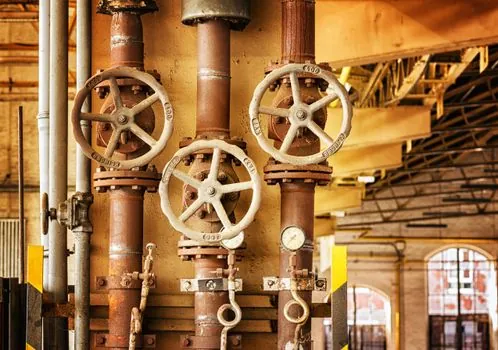
Unlined ductile iron and cast iron share roughly the same corrosion profile: suitable for water, air, petroleum products, most solvents, dry powders, and many chemicals, but vulnerable to aggressive acids, alkalis, and saline media unless the wetted surfaces are rubber- or PTFE-lined [S1][S5]. Ductile iron's higher strength lets it survive water-hammer surges and buried-pipe soil loads where gray cast iron would crack, which is why municipal water and wastewater plants default to it [S4][S5].
CF8M is the right pick for foods, beverages, pharmaceuticals, solvents, sea water, oils, and dilute acids and alkalis; Alloy 20 (CN7M) is the upgrade choice for concentrated sulfuric acid service [S1]. PVC-U and U-PVC bodies cover the same corrosive envelope as lined ductile iron at lower pressure and temperature, and are widely used in chemical dosing, plating lines, and ultrapure water loops where metal-ion leaching must be minimized [S2][S3].
Mechanical Loading and Impact Performance
The DIPRA pipe comparison data is the cleanest public benchmark for the ductile iron vs PVC mechanical argument: ductile iron pipe delivers more than 13x the impact strength, 9x the tensile strength, and 4x the burst strength of PVC pipe in the same nominal class [S7]. Although the data is for piping rather than valve bodies, the metallurgy carries over: ductile iron's spheroidal graphite matrix absorbs shock and water-hammer transients that would crack a PVC body or chip a cast iron one [S4][S5].
PVC-U valves gain an edge in chemical resistance per unit weight and in handling mineral acids, caustics, and brine at low pressure, but lose the ability to support mechanical actuators that apply high stem thrust, and cannot be specified for fire-protection or above-60°C service [S2][S3].
Comparison Matrix: Ductile Iron vs PVC vs CF8M
Pressure rating: ductile iron ASME B16.42 Class 150 (PN10-PN25 typical), CF8M ASME B16.5 Class 150/300, PVC-U generally capped at PN10 and derated above 20°C [S1][S3][S4].
Maximum service temperature: ductile iron and CF8M are limited by the diaphragm elastomer (EPDM/PTFE to 149°C, Viton to 149°C, Neoprene to 93°C), while PVC-U bodies are limited to roughly 60°C by the material itself [S1][S3].
Corrosion envelope: ductile iron and cast iron need a rubber or PTFE liner for aggressive chemicals, CF8M handles chlorides and many acids bare, PVC-U covers acids, alkalis, and brine bare but fails on solvents and aromatics [S1][S2][S3].
Cost-per-cycle: PVC-U has the lowest unit cost, ductile iron is typically 2-3x the price of a comparable PVC-U valve but lasts longer under mechanical cycling, and CF8M commands the highest first-cost offset by the longest service life in sanitary or chloride service [S2][S4].
Selection Rules by Use Case
For municipal water, raw sewage, and pump-station isolation at PN10-PN25, specify ductile iron ASTM A536 65-45-12 with EPDM liner, the standard pairing in water and wastewater treatment [S1][S4][S5]. Cast iron remains acceptable only on low-pressure HVAC and building service lines below PN16 where surge events are controlled [S4].
For chemical dosing, plating, and low-pressure acid/alkali service, choose PVC-U or U-PVC to ASTM D1784, sized within the de-rated pressure/temperature window, with PTFE diaphragm for solvent resistance [S2][S3]. For pharmaceutical, food and beverage, sea water, and high-purity water lines, specify CF8M (ASTM A351) with sanitary Tri-Clamp or ASME BPE end connections and EPDM or PTFE/FKM diaphragm [S1][S3].
Limitations and Failure Modes
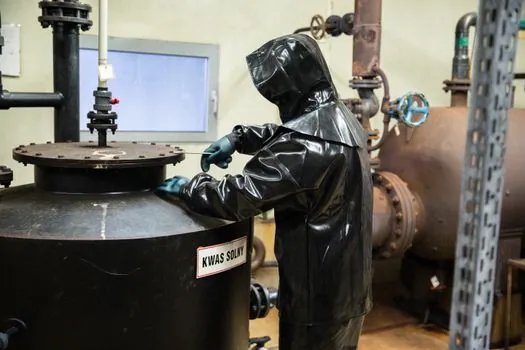
Ductile iron bodies fail by external corrosion of unlined exterior surfaces and by liner separation if the elastomer is not properly bonded; a cast iron body in the same impact condition would simply crack, which is the entire reason ductile iron is the safer default [S1][S4]. PVC-U fails by creep and stress cracking under sustained temperature above its rating, and becomes brittle below roughly 0°C, eliminating it from cold-climate outdoor service without insulation [S3].
CF8M can suffer crevice corrosion and pitting in stagnant chloride solutions above roughly 60°C, which is when Alloy 20 (CN7M) or a lined ductile-iron body becomes the safer specification [S1]. PTFE diaphragms over any body shorten actuator life because TFE stiffness increases required closing force and may need a larger actuator than an equivalent EPDM-lined valve [S1].
Standards and Specification Anchors
ASTM A126 covers cast iron valve bodies, ASTM A536 grade 65-45-12 covers ductile iron valve bodies, ASTM A351 grade CF8M covers 316-equivalent stainless castings, and ASTM A351 grade CN7M covers Alloy 20; lining elastomers are typically specified per ASTM D2000 line call-out for EPDM, FKM, or PTFE [S1][S5]. End connections on metallic bodies follow ASME B16.1 (Class 125) or ASME B16.42 (Class 150) for ductile and cast iron, and ASME B16.5 for stainless; plastic bodies follow ASTM F1970 or manufacturer-specific flanging [S1][S3].
For diaphragm elastomer selection, the published temperature bands are EPDM -34°C to 149°C, Neoprene -29°C to 93°C, soft natural rubber -34°C to 82°C, FKM/Viton -29°C to 149°C, and TFE/EPDM faced -34°C to 149°C, which sets the real operating ceiling regardless of what the body itself could theoretically take [S1].
Track these three signals on the next specification cycle: the 2026 IQS Directory update (August 26, 2026) continues to list PVC, U-PVC, ductile iron, cast iron, cast steel, brass, bronze, and stainless as the canonical body shortlist, so any deviation should be justified in writing [S2]; DIPRA's mechanical comparison is the cleanest open benchmark for the ductile iron vs PVC argument when the specifier is challenged on impact and burst margins [S7]; and ASTM A351 grade CN7M (Alloy 20) remains the standardized escalation path when CF8M fails on hot sulfuric or chloride pitting [S1].
For component-level specifications, see diaphragm valve, cast iron, and pvc u pipe.
Background reading: Cupola Carbon Pickup from Coke: How Bed Height, Coke Rate and TPK Set Cast Iron.