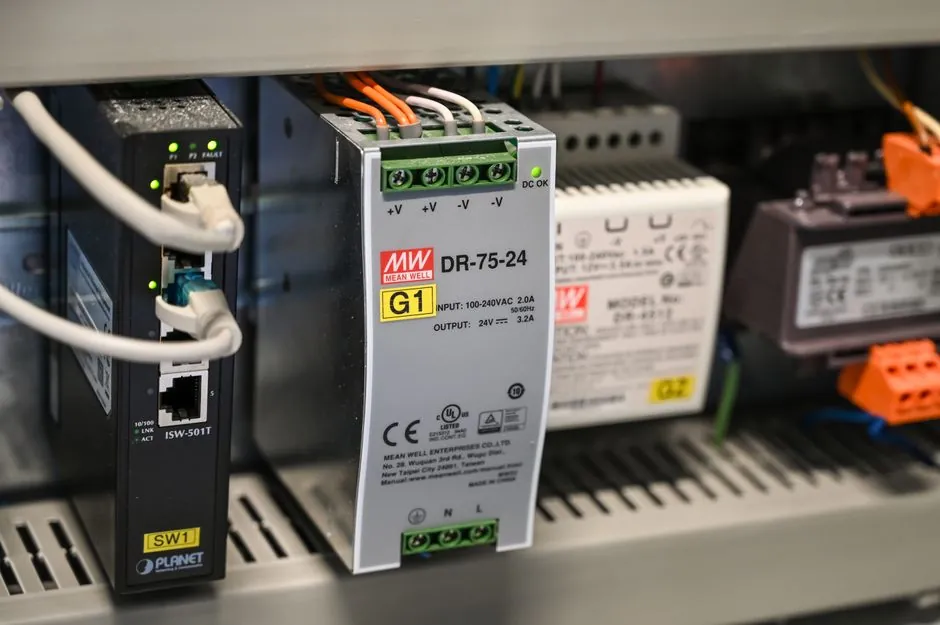
Remote oilfield work in 2026 still defaults to diesel-driven hydraulic power units because the prime mover ships with its own fuel, needs no grid tie, and accepts continuous-duty loading at 2,000-3,000 PSI without derating [S1][S2].
Electric-driven HPUs have closed the gap on pressure and flow, with aviation-grade units reaching 5,000 PSI and 30-150 HP continuous duty, but they inherit a hard dependency on stable incoming power that most wellpads do not have [S4].
Operating envelope each drive can actually cover
Diesel HPUs are routinely packaged for ambient temperatures from -40 degC to +50 degC, with skidded acoustic enclosures, fire and gas detection, and ATEX Zone 2 ratings, which is why they ship into mining, oil and gas, and Antarctic research stations as a single self-contained asset [S3]. The typical oilfield tool envelope is 2,000-3,000 PSI, with 74 kW to 340 kW class units representing common wellsite sizes, and these are almost exclusively diesel-driven because the fuel logistics already exist on location [S3][S1].
Electric HPU capabilities in 2026 reach 5,000 PSI, 100% continuous duty, and 3-micron multi-stage filtration, but require a clean, stable power feed that most remote wellsites cannot provide without an upstream generator [S4]. For wellpad applications, that generator effectively negates the maintenance and emissions advantage of going electric in the first place.
Power, flow, and pressure headroom
Diesel skid packages in the oilfield class commonly span 25 HP to 500 HP, with pressures up to 4,000 PSI and flow above 90 GPM, sized with deliberate headroom above tool demand so the pump does not run at its continuous limit all day [S4][S1]. A unit pegged at its nameplate flow runs hotter, wears faster, and leaves no margin when the wellhead pressure test pushes back, which is the most common failure pattern on extended workovers.
Electric units for aviation MRO and industrial service are typically 30-150 HP, capped at 5,000 PSI, and benefit from variable frequency drives that now closely match diesel speed and torque curves, an option that only matters if a stable DC bus or mains feed is available [S4][S3]. For a wellsite without shore power, a VFD on a diesel generator is just adding a converter stage to a system that already had a diesel engine.
Comparison matrix: diesel vs electric HPU for a remote wellsite
On a remote wellsite the relevant decision criteria line up as follows. Prime-mover independence: diesel wins outright, the unit carries its own fuel and needs no external power; electric requires a feeder, inverter, or upstream generator [S1][S2]. Continuous-duty power: diesel covers 25-500 HP across the common oilfield range, electric is practical up to about 150 HP in 2026 [S4]. Pressure capability: both reach 3,000-5,000 PSI at the package level, so pressure alone is not a discriminator [S1][S4]. Emissions and noise: electric is cleaner and quieter, which is why electric wins inside hangars and indoor MRO bays but rarely matters on an open wellpad where the diesel already runs under an acoustic canopy [S4][S3]. Maintenance burden: electric has fewer wearing parts and no engine service interval, but a diesel HPU's maintenance is well-understood by field crews and parts are stocked at the district warehouse [S2][S4]. Ambient range: both can be engineered to -40 degC to +50 degC, but only diesel is fielded at that range as a standard off-the-shelf product [S3].
The verdict per use case: a remote wellsite with no grid, no solar, and a multi-week workover is diesel. A permanent producing pad with utility power and indoor skid shelter can run electric. A hybrid pad running a diesel genset with a battery buffer can justify electric for the HPU only if the VFD package is rated for the inrush of the hydraulic pump, and most off-the-shelf packages are not.
Standards, ratings, and compliance that drive the spec sheet
For European and offshore work the HPU must be selected against the right hazardous-area classification, with ATEX Zone 2 being the common ceiling for compact diesel packages, and higher zones forcing electric-motor prime movers because internal-combustion engines cannot be used in those atmospheres [S3]. Build compliance options in the oilfield class typically include Rig Safe, Safe Area, Zone 1, ATEX Zone 2, and CE-marked, with -40 degC to +50 degC ambient as a standard design window [S3]. On the oilfield, ATEX 2014/34/EU governs equipment for explosive atmospheres, and the appropriate IEC 60079 series applies to the electric variants.
Filtration and fluid cleanliness drive hydraulic reliability more than prime-mover choice, and multi-stage filtration down to 3 microns is now standard on premium aviation and oilfield units, alongside reservoir sizing that lets the fluid cool and de-aerate between duty cycles [S3][S4]. When you review a diesel HPU datasheet, the three numbers that predict field life are reservoir capacity, heat-exchanger rating, and filter micron rating, in that order.
Failure modes and field-service realities
The largest single cause of hydraulic failure in 2026 is still poor fluid cleanliness, not prime-mover type, and that risk is mitigated by filtration design and operating-temperature control rather than by switching from diesel to electric [S3]. Diesel HPUs add engine-specific failure modes: fuel contamination, cold-start wear below -20 degC, and exhaust-side heat that has to be managed with a cooling kit on offshore packages [S1][S3].
Electric HPUs shift the failure profile to the supply side: voltage sags, harmonic distortion, and VFD trip events on weak feeds, which is why electric units in remote service are almost always paired with a generator and a buffer rather than a direct grid tie [S4][S3]. For a workover crew, the practical question is whether the failure mode the team can fix in the field is more likely to be a fuel system or a power-quality event, and on most pads the answer is fuel.
When electric starts to win on a wellpad
Electric HPU economics turn favourable when the site has stable power, a high duty cycle, and emissions are regulated or taxed, which is the case inside enclosed production facilities, offshore platforms with shaft generators, and any pad tied into a solar-plus-storage microgrid [S4][S2]. Under those conditions the lower maintenance and zero on-site fuel logistics offset the higher capital cost of the electric package.
For an unpowered remote wellsite, the 2026 spec still writes itself: a diesel-driven electric actuator prime mover at 74-340 kW, ATEX Zone 2, acoustic canopy, -40 degC to +50 degC, with reservoir, filtration, and heat exchanger sized for the actual duty cycle rather than the nameplate. Track in 2027 whether ATEX Zone 1 electric skid packages drop in price, because that is the threshold at which diesel loses the hazardous-area argument.
Detailed specification references: remote io module, and electric ball valve.
For related coverage, see Cupola Coke Bed Height: Spec for a Stable Combustion Zone.