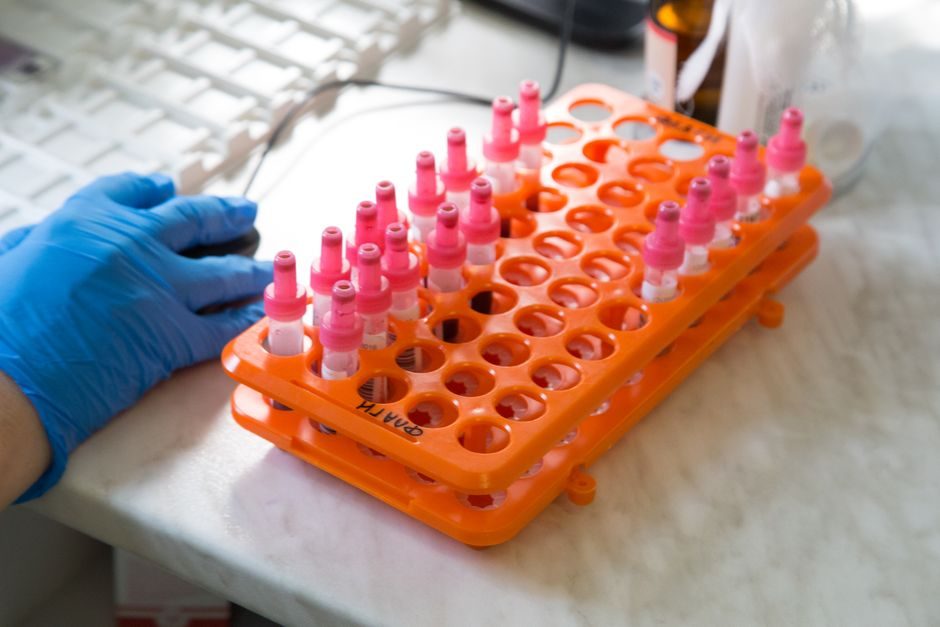
A complete dye penetrant testing kit bundles penetrant, cleaner/remover, developer, and a reference block, and the 2026 buying decision is driven by sensitivity tier (Level ½, 1, 2, 3, 4 per ASTM E1417) and by whether the inspection will run visible (Type I) or fluorescent under UV-A (Type II) [S4].
Penetrant kits span roughly $5–$400 per station on the spot B2B market, with full Method A water-washable aerosol sets anchored to the lower band and Type II fluorescent bulk-liquid sets pushed higher [S2]. Field NDT teams running castings, weld toes, and forged components will reuse the same dye penetrant kit across a week, so the unit-economics question is per-test cost, not sticker price.
Penetrant Types and Methods: The Core Spec Gates
Type I (visible dye, typically red) and Type II (fluorescent, green-yellow under 365 nm UV-A) are the two penetrant families; Method A (water-washable), Method B (post-emulsifiable, lipophilic), Method C (post-emulsifiable, hydrophilic) define how excess penetrant is removed before developing [S4]. Method A kits are the most common in low-volume weld shops and on-site construction because the water-rinse step eliminates an emulsifier bath; Method B/C kits dominate aerospace and nuclear components because the separate emulsifier step gives tighter, more reproducible background on rough cast surfaces [S5]. Sensitivity selection per ASTM E1417 is Level ½ (ultra-low), 1 (low), 2 (medium), 3 (high), 4 (ultra-high), and the kit literature must be matched to the smallest defect the procedure is qualified to find [S4].
Most procurement mistakes come from specifying a higher-sensitivity Level 3 or 4 penetrant for a low-stressed weld toe, which raises background fluorescence and false-positive rates while doing nothing for true defect detection capability [S4]. Conversely, picking a Level ½ kit to inspect a fatigue-critical turbine disc risks missing sub-surface-connected cracks below 1 µm opening.
Kit Contents, Form Factors, and Aerosol vs Bulk Trade-Offs
A 2026-spec kit ships four SKUs in matched lot numbers: penetrant, pre-cleaner or remover, developer (dry powder, water-suspendible, or non-aqueous wet), and a 5-point or NI-type reference test block [S4][S5]. Aerosol cans (typically 400–500 mL) suit field crews with a single inspection point and limited rinse water; bulk liquid (1 L, 5 L, 25 L) is cheaper per test in a stationary NDT lab where 5 to 50 parts pass through daily [S2].
For surface-breaking flaws on castings, forgings and welds, the liquid-penetrant process is the same regardless of the indicator chemistry, so the dye penetrant kit format decision should be driven by throughput, rinse-water availability, and the qualification of the Level 3 operator running the line, not by the part being inspected [S5]. UV-A lamp intensity must be verified ≥1000 µW/cm² at the surface for Type II work; many kit complaints trace to a weak 365 nm hand lamp, not the chemistry [S4].
Comparison of Main Kit Configurations

Four realistic 2026 kit configurations line up against cost, sensitivity, and duty as follows. (1) Method A water-washable aerosol, Type I red, Level 2: lowest cost, one-can-per-test workflow, ideal for on-site weld inspection and ASME Section IX weld qualification sampling. (2) Method A water-washable bulk, Type II fluorescent, Level 2: same rinse step, lower per-test cost, but requires a calibrated 365 nm UV-A station. (3) Method B/C post-emulsifiable, Type II, Level 3: aerospace/nuclear-grade, lowest background on rough cast surfaces, but adds an emulsifier dip and a longer cycle. (4) Solvent-removable Type II, Level 1/2, used in low-temperature in-service inspections where water rinse is forbidden, e.g., cold-condition LNG piping or below-deck marine. [S6]
Buyers running only ASME-code weld checks should stop at option 1 or 2; options 3 and 4 only earn their premium when the acceptance standard explicitly requires fluorescent, post-emulsifiable processing at Level 3 or higher [S4][S5].
Selection Criteria: Substrate, Defect Class, and Code Compliance
DPI works on all non-porous materials — ferrous and non-ferrous metals, plastics, and ceramics — which is why it is the default volumetric-surface method for aluminium, stainless, and Inconel welds where magnetic-particle testing is not viable [S5]. Pre-cleaning is non-optional: dirt, grease, paint, and machining oils must be removed before penetrant application or the procedure will give false negatives on tight cracks, and the kit must ship a matched pre-cleaner to avoid chemistry cross-contamination [S4].
For critical-service components, the kit should be qualified to ASTM E1417 / E165 and the lot certificate retained for traceability; for nuclear and pressure-equipment work, ASME Section V Article 6 is the governing reference and the developer, penetrant, and remover families must be from a single qualified manufacturer [S4]. When the inspection is one-off or low-rate, paying a premium for an integrated kit is wasted budget; the dye penetrant kit should be sized to the annual part count, not the procurement convenience of a single SKU.
Who Should NOT Buy the Mainstream Aerosol Kit
Buyers should not specify a Type I visible-red aerosol kit when the code of record requires fluorescent penetrant, which is the default for most aerospace, nuclear, and military welds [S5]. They should also not buy bulk Method A fluorescent when the surface is heavily rough or cold-worked, because water rinse cannot flush penetrant from undercuts; Method B/C post-emulsifiable processing is the correct call there.
Field crews working under ATEX/IECEx-rated zones (refineries, LNG terminals, pharmaceutical plants) need low-flammability, low-halogen, low-sulfur penetrant families to avoid SCC risk on austenitic stainless and to satisfy site HSE — generic hardware-store kits fail that gate [S4]. For buyers standardising QA across a 2026 production line, the comparison passage in color-mark sensor procurement shows the same lot-traceability logic that should govern kit procurement.
Limitations, Failure Modes, and Common Errors
DPI finds only surface-breaking flaws; sub-surface defects require ultrasonic or radiographic NDT, and the kit cannot substitute for those methods no matter how high the sensitivity level [S5]. The dominant failure modes in the field are over-cleaning the part before developer (washing penetrant out of real cracks), under-dwell time (penetrant < 10 minutes for tight cracks), and developer applied too thick — all of which defeat the dye penetrant kit regardless of the chemistry tier [S4].
Operator qualification is the real specification: an untrained Level II inspector will under-call a Level 3 kit, and the resulting false-negative history is what triggers audit findings under ISO 9712 / NAS 410. For shops adding a new product line in 2026, the PV module QA spec map shows the same logic — kit selection follows the acceptance standard, not the marketing brochure.
Standards, Sourcing, and Trackable Signals
The governing 2026 references for DPI are ASTM E1417 (bulk penetrant process), ASTM E165 (general LPI), and ASME Section V Article 6 (pressure-equipment code); kit certificates must be traceable to these documents for any code-work [S4][S5]. Indian and EU-based OEM supply has consolidated around multi-lot kit sets, with go4worldbusiness listing 1-L through 25-L options in the $5–$400 range from Vadodara-based exporters as a baseline spot-market reference [S2].
Trackable signals into Q3 2026: tighter EN 10228 / EN 10160 acceptance for castings in wind and rail drive higher Method C demand; aerospace recovery keeps Level 3/4 Type II stable; hydrogen-service pipe QA continues to push low-halogen, low-sulfur penetrant SKUs. For a buyer building a 2026 NDT bench, line up the dye penetrant kit, a UV-A meter, and a 5-point reference block in a single qualified-manufacturer lot, and the cost of a missed indication on day one drops materially.
Spec-level background on the components involved: tensile testing machine, and linear guide.