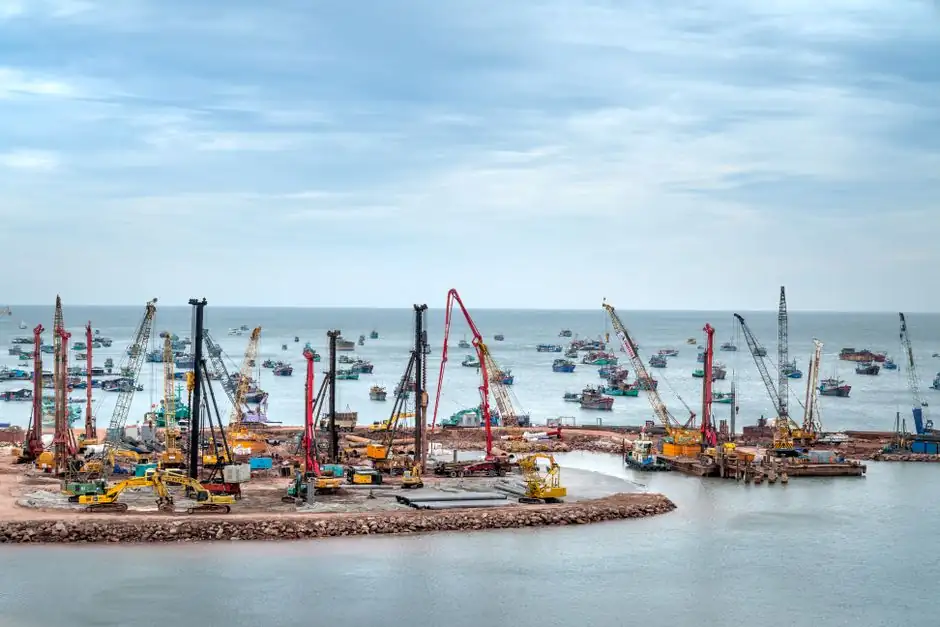
For soft clay, vibro stone columns usually outperform dynamic compaction because they create a deep load-transfer system, while dynamic compaction is more appropriate for loose granular soil [S1][S4].
The decision depends on clay thickness, undrained strength, groundwater, settlement targets, treatment depth, vibration limits and installation control rather than on cost alone [S1][S5].
Choose the method by soil structure
Dynamic compaction densifies loose soils by repeatedly dropping heavy steel pounders, with reported equipment weights of 10–33 tonnes and drop heights up to 25 m; its established application is compaction of loose granular soils, including sands, fill and reclaimed ground [S3].
Vibro replacement forms load-bearing columns from gravel or crushed stone that share load with the surrounding soil and can extend to large depths [S2]. In the comparative model study, 13 tests used clay at 27% water content and 9 kPa undrained shear strength, including untreated soil, three stone-column configurations and nine dynamic-compaction configurations [S1].
That distinction matters because compaction energy primarily densifies granular material, while soft clay requires replacement, reinforcement, drainage, stabilization or a combination of these mechanisms.
Compare performance and execution
In a 30 kN/m² model comparison, the reported maximum cumulative settlement improvement ratios were 69% for dynamic compaction with a 5 kg drop weight and 178% for the model with three stone columns, relative to untreated soil [S1]. The 178% figure represents a comparative improvement index, not a 178% reduction in absolute settlement, so it must not be used directly as a production design value.
The laboratory models examined dynamic compaction using 2, 3 and 5 kg drop weights at drop heights of 500, 750 and 1000 mm alongside untreated soil and stone-column-treated models [S1].
On execution, dynamic compaction is attractive for large areas and loose fill, with treatment depths up to 14 m cited for that soil class [S3]. Vibro replacement requires specialized installation equipment and granular backfill but provides a repeatable column grid, direct load sharing and a stiff load path through soft cohesive strata [S2][S4].
Match the treatment to depth and ground conditions
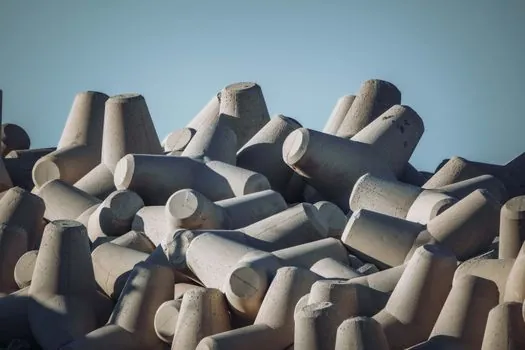
Vibro-compaction is not a substitute for vibro replacement in soft clay. If a proposed specification calls for vibro-compaction in cohesive soil, it is describing the wrong treatment mechanism.
Dynamic replacement is listed as a ground-improvement technique [S3]. It combines compaction and stone-column concepts, so it belongs in the comparison when conventional dynamic compaction cannot mobilize sufficient improvement in cohesive ground.
Account for installation disturbance
An instrumented trial at the Bothkennar soft-clay test bed examined the response of the ground to treatment by a group of dry bottom-feed stone columns supporting a raft foundation and found significant disturbance [S5].
Installation procedure, column spacing, depth, stage sequencing, pore-pressure dissipation and foundation loading therefore belong in the trial or instrumented verification plan.
Dynamic compaction also has site constraints because repeated poundings generate high vibration. Dynamic compaction is generally more suitable where loose granular deposits can densify efficiently, but it is a poor default for sensitive clay and for sites with vibration-sensitive assets or structures.
Select for the design load and failure mode

Use vibro stone columns when the design problem is deep soft-clay settlement, insufficient bearing capacity or load transfer to deeper competent material. Stone columns provide a stiff column, composite soil response and drainage acceleration in cohesive deposits [S2][S4]. They can also be an economic alternative to piling for low-rise construction over deep soft soil where end-bearing piles are prohibitively expensive or impracticable [S5].
Use dynamic compaction where the target is loose sand, granular fill, reclaimed ground or another densifiable layer and the treatment depth lies within the effective energy zone [S3]. It is not a reliable substitute for a deep stone-column system in uniform soft clay, especially where the model study found limited benefit except with the heaviest drop weight [S1].
For shallow soft clay over a compact competent stratum, consider dynamic replacement or another hybrid rather than assuming either conventional option is adequate [S3]. For a comparison with another soft-soil treatment, see dynamic compaction versus surcharge preloading.
Base procurement on trial-scale verification
No production specification should copy the laboratory stone-column dimensions of 30 mm diameter and 180 mm length, because they were model-scale values rather than full-size foundation dimensions [S1]. Production design requires site-specific strength, compressibility, groundwater and layer-thickness data, followed by a trial that checks settlement, heave and pore-pressure response.
Specify dynamic-compaction pounder mass, drop height, impact footprint, pass spacing and treatment depth against the soil profile, using the cited range of 10–33 tonnes and drop heights up to 25 m as equipment context rather than a default recipe [S3]. For vibro replacement, define column diameter, spacing, compacted aggregate, installation method, drainage provisions and acceptance testing, with treatment depth checked against the 3–12 m range reported for aggregate piers in soft ground [S4].
Track settlement and groundwater response through staged loading, and retain at least one year of recovery observations where installation disturbance resembles the Bothkennar trial conditions [S5]. For dynamic compaction, the energy pattern and pass sequence should be adjusted only after field verification; for vibro stone columns, installation records and trial results should govern column spacing and depth.