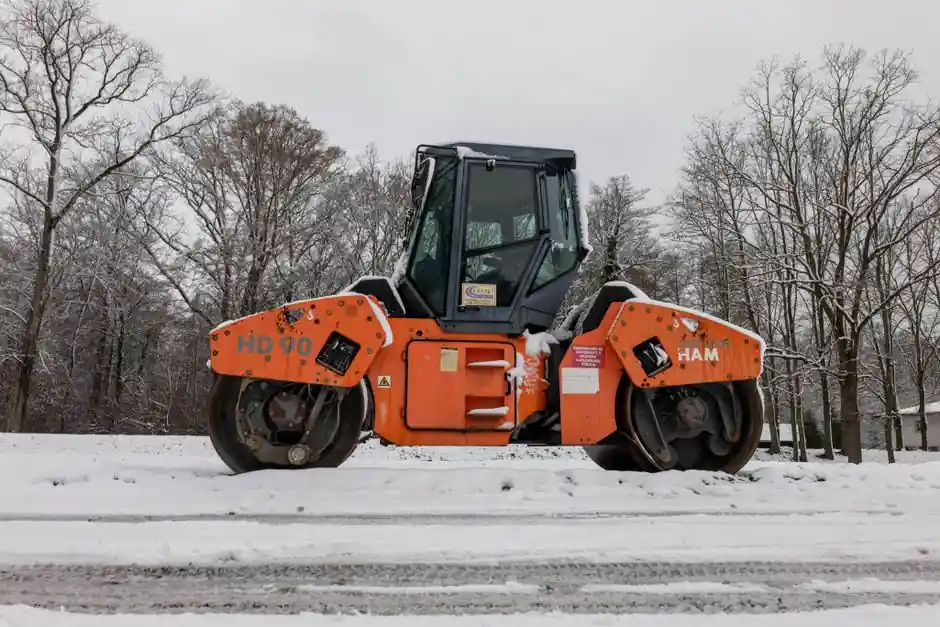
Dynamic compaction can densify suitable natural deposits and fills from 10 to 35 ft below grade, but depth is only one selection criterion [S1].
For a shallow fill, weight, drop height, passes, grid spacing, soil type and required treatment depth must be matched rather than treating “low energy” and “high energy” as interchangeable equipment classes.
What Separates Low-Energy and High-Energy Tamping
Dynamic compaction transfers impact energy by repeatedly dropping a heavy tamper from a controlled height onto the ground [S2]. High-energy work described by Densification uses steel tampers weighing 6 to 30 tons, dropped from 30 to 100 ft, usually in multiple passes over a grid [S5].
Dynamic compaction repeatedly drops steel tampers of 6 to 30 tons from heights of 30 to 100 feet to apply high-energy impacts to the soil [S5]. Federal guidance covers tamper selection, drop height, energy, treatment depth and monitoring rather than prescribing one universal energy class [S4].
Low-energy tamping is the practical choice when the objective is limited near-surface densification of a shallow, granular fill. High-energy dynamic compaction becomes relevant when the specification requires greater depth, greater unit energy or a deeper influence zone. The dynamic compaction equipment decision should therefore follow the geotechnical target, not the marketing label attached to the impact.
Decision Criteria for Shallow Fill
Granular soil with a low degree of saturation is generally favorable, while fill containing voids or debris can respond unevenly and may require a different treatment strategy [S5].
For a shallow fill, confirm that the target zone is granular, that groundwater does not prevent effective stress transfer, and that the required depth can be reached with the selected tamper. If the fill is predominantly cohesive, highly saturated, contaminated or rich in organics, conventional placement and mechanical compaction may be more predictable than impact compaction.
The field trial should record crater depth after each impact point because variations in ground response indicate differences in density, depth or soil composition [S5]. That response is a trial signal, not a substitute for laboratory classification, cone penetration testing, settlement monitoring or the project’s specified acceptance method.
Energy, Depth and Equipment Comparison
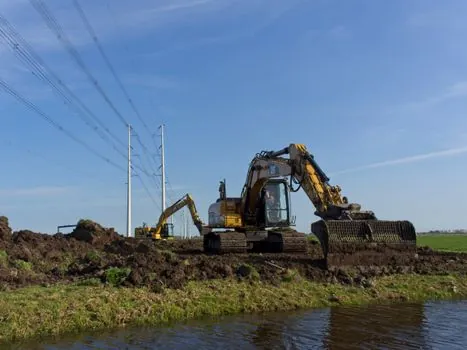
Dynamic compaction has produced densification in suitable natural deposits and fills at depths varying from 10 to 35 ft [S1]. That range demonstrates the method’s reach, but it does not mean every 10 to 35 ft fill requires high energy. Required unit applied energy, tamper mass and drop height determine whether the required depth is credibly mobilized [S1][S4].
Energy comparison must be made on a common basis. Impact energy is a function of tamper mass and drop height, while field performance also depends on passes, point spacing, tamper footprint and soil response [S4][S5]. A heavier tamper at a lower height can therefore produce a different ground response from a lighter tamper at a higher height, even if nominal impact energy appears similar.
Where Each Method Fits
Low-energy tamping is appropriate for shallow fill placed to improve the upper working zone, provided the fill is granular and the required density can be demonstrated by the trial. It is also the less aggressive option when excessive vibration, crane load, surface heave or disturbance to adjacent assets would be unacceptable. [S6]
High-energy dynamic compaction is appropriate where the design requires densification below the ordinary near-surface working zone, loose granular fill extends to meaningful depth, or larger void reduction is required [S1]. It may reduce the need to excavate and replace loose fill or install deep foundations, but that commercial benefit cannot override unsuitable soil or unacceptable ground response [S5].
The method is not suited as a blanket treatment for saturated clay, organic soil or poorly graded material that cannot transfer repeated impact energy through permanent volume reduction. Loose sand below the water table can be densified, but saturation, drainage and seismic performance require a separate geotechnical evaluation [S5].
Design, Monitoring and Acceptance
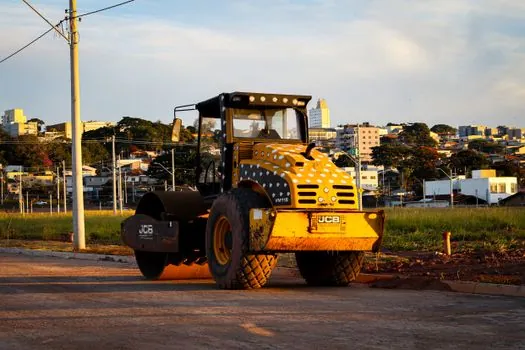
Federal guidance identifies site evaluation, improvement-depth prediction, drop-point spacing, required unit energy, monitoring and off-site vibration prediction as core parts of dynamic compaction design [S1]. For a shallow fill, the work plan should define tamper mass, footprint, drop height, passes, grid spacing, trial area and acceptance tests before production.
After each pass, craters are levelled before the next sequence so that subsequent impacts act on a workable surface [S5]. Production monitoring should include impact location, drop height, number of drops, pass count, crater response, equipment positioning and adjacent-structure vibration where relevant. Field results can be compared with the more detailed treatment logic in Dynamic Compaction Energy for a 10 m Fill.
Acceptance should be tied to the project specification, such as relative density, cone resistance, plate-load response or another approved criterion. FHWA publications provide design guidance but do not constitute a construction specification or regulation [S4]. A project-specific geotechnical engineer should approve the energy trial and acceptance framework before the equipment fleet and production plan are fixed.
Practical Selection Rule
Use low-energy tamping when the improvement depth is shallow, the soil is suitable granular fill, and the acceptance zone is close to the surface. Use high-energy dynamic compaction when the required treatment reaches a deeper zone or the shallow fill cannot achieve the specified density with the lower-energy program [S1].
A defensible procurement sequence is: classify the fill, establish the target depth and density criterion, run a monitored trial, compare crater and test results, then size the tamper and crane. For a typical 6 m fill, this staged approach is treated in Dynamic Compaction Energy Selection for a 6 m Fill.
The next trackable decision is the site-specific acceptance result from the trial area, especially depth of influence, crater response and measured density or penetration resistance. If low-energy treatment meets the target at the required depth, increasing impact energy adds cost and vibration exposure without engineering benefit.