
In a power-generation plant, the electric actuator sits at the heart of every fuel, feedwater, and cooling-water modulating loop; selection is driven by four hard numbers — torque in Nm, duty class (S2/S4), enclosure rating (IP67 or IP68), and hazardous-area certification such as Ex d IIB T4 [S2].
Unlike pneumatic spring-return units, motorised actuators deliver precise positioning feedback, integrated torque protection, and bus-network integration (Modbus, PROFIBUS, or HART), which is why new thermal and hydro stations list them as the default damper and isolation-valve driver [S1][S2].
Power-Plant Service Map: Where Electric Actuators Get Specified
Power generation converts mechanical, thermal, or kinetic energy into electrical energy, and the three dominant plant types — coal, gas turbine, and hydro — each impose a different actuator duty profile [S1]. On a 500–800 MW coal unit, electric actuators are standard on FD/ID fan inlet dampers, soot-blower isolation valves, and HP/LP bypass globe valves, where continuous modulating service demands S4-25 % or higher duty. On combined-cycle gas plants, the same units are paired with electric ball valves for gas-fuel shutoff in the 90-second emergency block, and the spec sheet is dominated by SIL 2/3 functional-safety claims and fast stroke times under 15 s. Hydro stations run a third pattern: low-speed multi-turn units driving large knife-gate or penstock isolation valves, with torque ranges climbing past 5,000 Nm [S2].
Wind and solar plants rarely use process-grade electric actuators at the panel level; their moving parts are pitch motors and tracker drives, which sit outside the valve-actuator duty class. A specifying engineer who lumps "all generation" into one spec will over-buy IP68 on a hydro gate and under-buy torque on a gas-turbine trip valve — the failure mode is real and recurring in EPC submittal reviews.
Quarter-Turn vs Multi-Turn vs Linear: Topology Match to Valve Class
The first decision node is rotation: 0–90° quarter-turn units drive butterfly, ball, and plug valves; multi-turn units (typically up to 50–60 turns) drive gate, globe, and knife-gate valves; linear / straight-stroke units drive diaphragm and control-globe bodies [S2]. Mis-matching topology — bolting a quarter-turn unit to a gate valve — is the single most common RFQ return I see, because the gate stem needs continuous thrust, not 90° swing.
Within multi-turn, the explosion-proof family typically covers 250 Nm up to 2,500 Nm nominal torque, with IP67 as the baseline and IP68 as the upgrade for outdoor coal-conveyor or ash-sluice duty [S2]. Quarter-turn units commonly land in the 50 Nm to 1,800 Nm window, with the 1,800 Nm explosion-proof IP67 SKU a common SKU on butterfly dampers in FD/ID fan service [S2]. For very large dampers and turbine bypass systems, expect torque climbs to 5,000–10,000 Nm, and a separate gearbox or a higher-frame actuator gets specified. A useful side-by-side map: a butterfly damper at 600–800 mm in coal-plant FD/ID service takes a quarter-turn 600–1,000 Nm IP67 unit; a turbine bypass globe in combined-cycle duty takes a linear / straight-stroke 2,000–4,000 N thrust S4-50 % unit; a penstock isolation gate at 1,200 mm takes a multi-turn 5,000+ Nm IP68 unit.
Duty Cycle, Enclosure, and Hazardous-Area Rules

Duty class matters more than peak torque on modulating service: S2 short-time, S4 intermittent, and S5 starting-electric braking each impose different thermal limits on the motor windings, and an underspec'd S2 unit running as S4 will trip on thermal overload within hours [S2].
Enclosure rating follows the plant's wash-down and outdoor exposure profile. IP65 is the indoor minimum; IP67 protects against temporary immersion (ash-sluice pits, hydro tailraces); IP68 is the spec when the unit sits below the high-water line or in a coal-handling flood zone [S2]. Hazardous-area certification is non-negotiable inside the boiler envelope and fuel-gas skids: Ex d IIB T4 flameproof enclosures cover most coal and natural-gas services, and the explosion-proof intelligent multi-turn family at 2,500 Nm is one of the typical configurations called out in tenders [S2]. Ingress protection (IP) and explosion protection (Ex) are independent — an Ex d IIB T4 unit can still be IP65, and a specifying engineer must list both codes, not one or the other.
Control, Feedback, and Network Integration
Modern electric actuators ship with absolute encoders, mechanical position potentiometers, or Hall-effect sensors to report stem position back to the DCS. Output is typically 4–20 mA analog or hard-wired contact for on/off, with HART, PROFIBUS, or Modbus as the digital upgrade — useful for remote valve diagnostics on unmanned hydro or wind-balance stations [S2]. A 4–20 mA feedback loop lets the operator run the actuator as a modulating element between 0 and 100 % stroke, which is how the boiler's FD-fan damper and feedwater-regulating globe get throttled in normal operation.
For a complete power-monitoring loop at the plant level, the actuator's position signal is one of several measurements; site power meter and power cable selections sit upstream and downstream of the actuator cabinet. Intelligent on/off and intelligent modulating actuator families are the standard way to describe the two control grades, and most suppliers will offer both variants in the same mechanical frame so that spare-parts rationalisation is preserved across the plant [S2].
Selection Criteria Map: Torque, Speed, Protection, Network
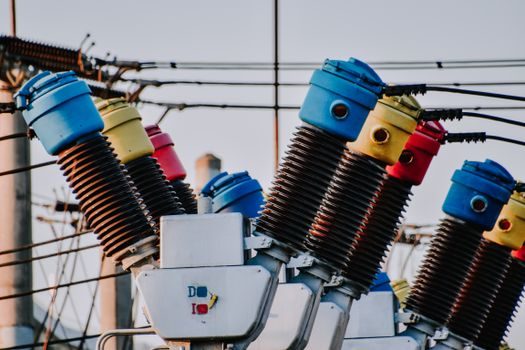
Four criteria decide the short list: (1) required torque or thrust at the worst-case differential pressure across the valve seat, (2) stroke time or travel speed — typically 10–60 s/90° for modulating, faster for on/off, (3) IP/Ex rating matched to zone classification, and (4) control interface matching the DCS (4–20 mA, HART, PROFIBUS, Modbus). A practical comparison: a 1,000 Nm IP67 Ex d IIB T4 multi-turn unit with 30 s stroke and HART feedback is the typical 150–200 mm gate-valve pick; a 600 Nm IP67 quarter-turn with 15 s stroke and 4–20 mA feedback is the typical 300–500 mm butterfly damper pick; a 2,500 Nm IP68 explosion-proof multi-turn with 45 s stroke and PROFIBUS is the typical ash-sluice isolation pick [S2].
Buying cheaper at the torque stage is the most expensive mistake: undersized actuators stall under seat pressure, trip on thermal overload, and burn out windings within the first 12 months. Build the torque calculation from the valve maker's published seat-friction coefficient at the design ΔP, then add a 25–30 % margin for seat wear and water-hammer transients. Cross-reference with the solenoid coil suppliers spec-tiering guide when the actuator is paired with pilot solenoids on a hydraulic trip block — the network and connector family often match across both.
Limits, Failure Modes, and What to Verify on the Datasheet
Electric actuators fail in three dominant patterns: thermal overload during sustained modulating duty, water ingress through degraded cable glands after 3–5 years of outdoor exposure, and limit-switch failure in high-cycle on/off service. Each of these is preventable at the spec stage: PTC thermistor in windings, IP67/IP68 with double-sealed cable entries rated to the actual cable OD, and mechanical position limit switches rated for the declared mechanical cycles. [S1]
Verify on every datasheet: declared torque at the declared duty cycle (not the 30-minute peak), ambient temperature range (–20 °C to +70 °C is a typical industrial window, narrower in tropical or arctic bids), and the SIL capability statement for safety-instrumented service. For procurement continuity, the explosion-proof family shown in [S2] is a good reference for the SKU naming pattern (e.g. 2,500 Nm multi-turn Ex d IP67), and the supplier's intelligent on/off and intelligent modulating product lines are the two SKUs a utility typically stocks to cover 80 % of plant service.