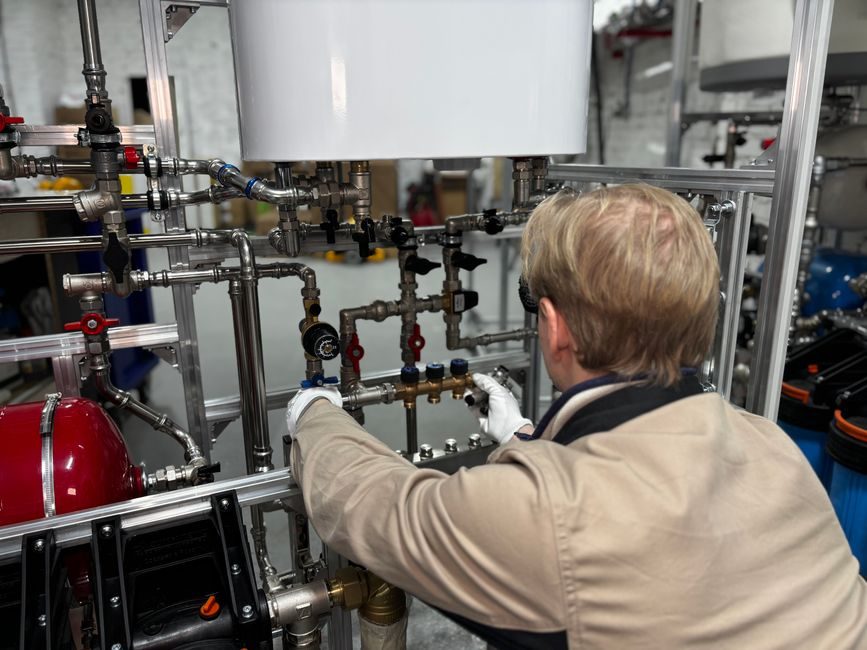
An electric ball valve pairs a 90-degree rotary ball element with a motorised actuator, while a knife gate valve uses a linear gate that shears through the media on closure, and that geometric difference dictates almost every downstream spec choice.
Both product families are stocked by the same Chinese process-valve manufacturers: Hangzhou Henggong Technology lists knife gate valves, ball valves, and forged steel valves as a single product group [S3], and Wenzhou Chisun manufactures V-type ball, O-type ball, and bidirectional knife gate valve lines under one roof with 90 series and 800 specifications total [S8].
Operating Envelope: Pressure, Temperature, and Solids
Electric ball valves are routinely offered in 150 lb to 600 lb classes with WCB carbon steel or 304/316 stainless bodies and PTFE/R-PTFE seats, suitable for clean water, air, oil, and chemicals up to roughly 200 °C in standard trim [S3]. The through-bore design gives a near-full-port flow path with low Cv loss, which is why three-piece wafer ball valve bodies from DIN/ANSI/JIS lines are common in chemical skid builds [S3].
Knife gate valves are typically rated DN50 to DN1200 in PN10 / 150 lb with bi-directional shut-off, elastomer sleeves in EPDM, NBR, Viton, or natural rubber, and bodies in WCB, 304, 316, or PP [S3][S8]. Their thin gate cuts through fibrous slurries, paper stock, mining tailings, and dry bulk solids, which a ball element would foul or score on the first stroke. Standard temperature ceiling on a rubber-lined knife gate is around 120 °C; metal-seated versions extend that range but at the cost of zero leakage class [S8].
Sealing Class, Leakage, and Maintenance Interval
A soft-seated electric ball valve achieves ANSI/FCI 70-2 Class VI (bubble-tight) shut-off, while a resilient-seated knife gate typically meets Class IV to Class VI depending on sleeve material and stroke alignment [S3]. Chisun's bidirectional knife gate line is designed for seat-assisted sealing on both flow directions, which matters in slurry service where reverse pressure events are common [S8].
Ball seats wear from cavitation, grit intrusion, and thermal cycling; field rebuilds usually mean a seat-and-seal kit replacement without removing the body from the line. Knife gate wear concentrates on the gate edge and the elastomer sleeve — sleeve life in abrasive mining slurry is commonly 6 to 18 months, and the gate itself is field-replaceable on most wafer and lug bodies. For a deeper dive on actuator-side wear mechanisms, see the Electric vs Pneumatic Valve Actuator gear backlash spec map.
Modulation and Control Characteristic
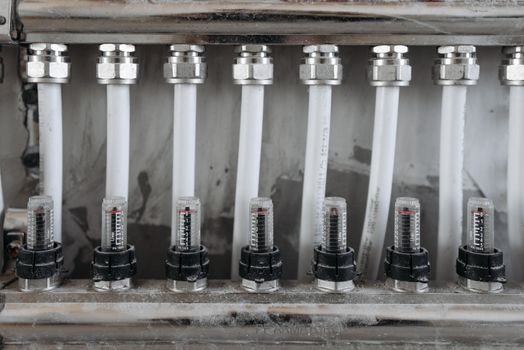
Standard round-port ball valves are on-off devices — they do not throttle well below 30 % opening without seat damage. V-port or segment ball valves solve that problem: a profiled ball gives an approximately equal-percentage characteristic, and combined with an electric actuator and 4-20 mA positioner they deliver usable rangeability of 50:1 to 100:1 [S8]. Hangzhou Henggong specifically markets V-type ball valves alongside its O-port line as flow-control products [S3].
Knife gate valves are fundamentally on-off or, at best, very coarse throttling devices. Attempting to hold a partial stroke position erodes the gate edge quickly and produces a non-linear flow curve. If the process needs stable flow control, the spec has to move to a V-port or segment ball, not to a knife gate with a positioner [S8].
Actuation: Torque, Stroke, and Power Budget
Electric actuators for quarter-turn ball valves are typically 50 Nm to 3,000 Nm, 24 VDC or 110/220 VAC, with on-off, modulating, or failsafe spring-return options; OEM list prices on Chinese factory direct listings span from US $40 per piece for small PVC-ball packages to US $1,320 per piece for 1100+ Nm multi-turn electric valve actuators [S1]. Wenzhou Heli's ball-valve electric actuators sit at the US $500 to US $675 per-piece band with a 2 to 10 piece MOQ [S1].
Knife gate valves need linear thrust, not torque, and are usually paired with pneumatic cylinders or hand wheels; electric linear actuators for knife gates exist but add cost because of the longer stroke (50 mm to 1,200 mm) and the higher closing thrust needed to shear packed media. Choosing between pneumatic and electric drive is a separate decision and is covered in the Electric Ball Valve Selection: Five Spec Axes That Decide the Buy reference, which maps the same actuators across ball, butterfly, and gate bodies. The electric actuator duty cycle (S2-15 min short-time duty) and ambient temperature rating should match the install location before the body is even specified.
Spec Comparison: Electric Ball vs Knife Gate
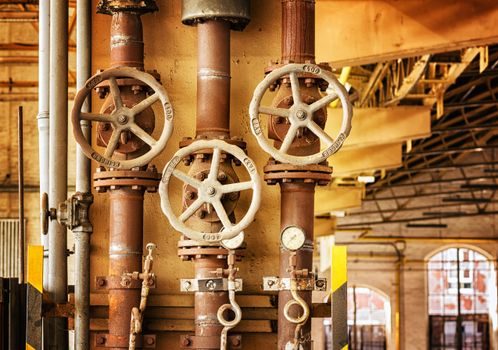
On four decision criteria drawn from the source data, the two families line up as follows. Pressure class: electric ball valves reach ANSI 600 / PN64 as standard; knife gate valves top out near PN16 / 150 lb [S3][S8]. Solids handling: ball valves tolerate only clean, low-fines media; knife gates are built for slurries up to 8 % to 10 % consistency and pulp with long fibre length [S3][S8]. Sealing class: soft-seated ball reaches Class VI; resilient-seated knife gate reaches Class IV to VI depending on sleeve [S3]. Modulation capability: V-port ball gives equal-percentage control; knife gate is on-off only [S8]. Unit cost: small electric ball assemblies list from US $20 per piece; knife gate bodies in carbon or stainless start near US $40 to US $60 per piece for small DN, scaling with bore [S1][S3].
Use-Case Fit and Failure Modes
Specify an electric ball valve when the media is clean, the duty is frequent (10+ cycles per day), the leakage requirement is Class VI, and modulation is needed. Typical fits: chemical dosing skids, HVAC isolation, fuel-oil transfer, clean-water distribution, and analyser sample loops. Failure modes to watch are seat swelling on incompatible chemicals, seat cold-flow on high-temperature steam, and handle or stem seizure if the actuator torque is undersized for the service [S1][S3].
Specify a knife gate valve when the media carries fibre, solids, or settled slurry, when bi-directional shut-off matters, when the line is large-bore (DN300+), and when a lower acquisition cost outweighs throttling performance. Typical fits: pulp and paper stock lines, mining tailings, wastewater plant underflow, cement slurry, and dry-bulk silo discharge. Failure modes to watch are sleeve erosion on abrasive media, gate-edge scoring on entrained metal, and seat collapse if the line is steam-cleaned above the elastomer limit [S3][S8]. The Plug Valve vs Pinch Valve: Spec-Level Selection for Temperature-Limited Service reference covers a related low-pressure, solids-bearing decision that sits next to knife gate in many mineral-processing P&IDs.
Sourcing, Standards, and Bid Triage
Chinese factory-direct listings on Made-in-China show electric-actuator-for-gate-valve SKUs at US $20 to US $1,320 per piece across 483 suppliers and 1,449 products as of December 2025, with 1-piece MOQs common on commodity items and 2- to 10-piece MOQs on engineered units [S1]. Hangzhou Henggong holds a 4.9/5 buyer rating, 0.1 h average response time, and ships FOB/CIF with 1-month peak-season lead time [S3]. Wenzhou Chisun's combined V-ball and knife gate catalogue covers 90 series and 800 specifications, which makes it a single-source option for plants that want to consolidate both valve types under one supplier [S8].
For procurement, the next two trackable signals are: (1) the published lead time of the chosen body material in the project's required DN/PN class, since Chinese factory lead times stretch from 15 working days on stocked electric actuators to 30+ days on custom valve bodies [S1][S3], and (2) the actuator's IP/Ex rating relative to the install zone, because an Ex d IIB T4 enclosure adds roughly 30 % to 50 % to the bare-actuator list price and must be matched to the ATEX/IECEx certificate before shipment, not at site.